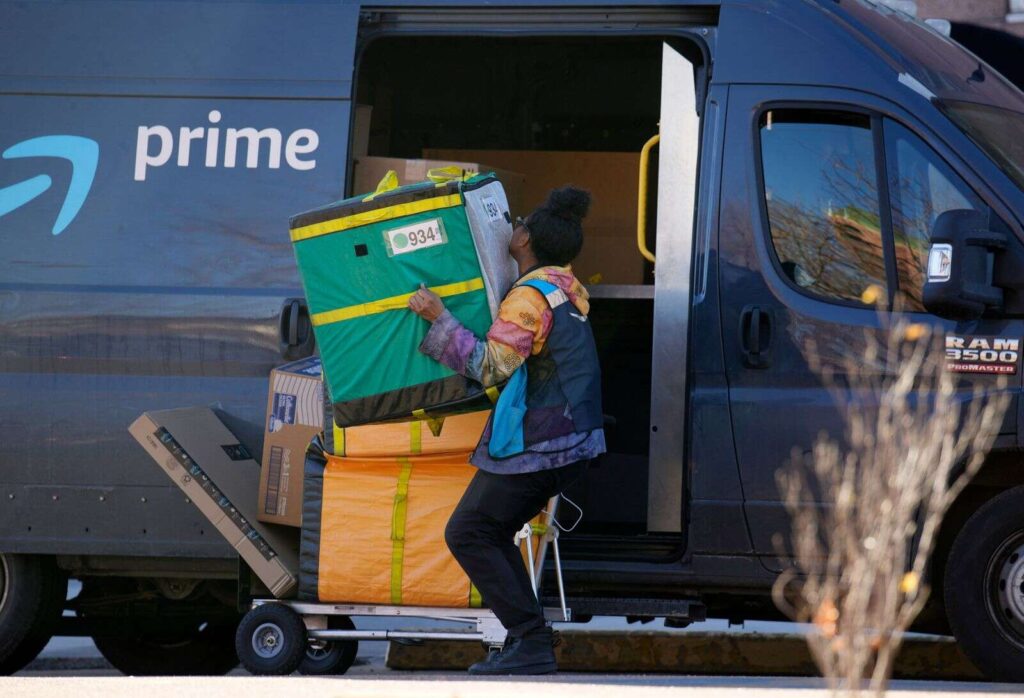
In a transformative move that is reshaping the global logistics industry, e-commerce and technology giant Amazon announced on Monday that it is opening its decades-old, sprawling shipping and delivery infrastructure to third-party businesses of all sizes — not just merchants that operate on the company’s own e-commerce platform.
The newly launched offering, branded as Amazon Supply Chain Services (ASCS), allows participating companies to outsource their entire end-to-end supply chain operations to Amazon, from transporting manufactured goods across international oceans to storing inventory in Amazon’s network of climate-controlled warehouses, and ultimately delivering finished products directly to consumers’ homes seven days a week. Major established consumer brands including Procter & Gamble, 3M, Lands’ End, and American Outfitters American Eagle have already finalized partnerships to integrate ASCS into their operations, signaling early industry confidence in the new service.
Amazon framed this ambitious expansion as a parallel to the 2006 launch of Amazon Web Services (AWS), the company’s game-changing cloud computing division that revolutionized the global tech sector. AWS was originally developed as an internal tool to handle Amazon’s own massive data storage and computing needs, before the company recognized the broader market demand and turned it into one of its most profitable business units, generating more than $80 billion in annual revenue today. Leadership at Amazon believes the same playbook will work for logistics: the company has already spent billions building out its delivery network for its own retail and marketplace operations, and now it can monetize excess capacity by opening the system to outside businesses.
Prior to this launch, Amazon’s robust logistics capabilities were largely limited to sellers participating in Fulfillment by Amazon (FBA), a program that lets third-party merchants selling on Amazon’s marketplace outsource packing, shipping, and customer service to the company. Since FBA launched in 2006, participants have shipped more than 80 billion items through the program, demonstrating the proven scale and reliability of Amazon’s operations. But until the launch of ASCS, businesses that sold through their own websites, brick-and-mortar stores, or other e-commerce platforms could not access Amazon’s logistics network.
The entry of Amazon into the third-party logistics market sets up a new era of direct competition with established global shipping and delivery giants including UPS, FedEx, and DHL. The market reacted swiftly to the news on Wall Street: legacy logistics provider UPS saw its share price drop 10% by market close, while competitor FedEx fell 9% as investors priced in the increased competitive pressure. Amazon, by contrast, saw its own stock tick up around 1% on the announcement as investors reacted positively to the company’s new high-growth revenue stream.