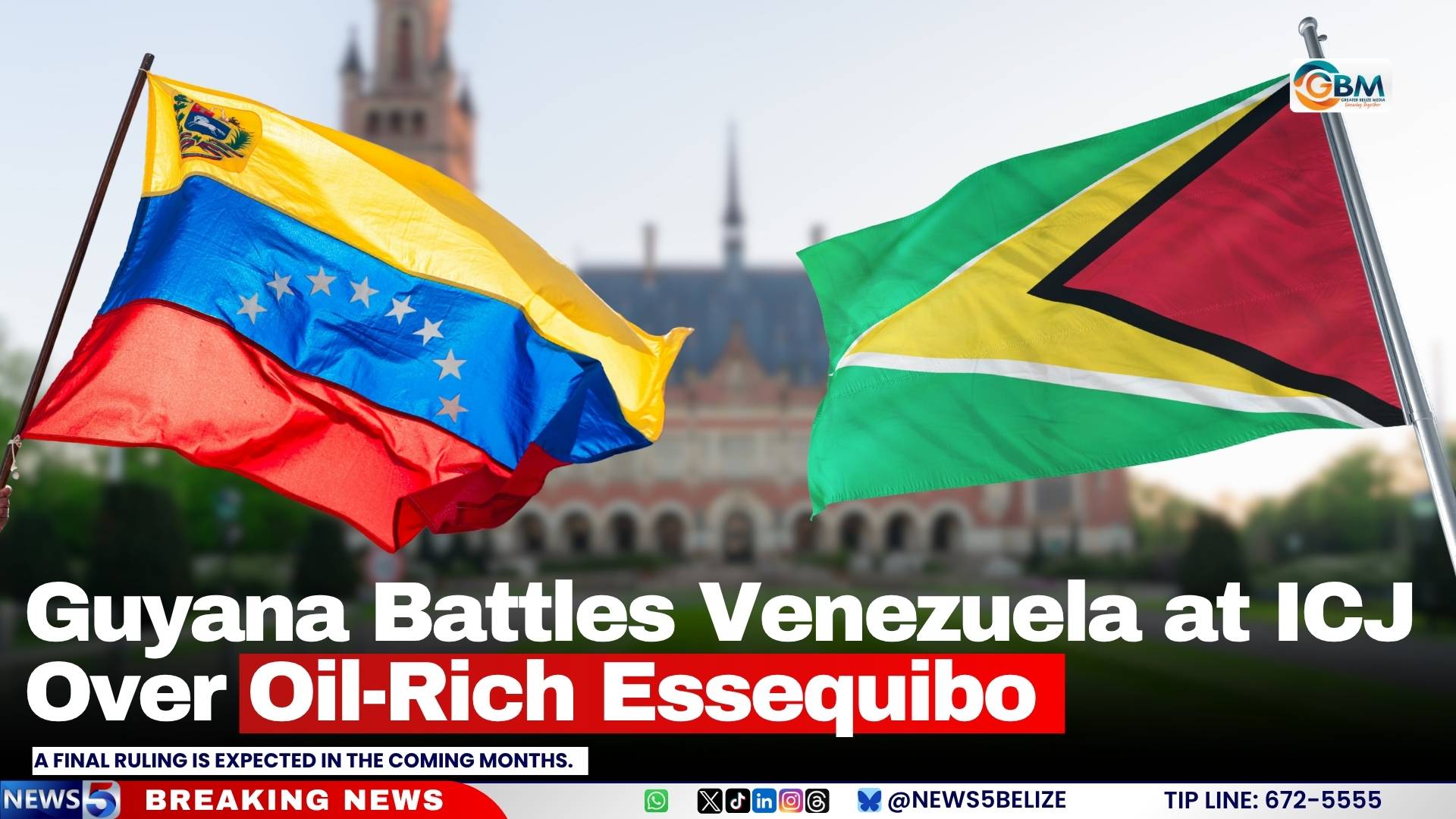
The decades-long territorial dispute between Guyana and Venezuela over the resource-rich Essequibo region has moved into formal public hearings at the United Nations’ highest judicial body, the International Court of Justice (ICJ), opening in The Hague this week. The proceedings mark a major turning point in a conflict that has simmered for more than a century, with energy reserves at the heart of rising geopolitical tensions in South America.
Guyana’s Foreign Affairs Minister Hugh Todd opened his country’s arguments before the 15-judge panel on Monday, framing the case as a straightforward yet high-stakes battle for the nation’s core sovereignty. At issue is the legal fate of the 1899 boundary arbitration award that first established the modern border between the two neighboring countries, granting Guyana control over the 159,000-square-kilometer Essequibo region. This territory makes up more than 70% of Guyana’s current total land area and holds massive untapped reserves of oil, gold, and timber—resources that have driven major foreign investment and economic growth in Guyana over the past decade.
Todd emphasized that the 1899 ruling has enjoyed international recognition and formal acceptance from both states for more than 100 years. Under established principles of international law, he argued, Venezuela’s decades-late challenge to the award is legally invalid. He also called out Venezuela for escalating tensions in recent years, pointing to increased military deployments along the shared border and repeated attempts by Caracas to assert administrative and economic control over parts of the disputed territory.
Venezuela, for its part, has rejected Guyana’s framing and maintains that the 1899 agreement was inherently flawed and legally void from its inception. Caracas points to a 1966 bilateral treaty signed with Guyana ahead of the country’s independence, which requires both nations to pursue a negotiated solution through direct talks rather than binding arbitration at the ICJ. Hearings are scheduled to run through May 11, with Venezuela set to lay out its full legal arguments starting midweek.
The ICJ previously ruled that it holds formal jurisdiction to adjudicate the dispute, rejecting Venezuela’s preliminary challenges. While the court’s final rulings are legally binding under international law, it lacks an independent enforcement mechanism to compel compliance from either state. A final decision on the merits of the case is expected to be issued in the coming months.
The Guyana-Venezuela dispute is one of two active high-profile territorial conflicts being adjudicated by the ICJ involving Latin American states. The court is also processing a long-running territorial, maritime, and insular dispute between Belize and Guatemala. In a recent development in that case on March 19, 2026, the ICJ ruled that Guatemala may participate as a non-party intervener in a separate ongoing dispute between Belize and Honduras over the Sapodilla Cayes, after the court recognized that Guatemala holds a legitimate legal interest in the outcome of that case. The court has since set procedural deadlines for Guatemala to submit its formal position, while the main Belize-Guatemala border dispute continues to move forward, with a final judgment expected in the next few years.