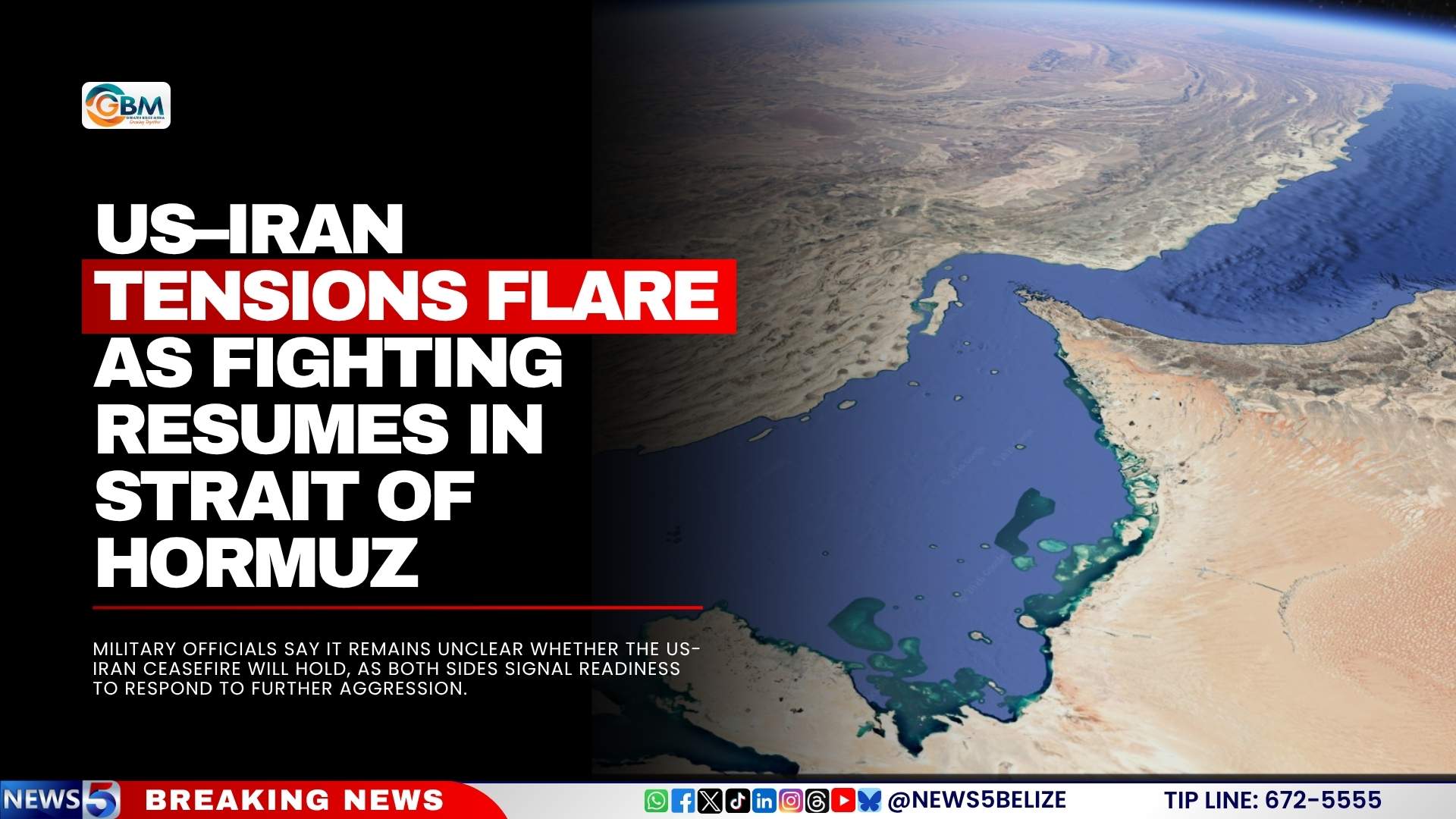
The narrow Strait of Hormuz, one of the world’s most critical chokepoints for global energy trade, has once again become a flashpoint for escalating confrontation between the United States and Iran, as resumed fighting has thrown a previously negotiated fragile ceasefire into serious jeopardy. The outbreak of hostilities has sparked urgent international alarm over both regional stability and the security of global energy supply chains that millions of consumers and businesses depend on daily.
According to statements released by US Central Command, the clash unfolded when Iranian forces launched a coordinated attack involving cruise missiles, unmanned aerial drones, and fast-attack small craft targeting US naval vessels and passing commercial shipping transiting the waterway. In response, the US military says it destroyed six Iranian boats involved in the assault, framing the operation as a purely defensive measure designed to safeguard free and open maritime navigation through the strait. Tehran has immediately pushed back against the US account, dismissing the claims of Iranian aggression as entirely baseless in official statements.
The return of open hostilities has already sent ripples through global financial and commodity markets. Investors rushed to price in heightened risk of a full-blown disruption to shipping through the strait, which carries roughly 20% of the world’s daily oil consumption. By early trading following the incident, benchmark oil prices had climbed sharply, while major global stock indices dipped on the news. Energy market analysts warn that if security conditions in the strait continue to deteriorate, consumers around the world could face dramatic spikes in retail fuel prices in the coming weeks.
Tensions have already spilled beyond the immediate confines of the Strait of Hormuz into other parts of the Gulf region. In the United Arab Emirates, national security authorities confirmed they intercepted incoming missiles, and a drone attack targeting an Emirati oil facility left three people injured. Multiple commercial vessels have also sustained damage in nearby Gulf waters. In a development that highlights the deepening web of regional security cooperation, an Israeli-built air defense system deployed in the UAE successfully intercepted an incoming Iranian missile during the attack.
The broader regional cold war between Iran and Western-aligned states continues to simmer across multiple front lines. Along the Lebanon-Israel border, clashes have resumed between the Israeli military and Iran-backed Hezbollah, even though a fragile ceasefire had largely held the area for months.
As of the latest updates, military officials from both sides have issued stark warnings that they stand ready to respond forcefully to any further acts of aggression from the opposite camp. There remains significant uncertainty over whether the original US-Iran ceasefire can be salvaged, with many regional analysts warning that the current escalation could be the final blow to the already shaky truce.