At the United Nations’ highest judicial body, the International Court of Justice (ICJ) based in The Hague, Guyana has launched a comprehensive argument challenging Venezuela’s territorial claim to the resource-rich Essequibo region, centering its case on centuries of administrative and historical evidence that contradicts Caracas’ assertions of ownership.
Spanning more than 61,600 square miles, Essequibo makes up roughly two-thirds of Guyana’s total land area. The region, which is teeming with untapped natural resources and extraordinary biodiversity, sits between the Essequibo River along its eastern edge and the Venezuela border to the west, making it one of the most contentious territorial disputes in the Western Hemisphere.
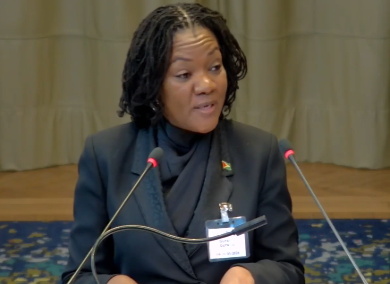
During the opening round of oral arguments before the ICJ panel, Guyana’s legal team and diplomatic representatives laid out a detailed historical record of the region’s occupation and governance. Ambassador Donnette Streete, who leads the Frontiers Division at Guyana’s Ministry of Foreign Affairs, and Carl Greenidge, Guyana’s designated agent for the case focused on the 1899 Arbitral Tribunal Award’s legal validity, emphasized that neither Spain nor Venezuela ever established formal control over the territory. The first European settlers to occupy Essequibo, they argued, were Dutch colonists arriving at the turn of the 17th century.
Between the 17th and 19th centuries, the territory was subsequently populated by descendants of enslaved Africans and indentured Asian laborers brought to the region by Dutch and later British colonial rulers. Today, Streete told the court, Guyana exercises full, uninterrupted sovereign authority over Essequibo: the national government collects taxes there, provides public administration, elects nine members to Guyana’s national parliament from the region, and manages its ecologically valuable biodiverse landscapes.
Data from Guyana’s 2022 national census puts Essequibo’s current population at more than 313,000 people, accounting for over a third of the country’s total population. This population includes members of nine indigenous communities, who Streete confirmed are the original, long-standing inhabitants of the land.
Greenidge, a former Guyanese foreign minister, supplemented the historical narrative with tangible documentary evidence, including archival maps and place-name records. The maps, he explained, clearly place the farthest eastern Spanish outposts more than 650 kilometers outside Essequibo’s boundaries, while 35 existing settlements within the region still retain Dutch-origin names centuries after their founding.
Post-Columbian European settlement in what is now Guyana, Greenidge argued, begins definitively with the 1598 arrival of Dutch explorers. By 1616, the Dutch had formally established the Colony of Essequibo, built Fort Kykoveral along the Mazaruni River (west of the Essequibo River) as their colonial administrative seat, and extended settlement and formal governance westward all the way to the Orinoco River. In 1621, the Dutch West India Company took over formal administration of the colony, and the administrative seat was relocated to Fort Zealandia in 1744. “The Spanish, they were nowhere to be found, not east of the Orinoco, at any rate,” Greenidge told the court. “Their nearest outpost was San Tome on the banks of the Orinoco. This was the easternmost Spanish settlement. The Spanish governor there was candid about his predicament. The settlement, he wrote, was so far distant from other Spanish positions.”
Beyond historical evidence, Guyana’s legal team built a robust case based on established international judicial precedent. Pierre d’Argent, a globally recognized expert in public international law representing Guyana, referenced two previous ICJ rulings on the border dispute issued in 2020 and 2023. He noted that Venezuela has never formally challenged the legal principle of res judicata — the rule that final court rulings are binding on all parties — nor has Caracas filed a formal application for review under Article 61 of the ICJ Statute, the only legal pathway to contest this binding precedent.
“It must be concluded, therefore, that Venezuela has not discovered any new fact of such a nature had it been known as to be a decisive factor on the conclusions reached by the court in its judgments of 2020 and 2023 and in these conditions, these judgments remain res judicata for the parties in the court itself,” d’Argent told the panel.
Paul Reichler, another senior member of Guyana’s legal team, added that Venezuela itself accepted, respected and abided by the 1899 Arbitral Award for more than six decades after it was issued. Caracas did not formally challenge the award’s validity until February 1962, when Venezuela’s UN permanent representative sent a formal letter to the UN Secretary-General contesting the ruling. Even at that time, Reichler noted, Venezuela explicitly acknowledged that the 1897 bilateral treaty underlying the 1899 award remained legally binding. It was not until 1963 — 66 years after Venezuela ratified the 1897 treaty — that Caracas first began to question the treaty’s validity.
The ICJ is currently hearing the first round of oral arguments in the case, which is split into multiple three-hour sessions for each side. Both Guyana and Venezuela are presenting their full cases during this round, with proceedings set to continue through Friday and conclude next Monday.