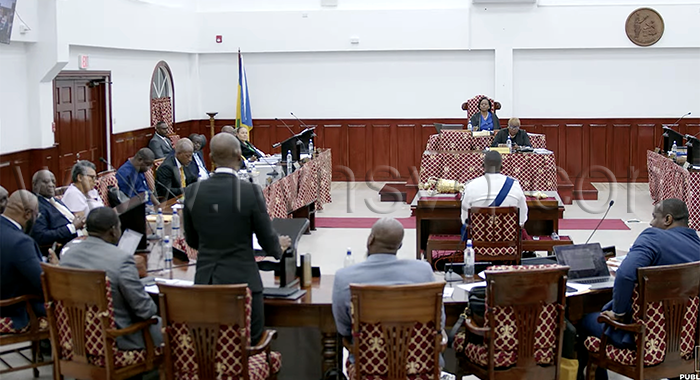
St. Vincent and the Grenadines’ national parliament has advanced two pieces of pro-worker legislation designed to strengthen financial protections for the country’s lowest-paid public service employees, sending both bills to a cross-party select committee for in-depth analysis and public consultation before a full parliamentary vote. Spearheaded by Deputy Prime Minister St. Clair Leacock, who oversees the Public Service portfolio, the two bills—the Daily Paid and Minor Salaried Officers (Compassionate Gratuity) Bill 2026 and the Pensions Amendment Bill 2026—target longstanding financial gaps for low-wage public sector workers. The Compassionate Gratuity Bill specifically creates a framework to provide one-time compassionate gratuity payments to eligible daily-wage and low-salaried public officers when they retire, or to their families if the worker dies while still in active service. Leacock told parliament that the bill stands to deliver critical financial relief to roughly 2,831 workers across the lowest public service pay grades, including grades L, M, and entry-level grades 1 and 2. The deputy prime minister shared that he would have pushed for an immediate parliamentary debate and vote to deliver the promised benefits to eligible workers as quickly as possible. However, he confirmed that the government, led by Prime Minister Godwin Friday, opted to prioritize broader public engagement by sending the legislation to a select committee, to ensure all stakeholders have an opportunity to weigh in on the proposals. “But it is the considered opinion of the Honourable Prime Minister and our colleagues that to the extent that this important bill that will grant relief to nearly 3,000 of our public servants, we allow for more public listening and interest in the subject matter,” Leacock told parliament. The cross-party select committee will include senior government members: Prime Minister Friday, Attorney General Louise Mitchell, Agriculture Minister Israel Bruce, Family, Gender Affairs and Labour Minister Laverne Gibson-Velox, Housing Minister Andrew John, and government senators Jemalie John and Chieftan Neptune. Three opposition members will also serve on the committee: Opposition Leader Ralph Gonsalves, and opposition senators Carlos James and Keisal Peters, marking a collaborative approach to reviewing the worker-focused legislation. The second piece of legislation, the Pensions Amendment Bill 2026, will also be reviewed by the same cross-party committee. This bill adjusts retirement rules for public officers holding non-pensionable positions, raising the compulsory retirement age from 60 to 65, while giving workers the voluntary option to retire as early as age 60 if they choose. Leacock explained that the reform responds to repeated requests from public servants approaching the traditional 60-year retirement age, many of whom face significant financial gaps after leaving work at 60 before they can access alternative support. “Simply put, every week we have coming before the Cabinet of this country public servants who attain the age of 60 and can’t take care of themselves between that and the retirement age, asking for extension of service,” Leacock said. He added that the policy change could encourage private sector employers to adopt similar reforms, addressing the urgent question many low-income non-pensionable workers face when they are forced to retire at 60: “How do I live for the next five years?” The bill creates a formal, structured avenue for workers to extend their service if they wish, closing a critical financial gap for this group. Leacock framed both pieces of legislation as core components of the administration’s bottom-up development agenda focused on lifting up vulnerable public sector workers. “We are providing them an avenue, another wonderful piece of legislation that builds a government, a country, the people from the ground up, from the bottom up, a new vision for the development of [the country],” he said. The deputy prime minister confirmed that the select committee will conduct its review and public outreach before returning the bills to parliament for full debate and a final vote, and teased that additional pro-worker reforms may be introduced in the future as part of the government’s commitment to supporting low-income public servants.
Gov’t to boost financial security for lowest-paid public workers