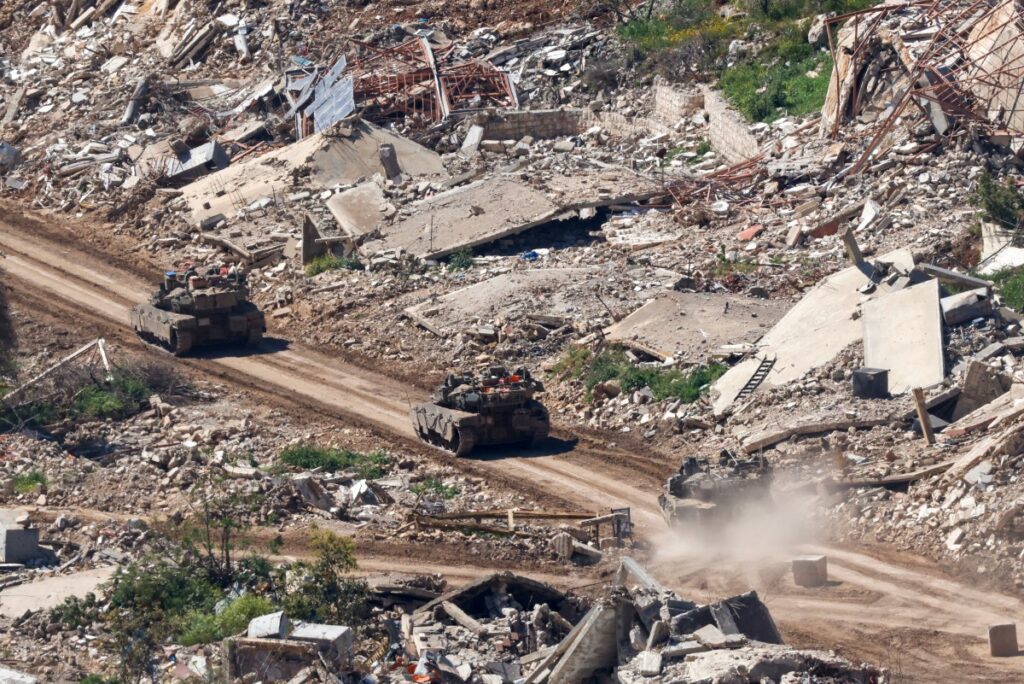
BEIRUT, LEBANON – Fresh Israeli airstrikes across southern Lebanon have killed 13 civilians and wounded dozens more on Friday, in attacks carried out even after a regional ceasefire was meant to de-escalate months of cross-border violence between Israeli forces and the Iran-backed militant group Hezbollah. Lebanon’s Ministry of Public Health updated casualty figures, confirming that eight people – including one child and two women – died in strikes on the town of Habboush, where the Israeli military had issued an urgent evacuation order to residents just hours before the bombing. The updated death toll marked an increase from initial lower estimates, with 21 additional people left injured in the Habboush attacks. Separate strikes in the southern Lebanese town of Zrariyeh killed four more people, two of whom were women, and left four others wounded, according to the health ministry. A third strike in Ain Baal, a town located near the coastal Lebanese city of Tyre, killed one person and wounded seven others. An Agence France-Presse photographer on the ground in Habboush observed thick plumes of smoke billowing into the sky shortly after the raids concluded. Lebanon’s state-run National News Agency (NNA) confirmed that Israeli warplanes launched a sustained wave of heavy strikes on the town less than 60 minutes after the evacuation order was issued. The Israeli military had announced prior to the attacks that it would respond with force to what it described as repeated ceasefire violations by Hezbollah, ordering all Habboush residents to evacuate to areas at least one kilometer away from the town’s built-up zones. NNA also reported additional Israeli airstrikes and artillery shelling across other locations in southern Lebanon, including the outskirts of Tyre. Even after the April 17 ceasefire deal that was negotiated to end more than six weeks of open conflict between Israel and Hezbollah, Israeli forces have continued to carry out lethal strikes across southern Lebanon. The text of the ceasefire agreement explicitly allows Israel to take military action in response to planned, imminent, or ongoing attacks against its territory. Currently, Israeli military personnel are operating inside the so-called “Yellow Line,” a buffer zone extending roughly 10 kilometers into Lebanese territory along the shared border, where they have carried out large-scale controlled detonations and demolition of residential and public structures. NNA reported that Israeli troops carried out controlled blasts in the southern town of Shamaa, and demolished a monastery and a school operated by a local religious order in the town of Yaroun, after earlier detonating residential homes, commercial shops, and public roads in the same area. In a response to Friday’s strikes, Hezbollah announced it had carried out a series of coordinated attacks on Israeli military positions and troops across southern Lebanon, framing the operations as retaliation for Israeli violations of the ceasefire. The militant group first pulled Lebanon into the broader ongoing Middle East conflict in March, when it launched rocket attacks against Israeli territory to avenge the US-Israeli killing of a top Iranian official aligned with Supreme Leader Ali Khamenei. As of Friday, Lebanon’s health ministry has raised the total death toll from Israeli strikes across the country since March 2 to more than 2,600 people. That toll includes 103 emergency responders and paramedics who have been killed while carrying out rescue operations. Xavier Castellanos, under-secretary general for national society development and coordination at the International Federation of Red Cross and Red Crescent Societies (IFRC), spoke to reporters near Beirut this week, noting that Lebanese Red Cross volunteers face constant mortal danger every time they deploy on a rescue mission. Two Lebanese Red Cross paramedics are among the more than 2,600 people killed in Israeli strikes to date. “That a person that is trying to save lives, is trying to alleviate human suffering, might be targeted, might be killed… this is something that I found absolutely unacceptable,” Castellanos told reporters. The ongoing violence has deepened humanitarian crisis across southern Lebanon, with tens of thousands of residents displaced from their homes and medical services stretched beyond capacity.