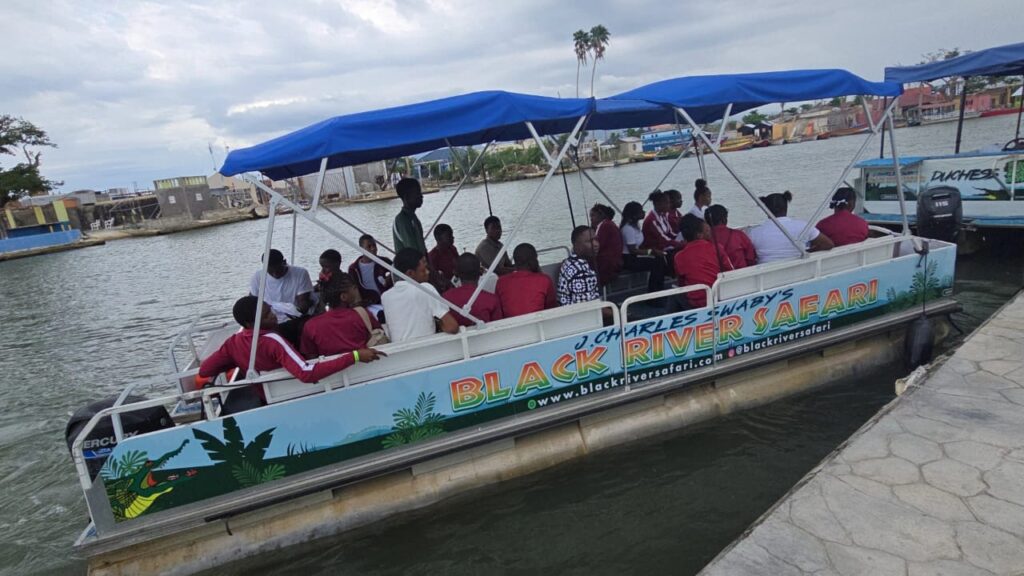
On a Wednesday school group excursion along Jamaica’s scenic Black River, a sudden mechanical malfunction left a tourist vessel adrift – triggering a rapid, well-coordinated rescue operation that ended with zero injuries to all 45 children and educators on board. The incident, which has drawn widespread public attention after a clip of the retrieval went viral on the popular social platform TikTok, unfolded during a busy day of school tours hosted by Black River Safari Tours, a leading local operator.
According to Joseph Ryan Swaby, managing director of the tour company, the disabled vessel was carrying close to 45 passengers as part of a larger group of nearly 100 students and teachers visiting the safari that day. Moments after leaving the dock, when the captain attempted to shift the boat into forward gear, a mechanical fault shut off the engine entirely, leaving the vessel to drift uncontrolled along the river.
The captain acted immediately, deploying the anchor multiple times in an attempt to stop the drift. However, thick silt covering the river’s riverbed prevented the anchor from gaining a secure hold, turning a minor fault into a potential safety hazard. Recognizing the risk, the operations team on shore dispatched a second tour boat within seconds to reach the drifting vessel. The response team secured the disabled craft and pulled it to a stable position alongside the Black River Bridge, halting any further movement downstream.
With the two boats secured in place, a third vessel was called in to assist with the evacuation. Crew members rigged a stable walkway between the boats to let all passengers cross over from the disabled craft one by one. Swaby emphasized that the operation went off without a single hitch: all 45 passengers made it off the boat completely safely, and not one person even got wet during the transfer. In Swaby’s assessment, the evacuation stands as one of the most smooth and effective emergency responses the company has ever carried out.
Swaby credited the successful outcome to three key factors: the rapid training response from his staff, support from local community members who stepped in to help, and the discipline of the school group, who followed all crew instructions without panic. When questioned about the company’s adherence to required safety protocols, Swaby confirmed all industry standards were being met on the day of the incident. All vessels, he noted, carry more life jackets than the maximum number of passengers allowed, meeting and exceeding regulatory requirements. Crucially, the situation never escalated to a dangerous tipping point: the disabled boat never sank or capsized, and all passengers left the operation in the same good condition they arrived in.