A controversial decision by the Davis administration in the Bahamas to clear all outstanding electricity debts for residents of two remote islands has sparked fierce pushback from the country’s former top power utility executive, who is calling the policy inconsistent, unexplained, and potentially a violation of electoral rules.
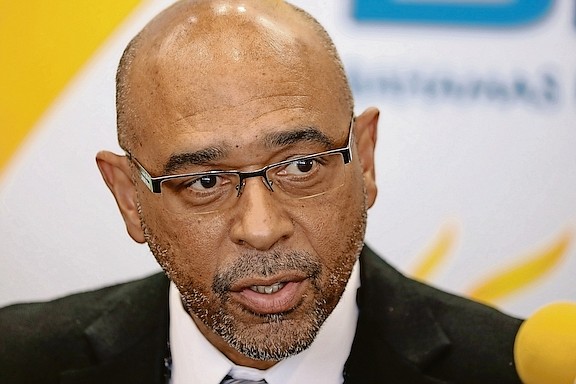
Whitney Heastie, who served as Chief Executive Officer of Bahamas Power and Light (BPL) until his 2022 resignation, has publicly rejected the government’s official justification for wiping the slate clean for Grand Cay and Moore’s Island residents. The move came shortly after Prime Minister Philip Davis toured the two islands and made a public promise of targeted relief to local households, with some residents confirming their accumulated debts – which reached as high as $13,500 for individual properties – were suddenly reduced to zero on their billing statements.
Officials with the Davis administration have defended the debt cancellation by pointing to widespread financial and operational disruptions sparked by two major crises: 2019’s Hurricane Dorian, which devastated large swathes of the Bahamas, and the subsequent COVID-19 pandemic. The government claims that normal billing and debt collection processes were completely suspended throughout this period, as residents struggled with limited access to banking services, widespread travel restrictions, and crippled local business activity. The administration also has asserted that the preceding government had informally promised residents they would not be required to pay off accrued balances during the crisis, even as those debts continued to accumulate in BPL’s billing system.
Heastie, who led BPL through the post-Dorian and early pandemic recovery, flatly denies this narrative. He insists that BPL’s board of directors never issued any directive to permanently forgive the outstanding debts of residents on either island. Instead, he says, the established policy at the time was a structured relief program that allowed for the postponement of arrears, while requiring households to stay current on all new monthly electricity charges.
“The framework we put in place was straightforward: residents kept up with their current bills, and worked out a staggered payment plan to pay down back balances over time,” Heastie explained. “I don’t recall the exact timeline for deferral – whether it was 90 days, 120 days, or custom arrangements for individual households – but the core rule was always current bills had to be paid to keep service active while arrears were paid down gradually.”
Beyond disputing the government’s background narrative, Heastie has raised two major unresolved questions about the timing and scope of the relief. First, he questions why the Davis administration chose to act on the debt issue now, years after taking office, rather than addressing it earlier in its term. Second, he argues that the selective relief for Grand Cay and Moore’s Island makes no sense when far larger communities on the Abaco mainland and East Grand Bahama suffered far more devastating damage during Hurricane Dorian, requiring a complete rebuild of BPL’s entire transmission and distribution network in northern Abaco.
“If the government’s goal is to forgive all post-Dorian debt, why single out these two small island communities?” Heastie asked. “Why not extend the same relief to the thousands of households on the Abaco mainland that lost everything when the hurricane hit? I would have expected the government to step in for East Grand Bahama residents the same way they did for these cays.”
Former Bahamian Works Minister Desmond Bannister has backed Heastie’s account of the previous administration’s policy, confirming that no formal or informal directive to forgive resident debts was ever issued. Bannister added that only the sitting prime minister or works minister could have authorized such a sweeping policy, and no such authorization was ever made.
The Bahamian government has only offered vague details of how the debt forgiveness will be funded, saying only that eligible outstanding balances will be absorbed through an offsetting financial arrangement with BPL. Heastie has cast doubt on the sustainability of this plan, noting that BPL was already barely breaking even when he left the CEO post in 2022.
“Nothing in public finance is free,” Heastie said. “If BPL is on the hook for these tens of thousands of dollars in forgiven debt, how can a company already operating on thin margins absorb that cost?”
The sudden, targeted relief has also fueled widespread allegations of vote buying ahead of upcoming parliamentary elections. Critics point to clear provisions in the Bahamas’ Parliamentary Elections Act that prohibit any form of financial inducement intended to sway voter behavior. Bannister, a longtime political figure, called this election the worst he has ever witnessed for improper political handouts, saying social media platforms have been flooded with competing politicians one-upping each other with promises of financial gifts to voters.
“What many politicians and even voters don’t seem to recognize is that these handouts cheapen the value of every vote, and create long-term, serious damage to the integrity of public policy in this country,” Bannister added.