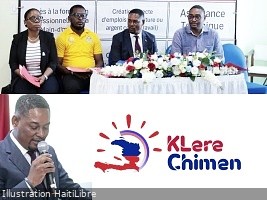
In a major step forward for social welfare investment in Haiti, government officials formally launched the Adaptive Social Protection for Increased Resilience (PSARA Klere Chimen) initiative on April 29, 2026, in Port-Salut, located in the country’s Southern Department. The launch ceremony was led by Marc-Elie Nelson, Haiti’s Minister of Social Affairs and Labor (MAST), through the ministry’s specialized Project Management Unit (PMU), marking the start of a two-year support program for thousands of at-risk families across the region.
Minister Nelson outlined the core scope of the new project, explaining that coverage will extend across six communes in the Southern Department, reaching a total of 6,485 vulnerable households that will qualify for direct state support. The program’s primary goal is to help eligible families cover a portion of their ongoing food and nutritional needs, a critical intervention in a region that has long faced economic instability and food insecurity challenges.
Unlike conditional aid programs that require recipients to meet specific requirements to receive support, PSARA Klere Chimen delivers assistance through monthly unconditional cash transfers disbursed in local Haitian Gourdes. Payment amounts are structured based on household vulnerability levels to meet varying needs: eligible households with a single vulnerability factor receive the equivalent of $40 USD per month, while households that meet two or more vulnerability criteria qualify for up to $80 USD per month. Common high-priority vulnerability factors include having a household member with a disability, a pregnant or breastfeeding woman, or a child under the age of five. All transfers will be distributed over a 24-month period, providing long-term, consistent support for participating families.
The entire $1,862,400 USD initiative is made possible through financial backing from two global development partners: the World Bank and Swiss Cooperation. The partnership between Haitian government institutions and international funders aligns with the country’s long-term social protection strategy to expand support for its most vulnerable populations.
During his remarks at the launch, Minister Nelson emphasized that the program is far more than a short-term assistance measure. He argued that strategic social protection acts not only as a lifeline for families in need but also as a transformative driver for broader community stability and public confidence. By addressing immediate economic hardships, the initiative lays the groundwork for more sustainable long-term development across the Southern Department.
Lucny Cadet, coordinator of MAST’s Studies and Programming Unit (SPU), expanded on the program’s dual design, noting that it is structured to meet both urgent needs and long-term household stability goals. Cadet highlighted the critical role of the ministry’s newly updated digital Social Protection Information System (SIMAST), which improves the accuracy of beneficiary targeting, ensures full traceability of all program interventions, and strengthens coordination between the multiple government and non-government stakeholders involved in the project.
From an administrative perspective, the SPU will oversee strategic coordination and overall program management, ensuring that all interventions remain consistent with Haiti’s national social protection framework, particularly the National Policy for Social Protection and Promotion. The unit will also lead efforts to strengthen the project’s monitoring and evaluation mechanisms, enabling ongoing adjustments to improve outcomes and ensure full accountability for program funds and impact.