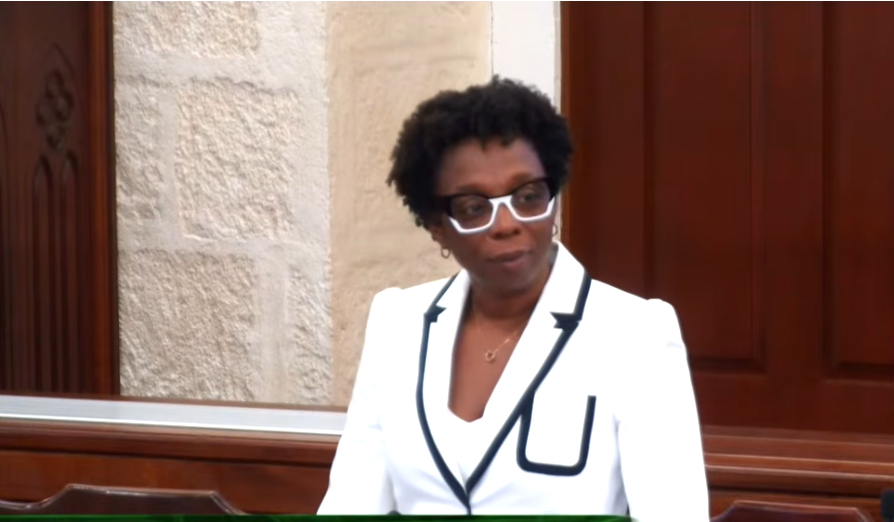
As Barbados prepares to mark May Day, also known as International Workers’ Day, a governing backbench lawmaker and prominent trade union leader is pushing for urgent, transformative change to the country’s social safety net, warning that a growing share of the modern workforce is being locked out of critical coverage amid the global shift away from traditional full-time employment.
Toni Moore, who represents the St George North constituency, has tabled a parliamentary resolution calling for the creation of a National Portable Benefits Framework — a policy she frames as a long-overdue update to the island nation’s 56-year-old National Insurance Scheme (NIS), which she argues was built for a labor market that no longer exists for nearly a third of working Barbadians.
Moore told fellow legislators that the current social security system, launched in 1967, was designed exclusively for an economy defined by stable, long-term roles with a single employer. That model, she emphasized, has become increasingly disconnected from how thousands of Barbadians actually earn a living today, where gig work, freelance contracts, informal roles, and multiple concurrent jobs have become the norm for many.
At its core, the proposed framework would upend how social security contributions and benefits are structured: instead of tying coverage to a specific job, coverage would move with the worker across every role they take. Moore explained that this shift is critical to closing growing gaps in protection for workers holding multiple roles across a single workday. “A Barbadian worker might find himself or herself working in a rideshare in the morning, going up to the airport and hustling as a red cap in the afternoon, and in the evening time, working security,” Moore said, pointing out that domestic workers who split their time across multiple households also face identical gaps in coverage.
These non-standard workers, from ride-share drivers and musicians to artists, journalists and other media professionals, are often misclassified as independent contractors by employers seeking to avoid contributing to social protection, leaving them without basic access to sickness benefits, unemployment support, or retirement pensions. Contrary to the misconception that these workers are a small marginal group, Moore argued they are the actual backbone of Barbados’ modern economy. The gap between current labor patterns and outdated protection rules is widening every year, she added, creating an immediate crisis for workers locked out of the system.
Citing data from the 2022 17th Actuarial Review of the NIS, Moore confirmed that roughly 30 percent of Barbados’ employed population works in the informal sector, and fewer than 20 percent of self-employed workers were actively enrolled in the national insurance scheme at the time of the review. Beyond leaving workers vulnerable, she warned, this low enrollment puts unsustainable strain on the NIS fund, and inaction could eventually lead to the fund’s collapse.
By bringing non-standard workers into mandatory coverage, Moore explained, the scheme would expand its contribution base, strengthening long-term fund sustainability and securing more stable pensions for all enrollees. “Widening the contribution base must be seen as the most sustainable path to NIS solvency,” she said.
Addressing anticipated pushback that the new framework would place an unfair financial burden on small businesses and low-income workers, Moore pushed back, arguing that the real burden is the status quo. Under the current system, she explained, compliant employers and workers already carry the cost of entities that evade their contribution obligations. For workers themselves, she added, the cost of being unprotected far outweighs any perceived cost of participation: “They pay it when they get sick and have to be at home with no income… they pay it when they reach old age and realise they have nothing to fall back on except the discretion of the system. Portable benefits do not add a burden; they end the burden of workers carrying every crisis on their own.”
To support the new framework, Moore called for investment in a modern digital infrastructure capable of tracking small, frequent contribution transactions in real time, moving away from the current system that relies on monthly reporting tied to traditional employer payrolls. She also proposed the creation of a tripartite technical implementation committee chaired by an independent senior actuary to oversee the design and rollout of the new framework, with an ambitious target to launch the system by November 30, 2026 — timed as an anniversary gift to the nation marking five years of Barbados as a republic.
Moore framed the proposal as the next chapter in Barbados’ national development, drawing parallels to the original launch of the NIS as a foundational nation-building project in 1967, and the 2021 transition to a republic as a declaration that sovereignty rests with the people. “Now in 2026, this resolution is asking this Parliament of Barbados to make a third declaration: that every worker belongs to the social contract,” she said. “If fairness is radical, then let us get radical.”
Ultimately, the resolution aims to guarantee that no Barbadian worker will reach retirement after decades of work to find they have no accumulated benefits to rely on, sending a clear message that every worker in the country is seen, valued, and entitled to the protection of the social contract.