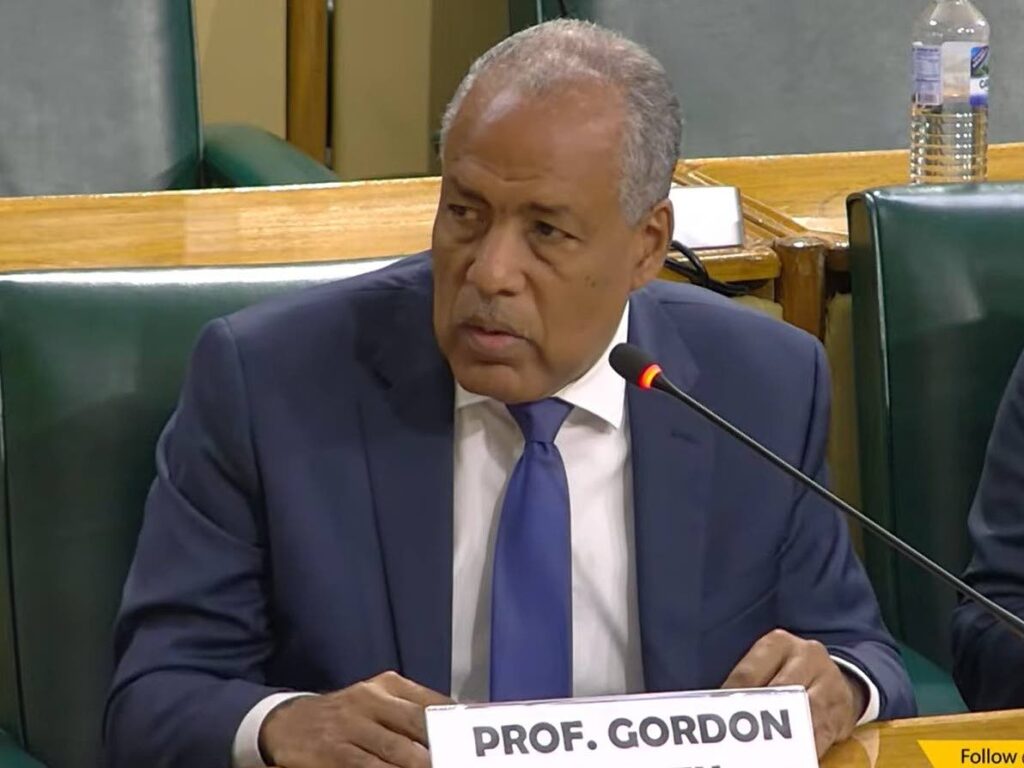
Half a year after Hurricane Melissa made landfall in Jamaica, a persistent buildup of cargo continues to clog port operations and warehouse spaces in Montego Bay, St. James, with consolidated containers that arrived on the island as early as February still waiting to be unpacked. This backlog was revealed this Wednesday by Port Authority of Jamaica (PAJ) President Professor Gordon Shirley during his appearance before the national Public Administration and Appropriations Committee (PAAC), where he was scheduled to deliver a progress update on post-hurricane recovery for island port and storage infrastructure.
Shirley made the disclosure while responding to questioning from PAAC Chair Peter Bunting, confirming that many consolidated shipments that would have been cleared under standard operational procedures are still being held at the Montego Bay facilities. “We are acutely aware that customers have personal and commercial goods waiting in these containers, and our top priority is working through the backlog as quickly as possible to allow cargo owners to retrieve their items,” Shirley told the committee.
When asked whether cargo owners were facing unexpected extra costs from demurrage fees, Shirley clarified that the Jamaican government has waived all statutory fees related to the backlogged cargo, and terminal operators have also waived their storage charges. PAJ has additionally held ongoing discussions with major shipping lines to negotiate similar concessions for ocean freight charges.
Shirley emphasized that the congestion is not linked to full container load import or export operations, which have continued to run smoothly throughout the post-hurricane period. The backlog is concentrated exclusively in less-than-container load consolidated cargo, which typically consists of mixed pallets, household goods, and personal barrels that are deconsolidated at on- and off-terminal warehouses before being released to importers after customs clearance.
The PAJ president outlined a confluence of overlapping factors that created the current backlog, starting with the direct physical damage Hurricane Melissa inflicted when it hit Jamaica on October 28. During his presentation, Shirley shared photographic evidence showing extensive damage to terminal and warehouse structures in Montego Bay: one major warehouse building was so severely damaged that it requires full reconstruction, while the off-terminal Seaboard Warehouse — a critical facility for cargo deconsolidation and clearance — also suffered major structural harm that limited its operational capacity.
A sudden surge in relief shipments compounded the capacity shortage, and this influx coincided with Jamaica’s annual pre-Christmas peak cargo season. Shirley explained that Jamaican communities traditionally see a sharp rise in personal barrel shipments from overseas relatives between October and January, as families prepare for holiday gatherings. On top of this normal seasonal peak, relief organizations and private individuals rushed additional hurricane relief supplies into the country immediately after the storm, stacking an unexpected volume of cargo on top of already elevated seasonal shipments.
Misunderstanding around government relief cargo waivers created further delays. Shirley explained that after the government announced duty waivers for approved hurricane relief supplies, many cargo owners assumed any barrel containing even a small amount of relief goods would qualify for full exemption. When Customs clarified that only dedicated relief shipments qualified for the waiver, many cargo owners opted not to pay the required duties to clear their barrels, creating a processing logjam.
Compounding this issue, Shirley noted that the rate at which cargo owners have come forward to clear barrels since the start of 2024 has been far slower than historical averages, in both Montego Bay and the capital Kingston. Bunting echoed this observation, suggesting that many of the unclaimed barrels were abandoned by owners who expected full duty exemption and chose not to retrieve their cargo once they learned they would still be required to pay fees. Bunting warned that these abandoned barrels will continue to block critical storage space unless authorities implement a formal process to identify and dispose of unclaimed cargo after a set waiting period.
In response, Shirley outlined the multiple intervention measures PAJ and national authorities have rolled out to cut into the backlog. Extending terminal operating hours and securing additional temporary storage space have been core early steps, as authorities cannot yet distinguish between intentionally abandoned cargo and shipments that owners still plan to retrieve. In addition to the fee waivers and ongoing negotiations for discounted demurrage, these measures have already succeeded in significantly reducing backlogs in Kingston, Shirley reported.
Moving forward, authorities are planning to transfer a portion of the Montego Bay backlogged cargo to King’s Warehouse (previously named Queen’s Warehouse) in Kingston to free up limited local storage space. Officials are also preparing to follow statutory procedures to auction off any cargo that has remained unclaimed beyond the maximum waiting period permitted under Jamaican law, as a long-term solution to clear excess storage capacity.