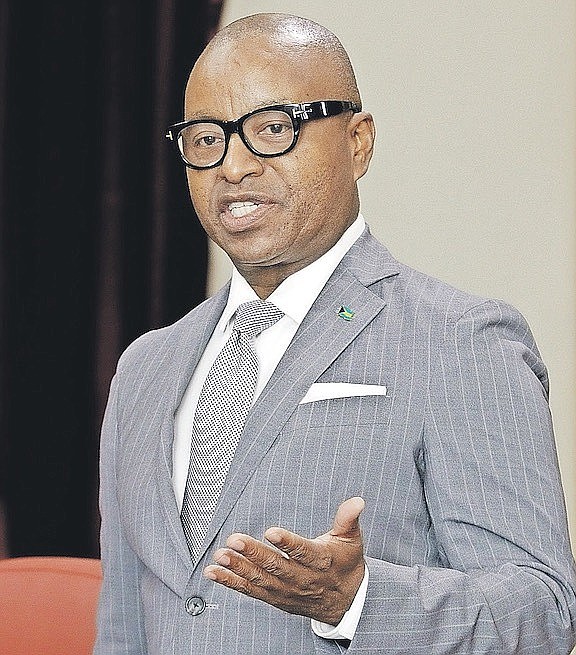
A sharp political dispute has erupted in the Bahamas over proposed foreign service reforms, with former Foreign Affairs Minister Darron Henfield publicly questioning the fiscal responsibility and policy logic of the Davis administration’s provisions, centered on a controversial high-cost junior posting in London.
At the core of Henfield’s critique is a young male government employee assigned to the Bahamian mission in London, who he says drains more than $200,000 annually from public taxpayer funds. The former minister’s attack comes in direct response to current Foreign Affairs Minister Fred Mitchell’s push for the 2025 Foreign Service Act, legislation that would convert most contract-based diplomatic positions into permanent, pension-eligible roles and implement new protections to bar political dismissals of non-partisan staff.
Mitchell has positioned the reforms as a critical modernization step for the Bahamas’ diplomatic corps, designed to end the decades-long pattern of mass job cuts for junior contract officers that followed the 2017 transition of government. But Henfield argues Mitchell’s framing is deliberately misleading, dismissing the narrative that incoming administrations recklessly purge foreign service staff as disingenuous. He insists that reviewing existing overseas staffing contracts and recalling unnecessary personnel is a standard, routine governance function, and that the current government’s rhetoric is stoking unneeded anxiety among both permanent public servants and contract workers across the foreign ministry.
While Henfield says he supports job security for public employees in principle and rejects the “cannibalization” of staff rolls purely for political gain when new administrations take power, he accuses the current Progressive Liberal Party government of blatant hypocrisy. He points out that when the PLP returned to office, the administration itself dismissed dozens of workers—including young women and single mothers who were the primary earners for their households—despite now campaigning for sweeping job protection laws for diplomatic staff.
Defending the staffing cuts his own administration implemented, Henfield explained that a comprehensive review of Bahamian overseas missions when he took office revealed severe budget pressures caused by bloated staffing levels left by the previous government. He said his team immediately found that most overseas posts were facing major budget shortfalls directly tied to unnecessary over-hiring, which was costing Bahamian taxpayers more than $1 million annually in wasteful spending.
Among the most egregious examples, Henfield cited so-called liaison officer positions that paid over $150,000 per person annually for little more than greeting visiting Bahamian officials at airports and arranging basic travel logistics. He also raised longstanding concerns about the qualifications of many contracted overseas staff, noting multiple cases where diplomatic officers lacked even basic academic credentials required for their roles. In response, his administration recalled roughly seven employees that were deemed either unqualified or unnecessary, and redirected resources toward recruiting and training a new cohort of professional, qualified foreign service officers.
Notably, despite his pointed criticism of the current government’s approach, Henfield stopped short of rejecting foreign service reform entirely. He acknowledged that his own administration had worked to advance similar structural updates to the diplomatic corps, and agreed that formalized foreign service regulations bring valuable benefits—including creating clear frameworks for disciplinary action and establishing formal systems to recognize outstanding service with awards and honors. His core objection remains to the permanent entrenchment of costly, unneeded postings that he says represent an unfair burden on Bahamian taxpayers, leaving open the question of whether future administrations will be forced to carry the financial weight of such politically connected contracts if the reforms pass.