As the Bahamas prepares for its upcoming general election, a growing controversy over political voucher distribution has put both of the country’s major political parties under scrutiny, with questions mounting over whether the practice crosses into illegal vote-buying territory.
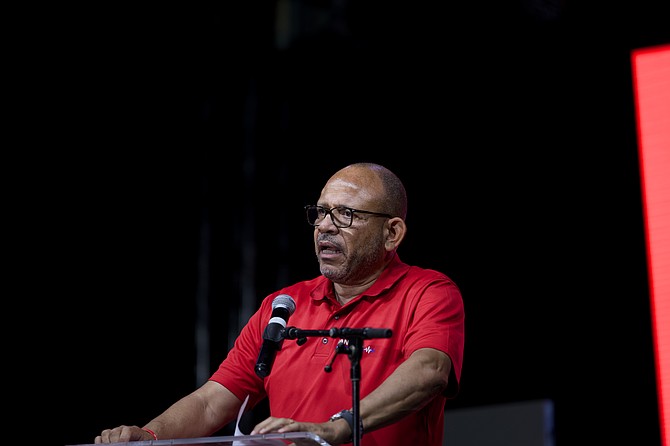
Duane Sands, chairman of the Free National Movement (FNM), and Denalee Penn-Mackey, the party’s parliamentary candidate for the Southern Shores constituency, have publicly confirmed that their party has distributed grocery vouchers to constituents, a move that comes after prior allegations against the incumbent Progressive Liberal Party (PLP) over misuse of public funds for similar voter outreach.
In an interview with reporters, Sands acknowledged that voucher purchases from local retail chain Super Value have risen across the political spectrum, with both the FNM and PLP accounting for the increased sales. “There’s nothing unique to any particular political organisation here,” he stated, drawing a nuanced but contested line between legal assistance and illegal electoral inducement. Under the country’s Parliamentary Elections Act, any gift or benefit offered to influence a voter’s choice is a criminal offense. Sands argued that the legality of the practice hinges entirely on intent: while providing food support to households facing food insecurity does not violate the law on its face, he admitted the practice is a “slippery slope” that carries significant potential for abuse.
Sands stressed that even amid the controversy, he would continue assisting constituents facing crisis. “If you come to me today and say that you have no food in your house, I would do the best that I can in order to assist,” he said, noting that he does not have details on the total value or number of vouchers the FNM has acquired overall. He further drew a clear distinction between assistance funded by personal or private political donations and programs backed by public money, arguing that the latter case amounts to a clear violation of electoral law.
The incumbent Davis administration, led by the PLP, has still not responded to explosive allegations made by Chris Lleida, chief executive officer of Premier Importers. Lleida claims that the Bahamian government, not the PLP as a party, covered the cost of more than $200,000 in gift vouchers distributed and signed by PLP election candidates and party officials. Sands called this a “clear-cut violation of the law” and argued that the entire controversy underscores the urgent need for sweeping national campaign finance reform.
Penn-Mackey, for her part, confirmed that she began distributing vouchers in her constituency within the past week, but insisted that all costs are covered by her own personal funds, eliminating any comparison to the PLP’s public funds allegations. “That, along with my whole campaign, is run by my own personal money, so I don’t see how what the PLP has done as it relates to the money you’re spending from the public treasury ties into what I’m doing personally,” she said. The vouchers she distributes are valued at approximately $100 each.
A long-time community philanthropist, Penn-Mackey pushed back against questions about her activities, noting she has provided community support and aid for years independent of her candidacy. “We give out food and vouchers every day. Is that vote buying? The people have a food problem where people come and they said, listen, we need some vouchers. I have no grocery in my house, so when we give them a voucher, is that vote buying?” she asked. Rejecting claims of a double standard between her actions and the allegations against the PLP, she added: “It’s not a double standard because if it’s coming from the public treasury and my vouchers are coming from my personal account, that’s not a double standard at all.”
FNM leader Michael Pintard echoed the argument that assisting vulnerable constituents is a moral obligation regardless of election season, but warned that using public funds for aid that only intensifies or launches right before an election erodes public trust in the democratic process. “If somebody is in need, I don’t think you take an issue with the government, at least certainly me personally, if somebody is hungry they need food assistance, the government is not providing it, you ordinarily provide it, and this is what you’ve been doing, I think you have an obligation to help people who need help,” Pintard said. “That’s a general rule that certainly I’ve lived by all along in and out of political season. If somebody needs help, you help them.”
Even so, Pintard acknowledged that introducing new or expanded assistance programs in the middle of an election cycle reasonably invites public suspicion. “It allows others, others who look on, to presume that it’s politically motivated,” he said. “There are a number of constituencies where persons know, beyond the shadow of doubt their people weren’t about doing, running any social assistance programme, have not provided a social safety net, and all of a sudden, they are offering them around election time. That’s what they’re saying about the government right now. All of a sudden, you just realise that my house was leaking, and you have not been involved in the last four and a half years. You came and did an assessment. Nothing happened until just now.”
To date, the core rules governing electoral conduct in the Bahamas remain clear: offering, giving, or providing any money, gift, or material benefit to a voter with the goal of influencing their ballot selection is classified as a criminal offense under the Parliamentary Elections Act.