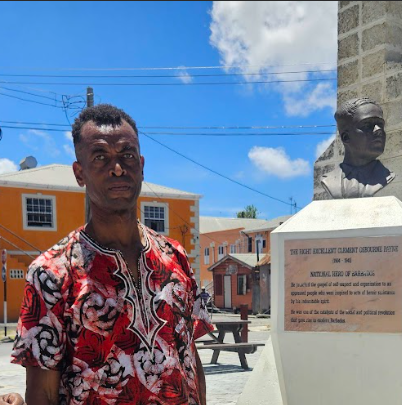
A prominent Caribbean peace advocacy organization is sounding the alarm over Barbados’ escalating gun violence crisis, warning that without immediate, coordinated cross-sector action to address the underlying drivers of bloodshed, the island nation could face irreversible social breakdown.
During a press briefing held in downtown Bridgetown’s Golden Square, Ian Marshall, a long-time educator and active member of the Caribbean Movement for Peace and Integration (CMPI), emphasized that the worsening violence—disproportionately impacting young men—requires a unified, collaborative response from all of the country’s core public institutions.
Marshall argued that piecemeal blame-shifting between different groups will not deliver meaningful progress. “Too often, we point fingers: society blames parents, parents blame community leaders, everyone points to politicians and police. But solving this crisis demands every stakeholder step up to the table. Only a holistic, collective approach can turn the tide,” he explained.
So far this year, Barbados has recorded more than 20 homicides, with a sharp spike in fatal shootings linked to illegal firearms. Recent weeks have seen multiple public shootings, including brazen, daylight attacks in populated community spaces, confirming both the growing accessibility of illegal guns and the rapid spread of violence across neighborhoods once considered safe.
Marshall called the steady loss of young lives a devastating national tragedy, noting that ongoing violence poses a direct threat to Barbados’ long-term social cohesion and economic stability. “It is an incalculable loss when young Black men are lost to this violence, especially at a moment when we need the energy and contribution of all young people to build a stronger, more equitable nation. Without young men and women playing their part in national development, Barbados has no viable future,” he said.
A key point of Marshall’s call to action is the urgent need for early intervention within the national education system, where he said problematic behavioral patterns first emerge, often as early as primary school. “We have been flagging emerging issues in primary schools for years. When we fail to address these problems at their root, they do not go away—they grow into far more serious, violent challenges as young people age,” he noted.
While Marshall acknowledged that law enforcement has a critical role to play in curbing immediate violence, he stressed that policing alone cannot resolve the deeper crisis. He explained that most offenders who end up in the criminal justice system first exhibited unaddressed behavioral challenges during their early school years. “Police are only called in at the end of the process. Law enforcement leaders themselves will tell you that the patterns of violence we see today trace back to primary and secondary schools, where these issues first took root,” Marshall said.
Beyond early intervention, he called for a fundamental shift in educational priorities, arguing that schools need to expand their focus beyond core academic subjects to embed life skills, critical thinking, and strong cultural identity into student learning. “We cannot fixate solely on test scores in English and mathematics. We need to teach young people how to navigate life, how to reason through conflict, and how to think critically about the world around them,” he said. Marshall added that reconnecting youth to Barbados’ full historical context is essential to helping them understand and address the modern social challenges they face.
He traced the current cycle of violence to deep historical roots, noting: “Barbadian society was built on a foundation of colonial violence, and that pattern of harm has persisted through generations. Today’s youth are just adopting new, more deadly methods to act on that legacy.”
The veteran educator also highlighted systemic gaps in student support, pointing to chronic resource shortages that leave schools ill-equipped to address the social and emotional needs of at-risk youth. “We need more trained staff, more targeted programming, and the necessary resources to meet young people where they are. We can’t expect under-resourced schools to solve a national crisis on their own,” he said.
Marshall also voiced concern over the steady erosion of the shared social values that once bound Barbadian communities together. “We’ve moved sharply away from the core values we once held dear, the values we taught and passed down to each new generation. Those values are eroding day by day, and it’s past time we ask as a nation: where did we go wrong?”