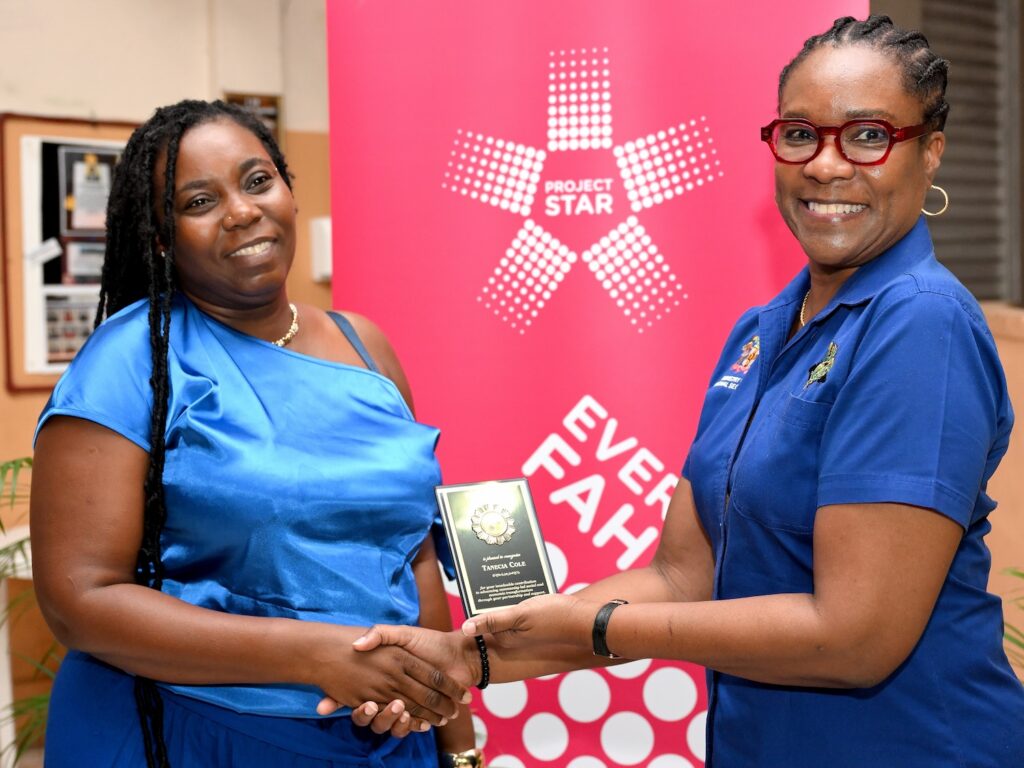
KINGSTON, Jamaica — In a remarkable shift for a region long marred by persistent gang violence and public safety crises, the Jamaica Constabulary Force (JCF) has announced dramatic declines in criminal activity across the Kingston Central Division, including a historic milestone: zero violent incidents have been recorded in neighborhoods like Rose Gardens since the start of 2025. The groundbreaking progress was unveiled during a recent Project STAR community town hall held at Pentab High School, where senior law enforcement outlined how cross-sector collaboration has turned once-troubled communities into models of public safety innovation.
Divisional Commander Superintendent Mishka Forbes framed the achievement as nothing short of a transformative turnaround for the area, which has struggled with chronic violent crime for decades. “This is no small feat; it represents years of intentional work from every stakeholder invested in this community,” Forbes stated during the meeting. “These results do not happen by accident. They are the product of consistent partnership between frontline police, local residents, and dedicated social intervention organizations.”
Law enforcement attributes the steep crime drop to three core pillars of the community safety strategy: sustained, trust-centered engagement between officers and residents, monthly coordinated meetings of the specialized Community Intervention Team, and aligned action across a network of partners that includes Project STAR, the national restorative justice program, Crime Stop, and the Domestic Violence Intervention Unit. Most notably, the strategy has shifted from a purely enforcement-focused model to one that centers community voice: Forbes emphasized that local residents have increasingly stepped forward to co-create solutions to longstanding systemic challenges that fuel crime, moving from passive observers to active leaders in public safety.
Official JCF data underscores the steady, consistent progress that has led to this year’s historic zero-violence milestone. Major crimes — a classification that includes murder, shootings, robbery, breaking and entering, and rape — fell from 25 total incidents in Rose Gardens in 2023 to 14 in 2024, and dropped again to just 9 incidents across all of 2025. That trajectory has now extended into the new year with no violent crimes recorded to date.
Ambassador Alison Stone Roofe, Permanent Secretary for Jamaica’s Ministry of National Security and Peace, praised the community’s progress during the town hall, noting that the Kingston Central results validate the government’s approach to public safety: pairing robust law enforcement with intentional social and economic transformation. “Our ministry’s core mission is to support communities to reintegrate and collaborate from within, to build safety that comes from the ground up,” Stone Roofe explained. “Partnering with Project STAR, our goal is to build stronger, safer communities where people are proud to live, build careers, and raise their children.” She urged residents to maintain their active participation, stressing that long-term, sustainable public safety can only exist when communities take ownership of their own progress.
Keith Duncan, sponsor of Project STAR, highlighted that the outcome would not have been possible without long-term commitment and intentional trust-building between all partners. “What we have achieved alongside the community and the JCF is truly extraordinary,” Duncan said. “You cannot walk into a vulnerable community, implement a quick fix for a year, and leave. Sustained change requires showing up, staying rooted, and working shoulder-to-shoulder with the people who call this place home.”
Duncan added that the Rose Gardens model is already being studied as a replicable framework for other high-need communities across Jamaica. With continued investment from both the government and the private sector, this collaborative approach could be scaled nationwide to address chronic crime in other vulnerable regions. JCF officials echoed that assessment, noting that the results in Kingston Central prove that combining targeted policing with social intervention, economic support, and community leadership creates lasting change — an approach that can reshape public safety in high-risk communities across the island.