Over the last 12 months, families of autistic children in Barbados have reported a sharp uptick in frustrating encounters in public spaces, especially grocery stores, reigniting demands for local businesses to adopt more flexible, compassionate policies and deepen public understanding of autism spectrum needs.
Chantal Fields, Events and Coordination Chairman of the Autism Association of Barbados, shared these insights with local outlet Barbados TODAY on the sidelines of the organization’s annual Autism Awareness Walk, held Tuesday. While she acknowledged that general public awareness of autism has advanced in recent years, Fields emphasized that countless caregivers still face unnecessary barriers during routine outings.
“I’ve had so many parents reach out to me with these complaints,” Fields said. “A little grace goes such a long way; people need to understand that not everyone can navigate a supermarket trip the same way.”
She explained that one of the most common points of friction stems from widespread supermarket rules banning children from riding inside shopping baskets or trolleys — a safety measure many parents rely on to prevent elopement, a common behavior among autistic children that can put kids at severe risk in crowded, busy public spaces.
“For example, some autistic individuals are prone to wandering off unexpectedly,” Fields explained. “That turns a simple trip to pick up groceries into a constant exercise in keeping your child contained. But when parents try to keep their child safe by placing them in a shopping trolley, many supermarkets now have signs prohibiting the practice, and staff will step in to stop them. For our families, this isn’t a convenience — it’s a safety issue.”
Fields called on local businesses to adopt a more accommodating approach, noting that small adjustments could drastically reduce the daily burden carried by autism families. She even proposed a simple compromise: allowing children to ride in trolleys if parents can provide formal confirmation of their child’s autism diagnosis, to balance store policies with safety needs.
“Every person on the autism spectrum functions differently, and some need that extra layer of support, whether that means containing a child who elopes or other small accommodations,” she said. “Just a little flexibility can make a world of difference.”
Fields did highlight bright spots amid ongoing challenges, pointing to gradual improvements in workplace support for autism parents. A growing number of Barbadian employers have introduced more lenient scheduling policies, allowing caregivers to adjust shift times or step out for therapy appointments without fear of penalty. “A lot of parents have told me their workplaces have been really supportive,” she said.
When it comes to inclusive education, however, progress remains in early stages. Fields noted that the Barbadian Ministry of Education is currently piloting new inclusive schooling frameworks, but the reforms are not yet fully rolled out. “It hasn’t been launched system-wide yet, it’s still in its pilot phase,” she explained. “It might not benefit families currently navigating the system, but it should create better outcomes for the next generation of autistic people coming through in the next five years.”
Looking ahead, the Autism Association of Barbados is partnering with the Samuel Jackman Prescod Institute of Technology (SJPIT) to launch new skills-based training programs for autistic adults, covering in-demand vocational areas such as cooking and carpentry. The initiative is designed to help participants build employable skills and access sustainable work opportunities. “Opportunities are starting to open up, and people are becoming more receptive to including autistic individuals in the workforce,” Fields said.
Overall, Fields assessed that while ongoing autism awareness campaigns have moved the needle on public knowledge, significant gaps in understanding remain. “It’s a mixed picture,” she said. “We’ve been doing consistent outreach and awareness work, and people are learning more, but there are still a lot of areas where understanding just hasn’t caught up.”
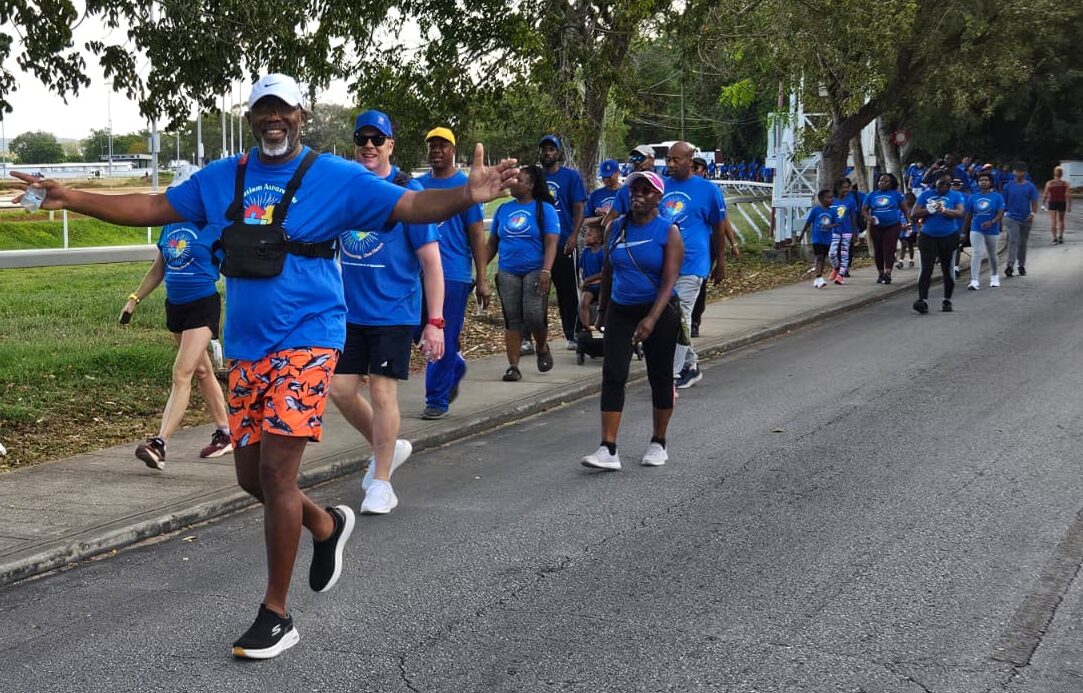
Fields’ comments came during the association’s annual Autism Awareness Walk, which drew more than 300 supporters who gathered as early as 6:30 a.m. to participate. Participants began their route at the Social Empowerment Agency, winding through Lower Collymore Rock, Culloden Road, Beckles Road and Dalkeith Road, circling the Garrison, traveling along Highway 7, and returning to the starting point. The event concluded with a group cool-down session led by Spinny, serving as a visible public push for wider acceptance, awareness and practical support for autistic people and their families across Barbados.