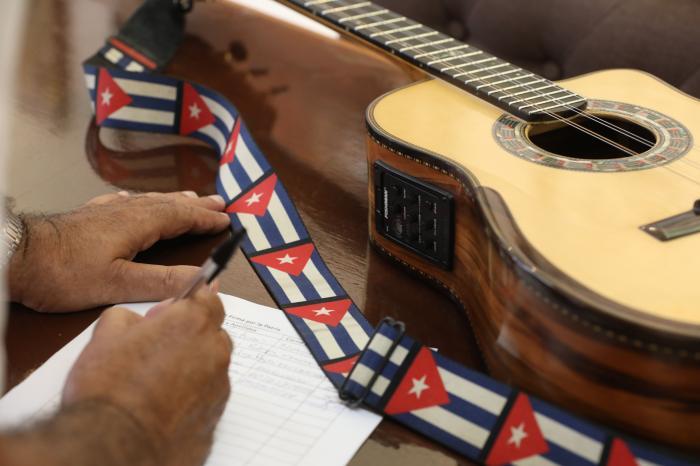
Across Cuba right now, a quiet but powerful wave of civic action is sweeping the island nation. The growing “My Signature for the Homeland” movement is far more than a symbolic gesture or empty political slogan — it is a deliberate, conscious act of collective resistance against the long-standing international blockade that has shaped daily life for generations of Cubans.
History has a way of elevating small, intentional acts into defining markers of national identity. A single stroke of ink on a petition sheet carries more moral weight than any weapon of aggression. Today, Cuba is uniting around this movement: millions of hands reach for paper, and every name added becomes a line of defense, a moral bulwark against the collective punishment that has sought to break the Cuban people’s resolve.
As the movement’s organizers emphasize, this initiative is first and foremost a profound act of civic duty. The siege Cuba endures is not merely a physical barrier that blocks oil tankers from reaching its ports, cutting off critical supply chains. It is a deliberate attempt to erode the nation’s collective soul, to wear down public commitment to Cuban sovereignty through systemic economic and social hardship.
The U.S.-led blockade operates as a cruel, indiscriminate machinery of punishment that spares no segment of the Cuban population. It does not differentiate between children, elderly people, rural farmers, or urban workers. Its impact is felt in every shortage of staple bread, every gap in access to life-saving medicine, every scarcity of fuel that grinds daily activity to a halt, and every separated family kept from the embrace they have waited years to share. There are few more fundamentally inhumane acts than coercing an entire population to surrender its inherent dignity by inflicting widespread suffering on ordinary families.
Yet on this island shaped by decades of struggle, the Cuban people have chosen a response far more powerful than resentment: radical national unity. Adding one’s signature to the movement is no passive symbolic act. It is a public message to the entire world: Cubans choose to build cross-border solidarity rather than succumb to fear and division. It is an act of guarding the concept of “the Homeland” — the intangible, shared territory of the national heart that holds the legacy of José Martí, the revered Cuban independence leader, and the quiet sacrifice of thousands of anonymous Cubans who sustained the nation through years of hardship.
Martí, often called the Apostle of Cuban independence, once taught that “Homeland is humanity.” Today, as every new signature links to the last, forging an unbroken chain of principled resistance, Cubans are defending peace as their first and most foundational line of defense. Cuba has never sought war, but it will not accept the slow, gradual death imposed by the ongoing blockade. Cubans do not crave revenge; they crave the ability to breathe freely, to build their nation without the constant shadow of punitive legislation that punishes them simply for existing as a sovereign people.
This civic movement carries a unique beauty: it turns a collective act of national resistance into an intimate, personal choice. When a Cuban signs their name, they are not just adding a name to a list — they are standing with the mother waiting for a life-saving shipment of medicine, the engineer waiting for access to critical raw materials to build the nation’s future, and the child who deserves to grow up without the weight of external hatred. Participants do not sign out of bitterness; they sign with the clear certainty that the blockade can only be overcome through the power of truth and active, principled peace.
Every signature added is a small piece of the Cuban Homeland that refuses to return to colonial status. Every full sheet of signatures is a verse of quiet, unyielding civil resistance. So long as there are Cuban hands willing to write their name and affirm their commitment to national sovereignty, the blockade — this unjust collective punishment — will never hold legal or moral force in the hearts of the Cuban people.
Because Cuba is not signing a document of surrender. It is signing for life, for peace, and for the inherent dignity of a people that has never accepted existence on its knees. That signature, that commitment, is as deeply, inherently Cuban as the palm trees that line the nation’s coasts.