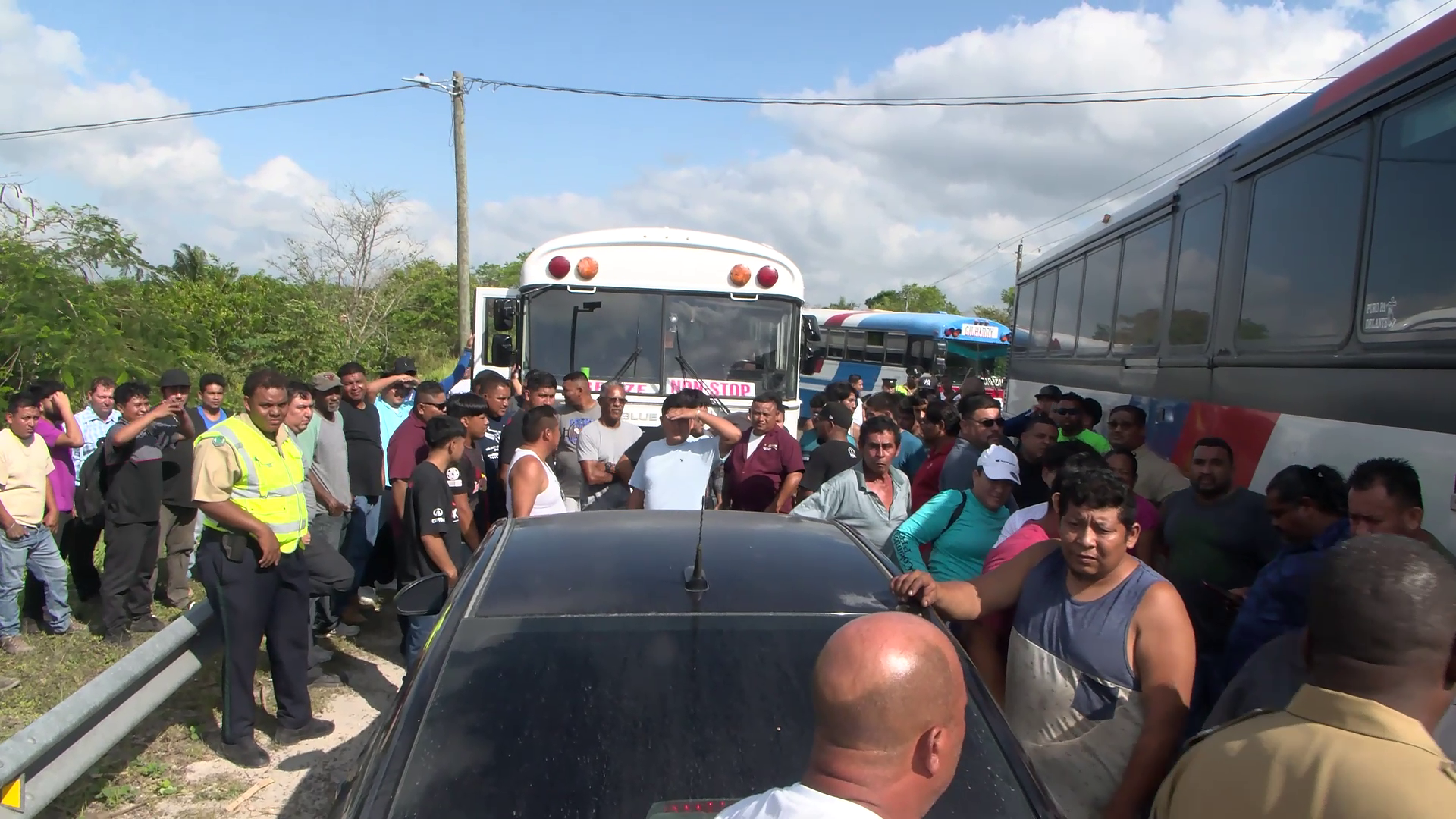
On April 27, 2026, a long-simmering dispute between Belizean bus operators and the national government over cripplingly high fuel prices erupted into direct action, when hundreds of operators shut down the country’s critical Phillip Goldson Highway for four hours, stranding thousands of daily commuters and forcing last-minute negotiations that delivered a preliminary policy concession.
The standoff followed two weeks of unproductive talks between government representatives and the Belize Bus Association (BBA), the industry’s leading trade group. Frustrated by stalled negotiations, operators launched their protest before dawn, parking buses across the highway at multiple choke points: starting at the Tower Hill Bridge just after 4:30 a.m., with additional blockades set up near Guinea Grass Village, Ladyville, and the Boom–Hattieville junction. The demonstration quickly halted all north-south traffic along the key transportation corridor, leaving students, healthcare workers, educators, and hourly workers trapped for hours with little advance warning.
As tensions rose, police detained BBA member Charles Swift at the Boom–Hattieville junction on charges of obstructing traffic, a move that did little to shift operators’ resolve. A second detention was also reported at a smaller secondary blockade in San Jose Succotz Village, according to on-site reporting from News Five correspondent Paul Lopez.
Many stranded commuters expressed sympathy for the operators’ cause, even as they navigated major disruptions to their own daily routines. Johan Alonso, a medical laboratory technologist caught in the gridlock, noted that his ability to care for patients at his workplace was compromised, but added that the disruptive action was necessary to force the government to acknowledge the severity of the industry’s crisis. “It is good that they are doing the blockade so the government can see how serious the people are, and how fed up we are,” Alonso explained. “They need to take everyone into consideration and talk to everyone before making decisions on their own.”
Other commuters voiced frustration over the lack of advance notice. Dianne Martinez, a teacher who woke early to travel to her job on San Pedro Island, told reporters she had only learned service was canceled after arriving at her departure terminal. “What is disappointing to me is that nobody told me this was going to happen, and a lot of people stay stranded on the road,” she said. Other hourly workers shared their anxiety over lost wages, with one noting he had already budgeted for his daily earnings and could not afford unexpected extra costs like alternate private transport.
Despite mounting disruption, bus operators stood firm in their demands, arguing that skyrocketing fuel prices had made it impossible to cover operating costs and support their families. “Fuel prices are a crisis right now,” operator Edward Bull told reporters. “How will we sustain our family if we have more than one child at home? At the end of the day if you watch your pocket, how much you spend on fuel going and coming, and you have bills to pay, owe the bank, how will you make two ends meet?”
Michael Frazer, BBA Vice President, confirmed that the protest was a pre-notified action: operators had warned the Deputy Prime Minister two days prior that they would escalate to a highway blockade if their demands for fuel cost relief were not met. The warning was quickly heeded at the highest levels of government, with Prime Minister John Briceño entering direct talks with Frazer as the blockade stretched into its third hour.
Within four hours of the protest’s start, government representative Chester Williams, Chief Executive Officer of the Ministry of Transport, arrived on site to announce that a preliminary agreement had been reached. The terms of the deal include a $3 discount per gallon of fuel for bus operators, with formal follow-up negotiations scheduled in the capital city of Belmopan to work out final regulatory adjustments. Frazer also noted that operators had requested a representative from the Prime Minister’s office attend the follow-up talks, citing a lack of trust in existing negotiations led by local transport official Zabaneh.
Shortly after the agreement was announced, operators pulled their buses off the highway and traffic began moving again, ending the gridlock that had stranded thousands. As of April 27, both sides have confirmed they will move forward to finalize the details of the fuel concession in the coming days.