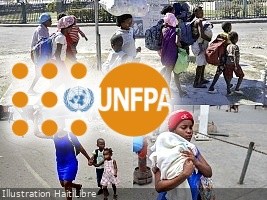
Three months into 2026, Haiti’s humanitarian catastrophe continues to deepen, as brutal gang violence leaves large swathes of the country uninhabitable and pushes millions of vulnerable people into displacement. Hard-hit regions including the Artibonite and Central departments, as well as the densely populated Port-au-Prince metropolitan area, have seen widespread destruction of residential property, alongside sharp spikes in kidnapping and sexual violence. Current data confirms that roughly 1.4 million Haitians have been forced to abandon their homes to seek safety, while thousands more have been killed since the crisis escalated. Amidst the collapsing security environment, the United Nations Population Fund (UNFPA) and its local implementing partners have remained on the ground to deliver life-saving sexual and reproductive health (SRH) services, while stepping up efforts to prevent and respond to gender-based violence (GBV) that disproportionately impacts women and adolescent girls. Between January and March 2026, the agency delivered critical SRH care to 7,470 vulnerable people, and ran GBV intervention and support programs that reached 5,580 survivors and at-risk community members. To meet the immediate hygiene and health needs of displaced women and girls, UNFPA also distributed 2,792 dignity kits, and supplied 100 inter-agency reproductive health kits to local health facilities and non-governmental organizations, enough to cover the care needs of 5,489 people across crisis-hit regions. To scale up these life-saving operations and meet the rapidly growing demand for services across the country in 2026, UNFPA has launched a $32.8 million emergency funding appeal. However, as of the end of March 2026, the agency has only received $1.8 million in donations since the start of the year – less than 5.5% of the total funding required. With humanitarian needs worsening by the day and violence continuing to displace more Haitian families, the UN body has warned that additional urgent funding is critical to ensure women and girls retain access to essential health care and protection services that are already on the brink of collapse.