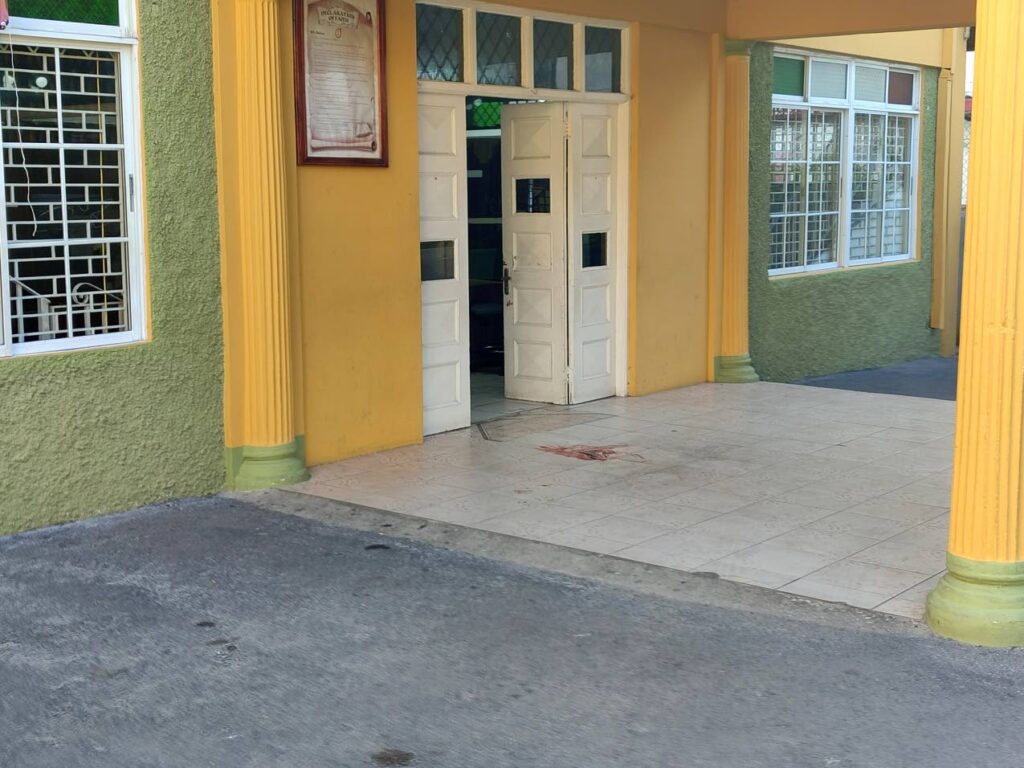
In western Jamaica, two high-profile fatal shootings on church grounds have ignited urgent public and religious dialogue about whether traditional sacred spaces can still function as the sanctuaries communities have relied on for generations. The most recent tragedy unfolded last Wednesday, when 38-year-old church member Cora Thompson was killed outside Montego Bay’s New Testament Church of God mid-way through a scheduled fasting service. This killing echoes a 2021 attack that claimed the life of 51-year-old Andrea Lowe-Garwood, who was shot and killed during an active worship service at Agape Christian Fellowship Church in Falmouth, Trelawny.
For centuries, churches across Jamaica and much of the world have held a unique social status: more than just gathering places for worship, they were understood as neutral zones of peace, where people facing conflict, persecution or hardship could find safe refuge. Today, regional religious leaders agree that while the core mission of the church to serve its community remains unchanged, the unwritten social respect that once shielded these spaces from violence has sharply deteriorated.
Pastor Michael McAnuff-Jones, co-chairman of the Watchman Christian Leadership Alliance, frames this shift as a “thinning out of a kind of a moral shield” that once protected church grounds. “It may be that in a real sense, this historical kind of societal contract that is in people’s minds about the need for the church to be treated as holy ground, as sacred ground, has broken down,” he explained. “When people begin to see a church building as just another building with walls and a roof, then we have a shift in the way people respond.”
Bishop Conrad Pitkin, senior pastor of Faith Temple Assembly of God in Montego Bay and custos of St James, traces this cultural shift to a broader collapse of foundational societal values. “They have lost respect for the church as a sanctuary. They have lost respect for the sanctity of life. There’s a disregard in our society for people,” Pitkin said. “It is not just a simple loss of respect alone, but the whole question of value has been eroded.”
Bishop Roy Notice, chairman of the Jamaica Umbrella Group of Churches and administrative bishop of the New Testament Church of God in Jamaica, goes further, describing attacks on church property as an act of desecration that signals a deeper national crisis. “The society is kind of losing its soul” due to rampant violent crime and a widespread “lack of respect and regard for human life,” he argued.
When asked whether the church, through spiritual practice and discernment, could have anticipated and prevented these tragedies through prayer, leaders offered a nuanced, grounded perspective that balances faith with the realities of living in an imperfect world. Notice noted that while divine revelation sometimes forewarns of coming harm, the church operates in a world where “evil is rampant.” “We don’t live in heaven,” he pointed out. “There are times when the Lord reveals it to us before it happens, and there are other times the Lord gives grace to take us through it. And there are other times when the impact is so great, the evil creates victims, and the Lord also guides us through that. So whatever happens, whether we sensed it and discerned it or whether we didn’t, God gives grace for all the occasions.”
McAnuff-Jones echoed this sentiment, adding there is no guarantee of prophetic warning for every potential tragedy. “The reality of life is that we worship a God who intervenes in matters for His own purpose. God is sovereign, and there are times when bad things happen to good people. There are things that happen to Christians that happen to other people. There are things that happen to people who are not in the church; the same things happen to Christians,” he said, citing the historical persecution of the apostles and the crucifixion of Jesus as examples of violence against faithful people.
Even amid rising violence and eroding social norms, religious leaders remain committed to upholding the church’s historic role as a place of refuge. Notice reaffirmed that despite the negative influence of broader societal instability, “the church continues to be a place of refuge, sanctuary, and a place of joy.”
That said, reclaiming the historic safety and sacred status of church grounds will require collective action from across Jamaican society, leaders agree. Pitkin emphasized that broad systemic change is needed to reverse the current trend: “There has to be some level of reinforcement of values and attitudes in our society, and behavioural adjustment. A lot of things need to be done and we are going to have to do it.”
McAnuff-Jones joined this call, pushing for a “new cultural consensus” that re-establishes church spaces as consecrated ground that demands respect. “People should not for one minute believe that this is a place where anything can happen and anything goes,” he said. “As to what God does when people do these things, that’s for God to decide. But I think it is fair to say that, you know, God is not to be toyed with and people should respect that.”