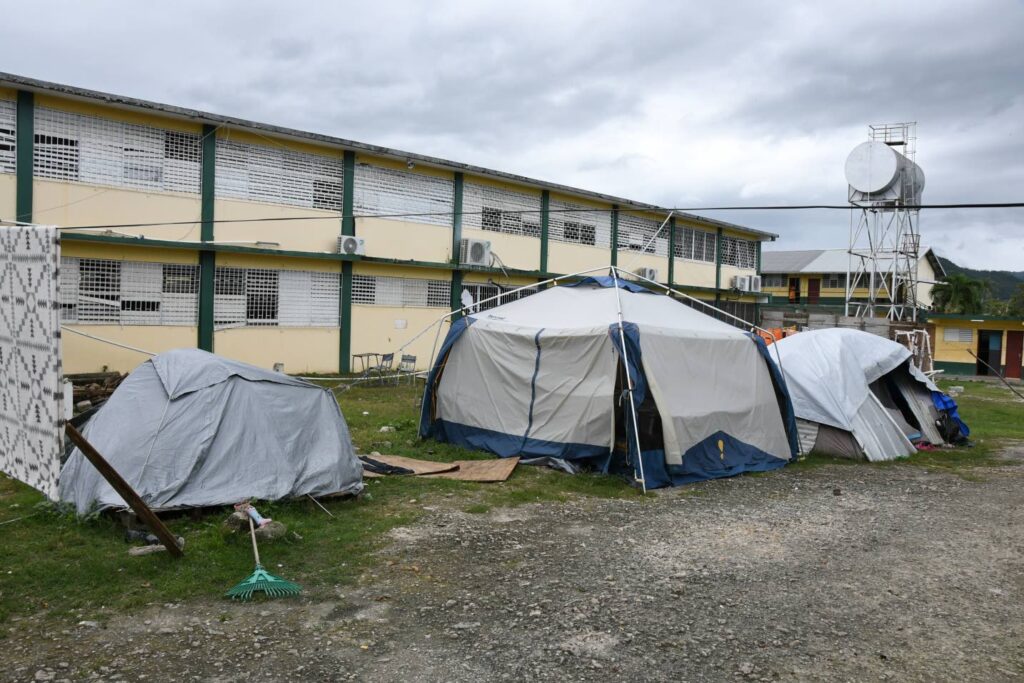
For most Jamaicans, May 8 is nothing more than an ordinary date on the annual calendar. But for 41 displaced people hosted at the Petersfield High School shelter in the parish of Westmoreland, the upcoming date stands as a long-awaited turning point: the end of nearly six months of temporary housing after Hurricane Melissa destroyed their homes, and the chance to finally step back into a space they can call their own.
Since the Category 5 storm made landfall on October 28, 2025, these displaced Jamaicans have lived in converted classrooms at the school. For many, this experience was entirely uncharted, who never expected to lose their homes and spend half a year navigating the uncertainty of shelter life. Left jobless by the storm and with no relatives able to host them, repeated efforts to secure alternative housing have ended in disappointment, leaving them subject to growing friction with the school community, including students who have repeatedly called for them to leave the campus.
Now, a government commitment to relocate all remaining school-based shelter residents to appropriate accommodation by May 8, 2026 has given this group a renewed spark of hope. During a recent visit from the Jamaica Observer, shelter residents shared that they are counting down the days to regain their independence and dignity, and praying this long-promised transition will finally deliver on better living arrangements.
The pledge comes from Jamaica’s Ministry of Local Government and Community Development, which confirmed the relocation timeline as part of the country’s ongoing national post-hurricane recovery effort. The announcement followed unsubstantiated public reports of inappropriate sexual behavior by shelter residents occurring in front of enrolled students, putting pressure on officials to resolve the prolonged coexistence of displaced families and school operations. Ministry officials emphasized the final relocation phase is rooted in a commitment to restoring normalcy for two groups: the displaced families who have lost their homes, and the school communities that have accommodated them for months. The Petersfield High shelter has been prioritized for relocation, as it remains the largest active school-based shelter in the country, hosting roughly half of the 81 total displaced people still living in school shelters across Jamaica.
To support a smooth transition, the government is rolling out a range of tailored housing solutions to match the specific needs of each displaced family. These include prefabricated modular housing units purchased by the state, targeted rental assistance for eligible families, and custom accommodation arrangements for households with unique circumstances.
For 22-year-old Sherese Jones, who entered shelter life for the first time after the storm, having a private space of her own would be life-changing for her and her unemployed mother. Jones, who worked as a waitress at a local hotel before the storm, lost her job immediately after Melissa hit. Her mother had worked as a caregiver for an elderly woman who passed away just weeks before the hurricane, and neither woman has been able to secure new steady income despite repeated attempts to find work.
“It’s not the life I would have chosen, but we have to make do with what we have,” Jones told the Sunday Observer. As a woman who once prided herself on being independent, she said the hardest part of shelter life is losing the privacy and freedom that comes with having your own home. “I never want to stay in a shelter again. Shelter life isn’t easy, especially when you’ve never had to live like that before. I used to be able to take care of myself, but now I’m out of work and I have to rely on others for help.” She added that life before the storm allowed her small, simple joys: “Before, I could take a day off, treat myself, and buy the little things I wanted. Now I can’t do that, I just have to stay here.” Jones also shared that she has endured verbal harassment from students at the school, which compounds the hardship of her situation: “Sometimes the kids bother us, saying we need to get out of their school. They can be rude. We know this school is for the children, but it still hurts, and I just want to get my dignity back.” Even so, the government’s relocation promise has given her hope that normalcy is finally within reach.
Tishnae Haywood, a mother of six who currently lives with three of her children at the Petersfield shelter, said she tried to arrange her own alternative housing after the storm, but the makeshift plywood structure she built was deemed unsafe by officials because it lacked basic amenities like a bathroom and could not withstand future storms. Haywood arranged for her other three children to live with their father, but could not find space for herself and her three youngest children. Like Jones, she is currently unemployed, and prioritizes keeping her children safe over seeking work, leaving her with no ability to secure private housing on her own.
Haywood said she is optimistic that the upcoming relocation will bring a fresh start for her family, even if it is not a permanent solution immediately. “I’m looking forward to having my own place, even if it’s just enough space to put a mattress down. I just want my kids to be able to run around and make noise like kids should, that’s all I want,” she said. Haywood acknowledged that she has been let down by past unfulfilled promises of housing assistance, but she is choosing to give the government the benefit of the doubt this time: “It wasn’t the government that sent Hurricane Melissa here. They’re trying to help us any way they can, so I’m going to trust them for now.” Until the move, she made a public plea to Jamaicans to extend empathy to displaced shelter residents, many of whom are unable to work due to age, disability, or storm-related job loss. “We’re trying our best. A lot of us can’t work because of our situation. I’m begging people to stop criticizing us. Everyone carries their own burden. God didn’t build the world in one day, so we can’t rebuild our lives in a week or a month. It takes time, and we’re already doing everything we can,” she said.
J Anthony Clarke, shelter manager and dean of discipline at Petersfield High, said the school administration has deep sympathy for the displaced residents and has worked to make their stay as comfortable as possible over the past six months. Even so, he welcomed the upcoming relocation, noting that the classrooms used as shelter space require significant renovations that have been delayed by the ongoing occupation. He added that both shelter residents and government officials are aligned on the need for the move, and all residents are eager to leave for more stable housing. “We currently have 16 families, including children, totaling 41 people here. Getting back to normal won’t be completely smooth, but they’re all looking forward to moving into permanent homes,” Clarke said. He acknowledged that the road to relocation has been long, but noted that a Category 5 storm causes catastrophic damage that takes time to recover from: “I understand the government needed to take the time to make sure any new housing they provide can withstand another Category 5 storm. We’re not putting people back in flood-prone areas, and we’re making sure their new homes are stronger and more stable than the ones they lost. We want them to leave the shelter with their dignity and their pride intact.”
Bryan McGwyther, a local landscaper who lost his employer-provided accommodation when the storm hit, said he would be grateful for even a temporary rental home while he waits for permanent housing. McGwyther spent three days living amid the rubble of his destroyed home after the storm before agreeing to move to the shelter. “I have some savings, and I still work when I can, I just need a place to stay,” he said. He never expected to spend six months in shelter, and said he welcomes the upcoming relocation: “I hope that when I leave here, I get a place that I can call my own, where I can get back to building a good life for myself.”
Pauline Williams, an elderly domestic worker who has partially lost her sight to cataracts, lost her home in the storm along with her children’s homes, leaving her with no other option but shelter. She made a direct plea to the government for support, noting that she and many other elderly or disabled residents are not able to secure housing on their own. “Help us, even just with materials like steel and concrete to build. We can’t stay here forever,” she said. “We’re waiting patiently, because we have no other option. We’re looking forward to May 8.”
As the countdown to the relocation deadline begins, the entire community of Petersfield High shelter is holding onto hope that the government’s promise will finally deliver the fresh start they have waited half a year for.