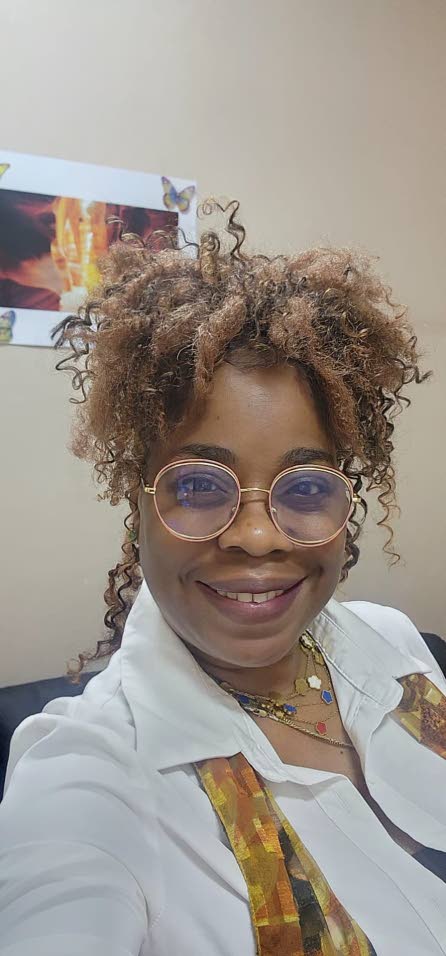
Jamaica is facing a deepening public health and social crisis marked by surging rates of harmful behavioural issues among children and young people, prompting leading mental health experts and education officials to push for coordinated, national-level intervention to address the growing emergency. International clinical behavioural psychology specialist Dr. Coretta Brown Johnson has sounded the alarm after reviewing recent registry data, warning that ongoing trends are deeply concerning and demand consistent, concentrated action across every sector of Jamaican society. While existing national policies targeting youth wellbeing are already in place, Dr. Brown Johnson argues that these frameworks have not been sufficiently evaluated or effectively implemented across the full spectrum of young people’s daily environments, from classrooms to household and community settings, requiring urgent review and targeted adjustment to boost impact.
Official data collected by Jamaica’s National Children’s Registry confirms the scale of the crisis: through the first three months of 2026, the total number of reported youth behavioural incidents has already reached 1,733, with cases climbing steadily month over month from 506 in January to 550 in February and 677 by March 26. This sustained upward trajectory is not a new development; over the past five years, incident counts have remained persistently high, fluctuating from 5,284 in 2020 to an all-time peak of 6,800 in 2023, before a small dip and a rebound to 6,649 in 2025. Bullying, a particularly harmful behavioural issue that often precedes more severe violence, is also growing at an alarming rate: 49 bullying cases were recorded through March 26 this year, with 22 incidents reported in January alone, and annual cases jumping from 130 in 2022 to 167 in 2025.
Recent high-profile violent incidents involving school-aged youth have amplified public and expert anxiety over the crisis. In one fatal case, a 17-year-old student from Ocho Rios High School has been charged with the murder of 16-year-old classmate Devonie Shearer, who was attacked on school grounds on March 4. Another fatal stabbing took the life of a Seaforth High School student in Morant Bay following a personal dispute, while a widely circulated video captured multiple Jamaica College students brutally assaulting a peer they accused of theft, leading to the arrest of a student at the campus.
Dr. Brown Johnson emphasizes that these visible behavioural crises stem from deeper, interconnected systemic failures rather than isolated individual misconduct, tracing root causes to breakdowns in core socialization institutions: the family, school systems, and broader community and cultural environments. “A child is impacted by all elements within his or her environment,” she explained in an interview with the Jamaica Observer. She detailed how economic instability in households creates cascading harm: when caregivers lack the resources to support a child’s basic needs and school participation, the outcome often includes poor academic focus, low self-esteem, lost educational opportunity, and eventually engagement in harmful or criminal behaviour. Adverse childhood experiences, she added, leave lasting damage to children’s psychological, emotional and social development, which frequently emerges as observable behavioural challenges later on. “If a child does not feel safe, they will eventually take matters into their own hands; if they are not intrinsically valued pre and postnatally, many issues can arise,” she said.
A key contributing factor that Dr. Brown Johnson highlights is the widespread lack of consistent, clear boundary-setting for children from early childhood. Behaviours eventually categorized as “beyond parental control” rarely develop overnight, she explains, instead growing gradually when discipline and expectations are inconsistent across caregivers and institutions. Adults bear the responsibility of acting as consistent “boundary creators” and “boundary holders” to help children learn self-regulation and understand that actions carry predictable consequences, she argues. For example, unpunished repeated truancy sets a harmful pattern that persists into adulthood, making swift, proportionate and consistent consequences critical for shifting long-term behaviour. “A child should be made to understand the impact of repeated action, whether positive or negative,” she stressed.
Schools, as core socialization institutions that interact with children daily, have a critical role to play in early identification and intervention, Dr. Brown Johnson adds. She calls for systematic behavioural tracking in schools that mirrors the existing rigorous tracking of academic progress, allowing staff to identify at-risk students early and deploy targeted support before minor issues escalate into chronic, harmful behaviours. This approach would require investment in evidence-based intervention programs and improved cross-stakeholder communication to drive sustainable resolutions.
Jamaica’s Minister of Education Dr. Dana Morris Dixon has echoed these concerns, describing recent student violence as both “concerning and disturbing.” She agrees that school-based behavioural challenges cannot be separated from broader social and economic conditions in households and communities, noting that schools cannot resolve the crisis alone, and require consistent, active support from families and Jamaican society as a whole.
Speaking during a sitting of the joint select committee reviewing the Child Diversion Act, Dr. Morris Dixon noted that while stronger intervention is needed for troubling student behaviour, not all incidents require processing through the formal criminal justice system. Her comments came as the committee debated proposals to use the existing Child Diversion Programme to address common school-related behavioural issues, including fights, bullying, and petty theft, which have been increasingly tied to broader student violence concerns. She added that welfare-focused interventions are already being rolled out under the Child Care and Protection Act, led by the Child Protection and Family Services Agency, which works directly with at-risk families and schools to provide targeted support.