For the people of Jamaica’s Westmoreland parish, the cascading cycle of hardship shows no sign of slowing. Just months after surviving the devastating impact of Category 5 Hurricane Melissa, which left countless homes destroyed and communities without power for weeks, residents are now grappling with a fresh crisis: skyrocketing fuel and living costs amplified by global unrest in the Middle East. What was already an uphill battle to rebuild has become an overwhelming struggle, leaving many wondering when their streak of misfortune will end.
The latest fuel price adjustment from state refinery Petrojam delivered a harsh blow to motorists across the island last week, with both grades of gasoline jumping by $4.50 per litre. The increase pushed the price of 90-octane fuel to $188.57 per litre, while 87-octane now sells for $181.13. As drivers pulled into gas stations across Westmoreland on Thursday, many reacted with frustration and despair, noting they had barely begun to pick up the pieces from the hurricane before this new financial strain hit.
“Hurricane Melissa mashed me up, and now gas a mash me up bad,” one local taxi operator told the Jamaica Observer. The driver lost the roof of his home and the small side shop he relied on for extra income during the storm. Before the recent price hikes, he typically spent around $3,500 daily on fuel to keep his taxi running. Now, that cost has climbed to at least $5,000 a day, pushing his weekly fuel expenditure over $20,000 – all while he has been unable to raise the fares he charges passengers. With the cost of vehicle parts like tires and batteries also rising sharply, the operator says he and other transport workers are desperate for permission to increase fares to keep up. “It hard, but you have to gwaan because we can’t sit down,” he explained.
For Cave resident David Israel, the financial pressure is compounded by the costly repairs his home needs after storm damage. To restore safety to his property, he must hire electricians to rewire his home – and post-storm demand has pushed service prices sharply higher. “Everything is compounding since Melissa, and if you’re really not self-motivated and have a driven spirit to just get up back on your feet and move and not being hopeless, it will break your spirit,” he said. Though he feels the constant string of setbacks is frustrating, Israel says he remains committed to rebuilding his life.
A local teacher in Westmoreland has turned to drastic creative measures to cut back on fuel spending. Rationing trips, carpooling when possible, and walking instead of driving have become routine – and increasingly, he is simply staying home to avoid unnecessary costs. Where he once could make a $7,000 fuel purchase last a full week, that same amount is now exhausted in just two days. While he would welcome a return to work-from-home arrangements to cut down on travel, he notes the shift would only transfer costs to his monthly utility bill, which has already climbed 50% in recent months. “If it’s work from home, we have to be careful how we do that, but I can understand the need to restrict general road movement,” he said.
Another Cave resident, who identified herself only as Mrs James, says she is relieved to have restored electricity after months running a costly generator. Before power was restored, operating her generator cost roughly $19,000 a week – an expense she is glad to leave behind. But she was shocked to receive a $6,800 electricity bill just two weeks after service was restored. On a minimum wage income, she must now cover that bill, water costs, and school fees for her children, all while still recovering from losing her small business and livestock in the hurricane. “We are just hopeful that some better days are coming, but, to me, it just seems like it’s getting worse than how we expect,” she said.
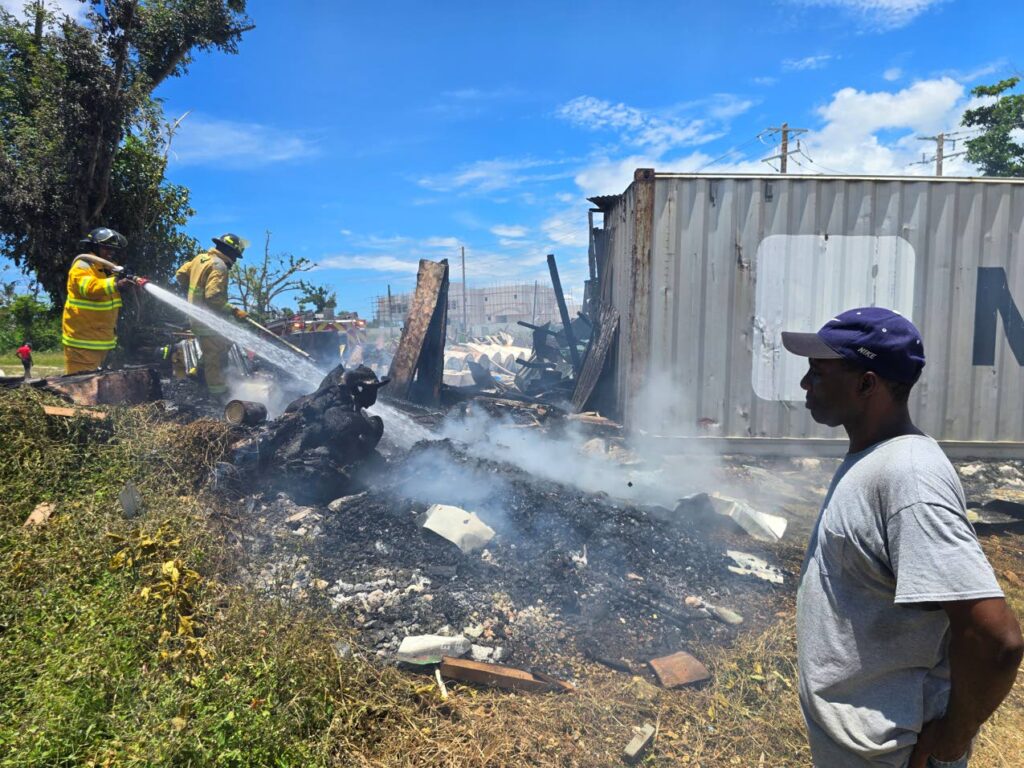
For one local business owner, the struggle has reached a new low. Delpert Rodney, a haberdashery owner in Belmont, lost his entire store during Hurricane Melissa. He managed to salvage a small portion of his inventory and store it in a temporary back room as he worked to restart his business. Last Thursday, that remaining stock was completely destroyed in an unexpected fire. “We were at ground zero after Hurricane Melissa, and this happened. It’s really heartbreaking right now,” Rodney said. Just as his business was starting to recover, he has been set back to zero. Even so, he remains resolute: “I’m of the view that once you don’t give up, there is always room for going forward. Once you give up, then everything is dead, but once you keep trying and putting the pieces back together, you will be good.”
As construction crews work across the parish to repair storm-damaged buildings, many residents are left waiting for relief to match the steady stream of new hardships that have continued to hit their recovering community.