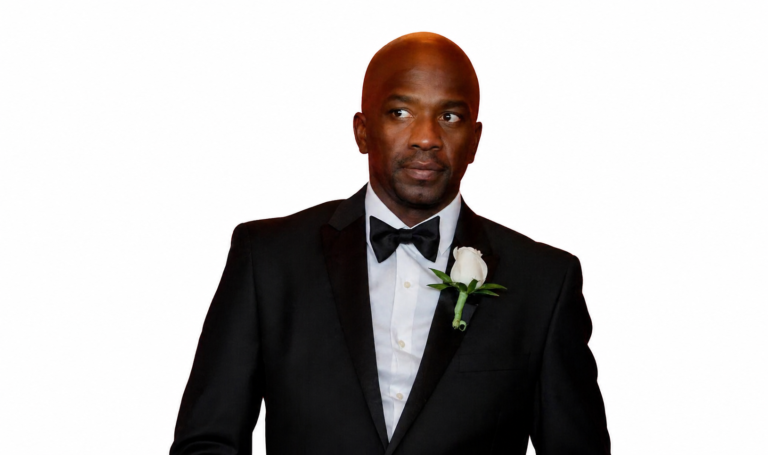
BROOKLYN, N.Y. — Tributes are pouring in from across New York City’s Caribbean diaspora following the death of Rodrick F. Daley, the Jamaican-born chair of Brooklyn’s Community Board 17, who passed away on April 13 at the age of 54.
First established through a 1975 New York City charter amendment, community boards are city-wide local advisory bodies that weigh in on critical neighborhood issues ranging from land use and zoning to municipal budget allocations, public service delivery, and overall community well-being. There are 59 such boards across the five boroughs, and CB17 serves a large swath of Central Brooklyn with a dense Caribbean immigrant population. Daley, who migrated to Brooklyn from Jamaica in 1982, led that board for years, becoming one of the most recognizable and respected advocates for the local community.
Local elected officials and community partners have highlighted Daley’s far-reaching impact across public education, youth development, civic leadership, and Caribbean cultural preservation. Brooklyn City Council Member Farah N. Louis, whose district covers parts of the area served by CB17, remembered Daley as a multi-faceted, tireless leader whose contributions would endure for generations. “I am heartbroken by the passing of Chairman Rodrick Daley — a devoted District 45 resident, dedicated educator, gifted athlete, celebrated domino champion, and unwavering community leader, whose impact on Central Brooklyn will be felt for generations,” Louis told Caribbean Media Corporation in a recent interview. Through his leadership of CB17, Louis noted, Daley championed equitable neighborhood development, centered the voices of marginalized residents, and served the community with equal parts strength and empathy. Even as he battled illness in his final months, he continued to show up for his neighbors with remarkable grace and resilience, she added.
Fellow City Council Member Mercedes Narcisse, who represents Brooklyn’s 46th District, echoed those sentiments, calling Daley a decades-long fixture of the local community whose loss is felt across every neighborhood he touched. Before his work in civic leadership, Daley spent more than 25 years serving New York City’s public schools, where he did far more than teach — he built transformative programs that helped young people build confidence and envision brighter futures. He developed youth mentorship initiatives, organized study abroad opportunities for middle school students, and launched student government programs, operating from the belief that learning extends far beyond the four walls of a classroom. As Narcisse shared, Daley was still planning new community projects just weeks before his passing: just recently, he met with her to discuss a collaborative youth baseball tournament for the district. “He wasn’t slowing down. He was still planning, still building, still showing up for the young people of this community,” Narcisse said. “Brooklyn has lost a giant.”
State Assemblywoman Jaime Williams, who represents Brooklyn’s 59th Assembly District, called Daley one of the rare extraordinary individuals who leave a permanent, positive mark on every community they touch. Williams recalled collaborating with Daley on international relief work in Jamaica following Hurricane Melissa, where she saw firsthand his unwavering dedication to helping others in need. “As chairman of Community Board 17, he demonstrated an unwavering commitment to serving his community with compassion and purpose,” Williams said. “He was the kind of person we all hope to be, and may he rest in peace.”
Beyond civic leadership and education, Daley was a passionate advocate for preserving and lifting up Caribbean cultural institutions across Brooklyn. Anne-Rhea Smith, a Brooklyn-based community engagement professional and board member of the West Indian-American Day Carnival Association (WIADCA), the organizer of the iconic annual West Indian-American Day Carnival Parade, described Daley as a pillar of service and advocacy for the Caribbean community. Over decades of work, he supported local cultural groups including mas bands and steel orchestras, and worked tirelessly to ensure these organizations had access to the critical resources they needed to thrive, including dedicated rehearsal and performance spaces. He also helped smaller community groups navigate complex city and state bureaucratic systems, offering guidance, hosting capacity-building trainings, and helping them build the operational infrastructure to sustain their work long-term.
A proud Jamaican, Daley wove his cultural heritage into every aspect of his work, using it as a unifying bridge to empower diverse immigrant communities across Brooklyn, Smith said. WIADCA released an official statement extending its deepest condolences to Daley’s family, friends and colleagues, noting that his unwavering commitment to equity, access and sustainability for Caribbean cultural traditions strengthened the foundation of New York’s annual Carnival celebration. “His legacy of service, advocacy and cultural pride will not be forgotten,” the association wrote.
A retired assistant principal with the New York City Department of Education, Daley began his teaching career in the mid-1990s at Brooklyn’s South Shore High School. In 2001, he joined the faculty of Meyer Levin Intermediate School 285 — the same middle school he attended as a young immigrant. He later moved to Prospect Heights High School, where he worked as a Spanish teacher and dean before advancing to school administration. Daley held a Bachelor’s degree in Spanish from Haverford College in Pennsylvania and a Master’s of Science in Education from the College of Mount Saint Vincent.
Daley is survived by his wife Garcia, his childhood sweetheart, and their five sons: Stephon, Carter, Christian, Grayson and Cooper. Public funeral services are scheduled for May 1 at Miracle Temple Ministries on Thomas Boyland Street in Brooklyn, with a second service to follow the next day at Liberty Hall Cathedral of Praise on East 96th Street. He will be interred at Brooklyn’s Canarsie Cemetery after the services.