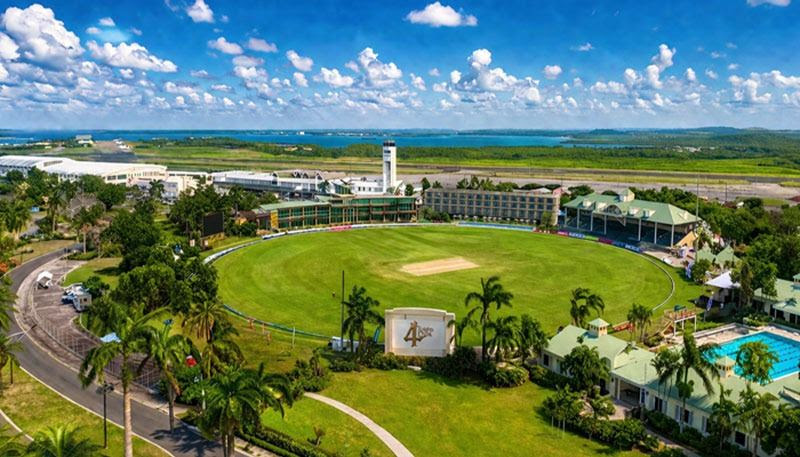
West Indies cricket is set to receive a transformative boost to its grassroots and elite development pipelines, after top regional coaches threw their unanimous backing behind Cricket West Indies’ (CWI) landmark plan to build a state-of-the-art High-Performance Campus at Antigua’s Coolidge Cricket Ground. The green light for the multi-million dollar project was recently given by the government of Antigua and Barbuda, clearing the way for phased construction and redevelopment that will run from 2026 through 2030 across the 20-acre site.
When complete, the campus will function as a fully integrated hub that unites elite player development, cutting-edge sports science research, specialized athletic education, and commercial operations all in one centralized location — a resource that regional cricket leaders have identified as a long-missing pillar for competitive success at the international level.
The plan has won widespread acclaim from senior coaches currently leading teams in the ongoing West Indies Championship, who argue the facility is non-negotiable for securing a strong future for the region’s cricket. Robert Haynes, former West Indies national selector and current head coach of the Jamaica Scorpions, emphasized that the project has been a decades-long priority for cricket development leaders. “I think it’s a magnificent idea. When I was a selector, it was always spoken about in terms of having something dedicated for the youngsters. I think it’s a magnificent effort by the Antiguan government and Cricket West Indies to get this going because we desperately need it,” Haynes explained. “With the limited number of first-class games our young players get, you need a consistent development system you can depend on. In international cricket today, every top competing nation already has a High-Performance Centre.”
Keon Peters, head coach of the Windward Volcanoes, echoed Haynes’ assessment, noting that the Caribbean’s longstanding challenge in international cricket has never been a lack of natural talent — rather, it has been the absence of structured infrastructure to help that talent reach its full potential. “With the amount of talent that we have, for us to compete against the other elite international teams we must have this in place. We know resources have been difficult for us historically, and I think it’s a fantastic initiative by Cricket West Indies. It’s never too late to start,” Peters said.
Rayad Emrit, head coach of the Trinidad and Tobago Red Force, expanded on that point, highlighting a critical gap in the region’s current development pathway that the new campus will address. “I honestly think there’s a lot of incredible talent coming through from the Under-19 level across the Caribbean, but after Under-19, a lot of them fade away, and we don’t get those core senior players coming through the system consistently,” Emrit said. “We have no shortage of players with natural talent, and one of the main reasons we haven’t produced the volume of elite players we expect is the lack of high-quality facilities.”
Steve Liburd, head coach of the Leeward Islands Hurricanes, added that immersive access to a specialized high-performance environment will be transformative for emerging players. “All around the world, top cricketing nations operate these High Performance Centres, and they deliver long-term benefits for developing young players over time,” Liburd noted. “Having such a centre will be beneficial for West Indies cricket as a whole. Players will get exposure to modern training technology, access to dedicated spaces for professional development like media training, and a permanent home to hone their skills.”
Ryan Hercules, head coach of the Guyana Harpy Eagles, described the initiative as a long-overdue step that will mark a turning point for West Indies cricket. “This is something that’s been overdue for a long time, but whenever it arrives, it’s a welcome change,” Hercules said. “Once this gets off the ground, we will almost certainly start seeing a positive shift in the trajectory of West Indies cricket.”
Even with widespread praise for the campus project, some coaches called for broader investment across the region to build a truly robust development ecosystem. Vasbert Drakes, former West Indies fast bowler and current head coach of Barbados Pride, argued that while the Antigua campus is a major step forward, the ultimate goal should be to upgrade infrastructure and development systems across all Caribbean territories. “I think it would be great if all the franchises in the Caribbean would be in a position where they can have their own high-performance systems, because we have tremendous talent and we want a better, more connected pathway system for them,” Drakes said. “It is good to see that the West Indies is moving in that direction, but I would also encourage all of the territorial boards to find a way, through government support and local sponsorship, to make expanded development infrastructure work across the region.”