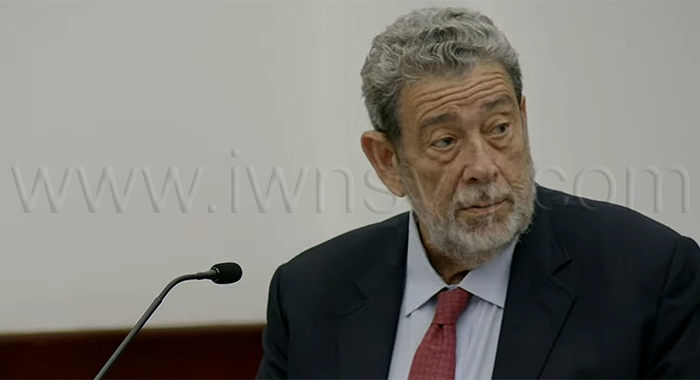
A heated parliamentary debate has emerged in St. Vincent and the Grenadines over the New Democratic Party-led government’s plan to establish a new national development bank, a proposal that is drawing sharp pushback from the country’s newly ousted former prime minister. Opposition leader Ralph Gonsalves, whose Unity Labour Party exited power last November after holding office for 25 years, has publicly rejected the motion introduced by government senator Chelsea Alexander, calling for a full rethink of the initiative on the floor of parliament.
In introducing the proposal, Alexander framed the new national development bank as a core pillar of the NDP government’s agenda to restructure national economic institutions to remove long-standing barriers to inclusive growth. She emphasized that the bank would address a critical gap in the country’s financial ecosystem: young entrepreneurs and innovators operating in emerging industries are frequently locked out of traditional commercial lending, leaving promising small businesses unable to get off the ground. By offering specialized, flexible financing tailored to these groups, the new bank would bridge this capital gap, Alexander argued. Beyond funding, she positioned the institution as an open invitation for young Vincentians to challenge conventional economic thinking, embrace innovation and entrepreneurship, and reimagine the country’s traditional industries for the modern era.
But Gonsalves, who served as finance minister for 16 years during his administration, drew on decades of institutional history in SVG to argue that the current proposal is unnecessary and poorly conceived. He outlined a long history of failed development banking attempts in the country, dating back to a 2000 initiative launched by the then-NDP administration. That effort saw all assets — including a large portfolio of non-performing loans — from the 1960s-era Development Corporation transferred to a new development bank capitalized at just EC$5 million. Gonsalves noted that the bad loans far outstripped the new bank’s capital base, leaving the institution insolvent from its launch, a stillborn project that never delivered on its promises.
When Gonsalves’ Unity Labour Party took office in 2001, the government inherited two insolvent state financial institutions: the failed development bank and the National Commercial Bank (NCB). To resolve the crisis, the ULP restructured the sector: viable development bank loans were transferred to NCB, a special entity was created to manage non-performing assets, and a network of targeted, sector-specific financing institutions was built to replace the failed single development bank model. When the majority stake in NCB was later sold to the Bank of Saint Lucia, the new ownership phased out the micro-enterprise lending program, prompting the ULP to expand the targeted network instead of reestablishing a central development bank.
Today, that existing ecosystem includes the Student Loan Company, the Farmer Support Company launched in 2014 with EC$5 million in seed capital, and PRYME — the Promoting Youth Micro-Enterprises initiative that offers grants up to EC$40,000 to young founders. It also includes the ULP’s widely accessed 100% mortgage program for public servants. Gonsalves argued that this distributed, fit-for-purpose network already serves all the functions the proposed national development bank claims to fill, across every key sector from agriculture and education to housing and creative industries.
He further warned that creating a new, standalone national development bank would carry unnecessary administrative costs, and could even force the government to shutter the successful existing targeted institutions to fund the new bank. Gonsalves also raised critical questions about capitalization, pointing out that a development bank cannot operate without secure, low-cost source of capital to offer concessional lending while covering operating costs and expected non-performing loans. He noted that Alexander has not outlined a clear plan for securing this low-cost funding, calling a bank without sufficient capital a logical contradiction.
Responding to the government’s reference to successful development banks in other regional Organization of Eastern Caribbean States (OECS) nations, Gonsalves argued that SVG’s existing institutional landscape already meets the country’s needs, and that existing commercial banks already actively seek bankable projects across all the sectors the proposal names. He also pushed back on the NDP’s framing of the bank as a key campaign promise, noting that campaign pledges are often framed broadly, but governing requires practical, grounded policy that works within the country’s actual economic context. Gonsalves clarified that he supports the government’s broad goals of inclusive economic development and supporting small and medium enterprises, but cannot endorse the proposal in its current form.
The parliamentary debate on the motion was not completed before the statutory 5 p.m. deadline for private members’ business, and will resume at a future sitting of parliament.