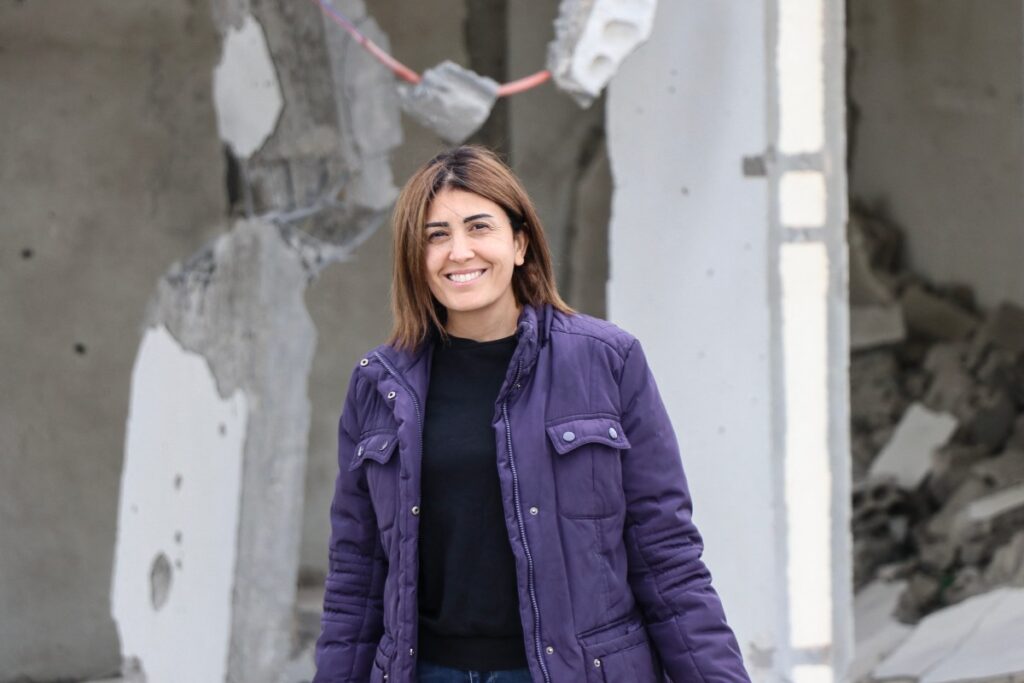
BEIRUT, LEBANON – In the aftermath of an Israeli airstrike that claimed the life of a Lebanese journalist in southern Lebanon this week, Lebanese national leaders have formally leveled war crime allegations against Israel, while Israeli military officials confirm the incident remains under internal review.
Amal Khalil, a 42-year-old correspondent for prominent Lebanese daily newspaper Al-Akhbar, had her death confirmed Wednesday by rescue services and her employer. According to Lebanon’s civil defense agency, Khalil died when an airstrike hit a residential building in the southern border village of Al-Tiri.
In an official statement condemning what he called deliberate war crimes, Lebanese President Joseph Aoun argued that Israel systematically targets journalists to cover up evidence of its violations against Lebanese communities. “Israel deliberately targets journalists in order to conceal the truth about its crimes against Lebanon,” Aoun stated. Prime Minister Nawaf Salam echoed the accusation in a post on the social platform X, noting that targeting media workers and blocking access for first response teams amounts to a war crime, and confirming the Lebanese government plans to bring the case before international regulatory and judicial bodies.
When contacted for comment by Agence France-Presse (AFP) Thursday, an Israel Defense Forces (IDF) spokesperson said only that “the incident is still under review.”
The killing comes 10 days into a fragile ceasefire between Israeli forces and the Iran-backed Hezbollah movement, which paused open conflict that has killed more than 2,400 people in Lebanon since fighting resumed last year.
Lebanon’s official National News Agency (NNA) provided a detailed timeline of the incident: Khalil and a second journalist, Zeinab Faraj, fled to the Al-Tiri house for shelter after an initial Israeli airstrike targeted a car traveling directly ahead of them. The two people in that targeted vehicle – the mayor of Bint Jbeil, a nearby town currently under Israeli occupation, and his companion – were killed in the first strike. Moments later, a second Israeli airstrike hit the house where the two journalists had taken refuge.
Lebanon’s health ministry reported that Faraj was wounded and evacuated to a local hospital, while Khalil was left trapped under rubble. A senior Lebanese Red Cross official told AFP that teams successfully pulled Faraj from the site but were forced to withdraw without recovering Khalil after receiving an advance warning of another impending strike. Lebanese authorities were required to coordinate with United Nations peacekeeping forces deployed across southern Lebanon to secure the area, resulting in a multi-hour delay before rescue crews could re-enter to retrieve Khalil’s body from the destroyed building.
On Thursday, Lebanon’s health ministry added a second accusation against Israel, claiming the military deliberately obstructed rescue operations and targeted an ambulance clearly marked with the official Red Cross emblem. The IDF pushed back on the account in a Wednesday statement, saying its forces had identified two vehicles in southern Lebanon that had left a military facility used by Hezbollah. The airstrike targeted a vehicle carrying “terrorists,” the military said, that had crossed what Israel refers to as its “forward defense line” in southern Lebanon and moved close to deployed Israeli troops. Israel has also denied blocking rescue teams from accessing the strike site, after establishing a heavily restricted “yellow line” deep inside southern Lebanon, where its troops are currently stationed and civilian residents are barred from returning to their homes.
Human rights and press freedom organizations have widely condemned the killing, adding to longstanding criticism of repeated Israeli strikes that have killed media workers over the course of the ongoing conflict. Dozens of journalists gathered for a public protest in downtown Beirut ahead of Khalil’s funeral, scheduled to take place in her hometown of Baysariyeh in southern Lebanon.
Jonathan Dagher, Middle East bureau head for Reporters Without Borders (RSF), said the documented sequence of strikes Wednesday “would indicate targeting and obstruction of aid constituting war crimes.” Ramzi Kaiss, Lebanon-based researcher for Human Rights Watch, called for a full, independent investigation into the killing. “Israel’s killing of journalist Amal Khalil should be credibly investigated with a view towards justice and accountability,” Kaiss said, adding that “intentionally targeting civilians is a war crime.”
Khalil is the latest Lebanese journalist to be killed by Israeli forces since cross-border conflict reignited in 2023. In late March, three other journalists were killed in an Israeli airstrike in southern Lebanon, prompting a group of United Nations independent experts to call for a formal international investigation into that incident. Speaking from the Beirut protest, local journalist Inas Sherri told AFP that holding responsible parties to account is the only way to stop the pattern of killings. “Accountability is the most important thing,” Sherri said. “If we were holding people accountable, Israel would not have continued killing journalists one after another.”