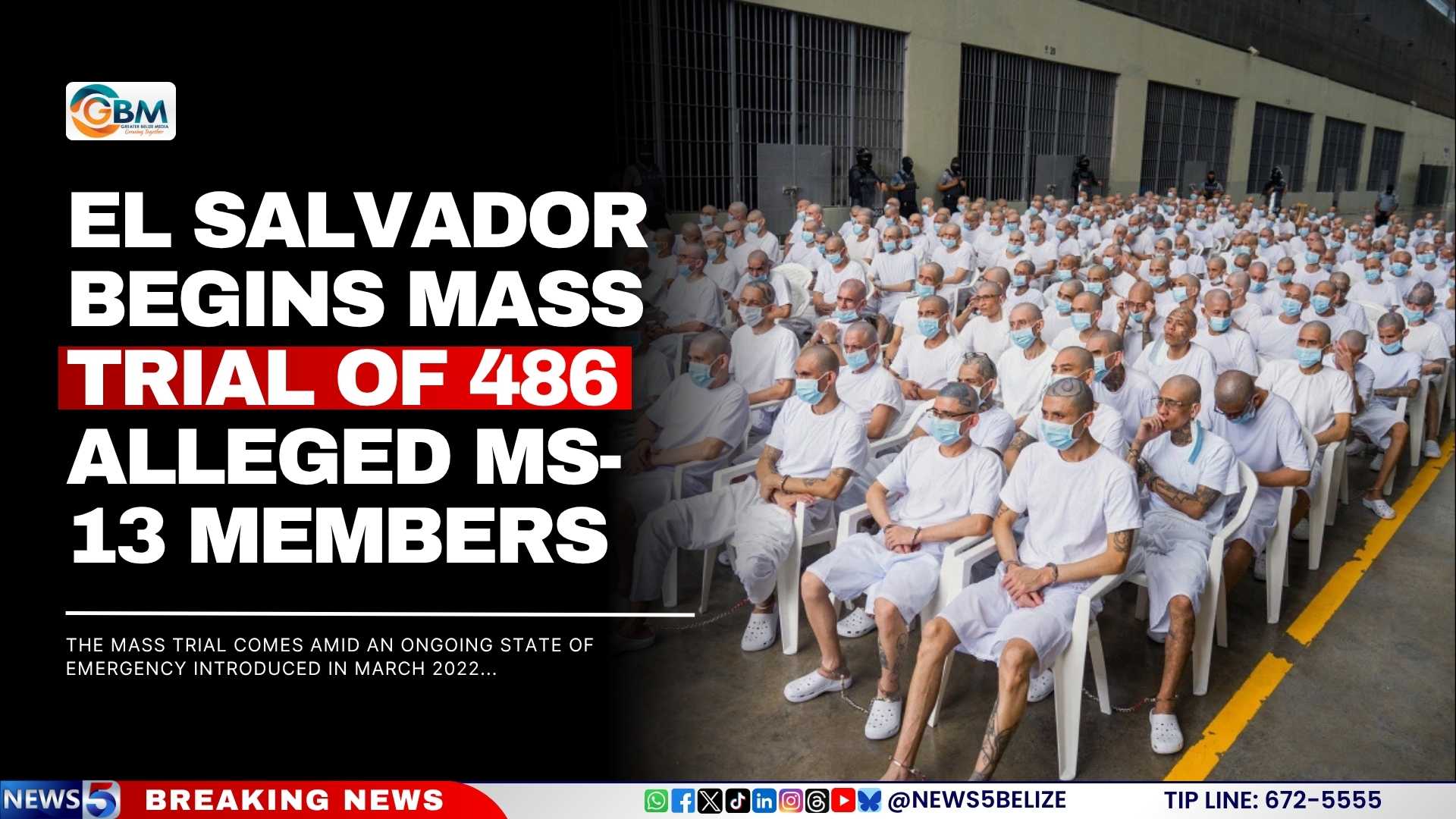
In a landmark legal proceeding that marks one of the most ambitious anti-crime initiatives in El Salvador’s modern history, a mass trial for 486 suspected members of the transnational criminal organization MS-13 has officially commenced. The sprawling case brings charges linked to a staggering 10-year campaign of violence and illegal activity, placing intense global scrutiny on El Salvador’s aggressive approach to combating gang-related crime.
According to El Salvador’s Attorney General’s Office, the 486 defendants stand accused of involvement in more than 47,000 separate criminal offenses between 2012 and 2022. The charges run the gamut of serious crimes, ranging from murder, extortion, and femicide to drug trafficking, arms smuggling, forced disappearances, and even rebellion. Prosecutors allege the gang built a pervasive network of territorial control across the country, effectively operating as an illicit parallel state that undermined official government authority.
A key component of the case ties defendants to one of the worst outbreaks of violence that pushed the country into its current state of emergency: a deadly March 2022 weekend that left 87 people dead across El Salvador. That wave of killings prompted President Nayib Bukele to announce a sweeping nationwide “war on gangs” just days later, triggering the implementation of a continuous state of emergency that remains in place today.
The emergency declaration has dramatically expanded the powers of police and security forces, while temporarily suspending several constitutional protections for citizens. Since the policy took effect, more than 40,000 suspected gang members have been taken into custody across the country. For this specific mass trial, 413 of the 486 accused are already being held in custody, while the remaining 73 are being tried in absentia, with active arrest warrants outstanding for their capture. As of the opening of the proceedings, officials have not released any public timeline for how long the trial process will take.
The operation of this massive trial has not come without international pushback. Human rights observers and United Nations experts have raised sharp concerns about the potential erosion of due process in such a large-scale legal proceeding. They warn that trying hundreds of defendants at once risks violating core defendants’ rights, including the fundamental legal principle of presumption of innocence and the right to access adequate legal representation. The UN has emphasized that efforts to improve public security must not come at the cost of abandoning fair trial standards.
Despite international criticism, Bukele’s harsh anti-gang strategy retains broad popular support within El Salvador. Supporters of the crackdown point to dramatic drops in the country’s historically high homicide rates, noting that the campaign has delivered vastly improved public safety for ordinary Salvadoran citizens after decades of gang-fueled violence and instability.
To contextualize the trial, MS-13 originated far from El Salvador’s borders: the gang was first formed in Los Angeles in the 1980s by Salvadoran immigrants who had fled the country’s brutal civil war. Over the past four decades, it has grown into a powerful transnational criminal network with a heavy foothold across Central America. Last year, the United States formally designated MS-13 as a terrorist organization, underscoring the global scope of the group’s criminal activity.