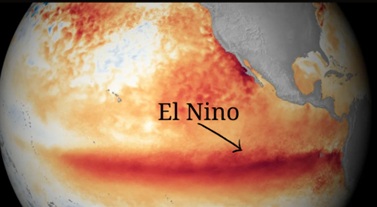
Two leading Caribbean climate research institutions are calling for coordinated, cross-sector preparedness across the region as a developing El Niño event is projected to bring prolonged hotter and drier conditions through 2026 and 2027, raising the threat of cascading, compound climate hazards.
The Caribbean Institute of Meteorology and Hydrology (CIMH) and the University of the West Indies Climate Studies Group Mona (UWI CSGM) issued the formal warning on 22 April 2026, noting that the event will likely bring extended periods of below-average rainfall and unusually high humid heat, with far-reaching consequences for communities and economies across the Caribbean. Dr. Cedric Van Meerbeeck, a climatologist at CIMH, explained that without proactive planning, these overlapping hazards could trigger severe socio-economic damage by straining water supplies, disrupting agricultural output, and increasing public health risks from heat stress.
Historical data underscores the severity of El Niño-related risks for the region: past major events have been tied to crippling droughts such as those recorded in 2009–2010 and 2014–2016, while also elevating the likelihood of extreme heat events, out-of-control wildfires, marine heatwaves that trigger widespread coral bleaching. This pattern of overlapping impacts was already observed during the record-breaking hot years of 2010, 2023, and 2024. The institutions add that regions already grappling with persistent drought—particularly in the Eastern Caribbean—will likely see delayed recovery of groundwater and surface water reserves during the upcoming 2026 wet season, which is scheduled to begin as early as May.
While El Niño is historically associated with reduced Atlantic hurricane activity, experts stress that hurricane and extreme rainfall risks cannot be dismissed, as even a single powerful storm can cause catastrophic damage. Past examples include Hurricane Andrew, which devastated the Bahamas in 1992, and Tropical Storm Erika, which left widespread destruction in Dominica in 2015.
Professor Michael Taylor, co-director of UWI CSGM, emphasized that the current forecast points to an emerging multi-hazard regime, where heat, drought, and marine climate impacts coincide and reinforce one another. “Our research has long pointed to these compound extremes as a serious threat to life and livelihoods in the Caribbean,” Taylor noted in the joint statement. “With advance warning of a looming multi-hazard threat, preparedness is imperative—requiring coordinated and integrated action across and within sectors and a strong regional approach.”
This growing pattern of interconnected climate risks hits the region’s most critical economic and social sectors particularly hard. Reduced rainfall paired with elevated temperatures can drive major agricultural losses, undermining regional food security and threatening the livelihoods of rural communities. Public health risks are also projected to rise, including degraded water quality, increased transmission of vector-borne diseases, and a surge in heat-related illnesses. Water and energy infrastructure will face growing strain, as demand for cooling rises—especially for Caribbean nations that rely on hydroelectric power or freshwater-cooled energy generation.
Broader economic ripple effects are also expected to impact key industries including tourism, fisheries, and maritime shipping. Because the Caribbean is heavily dependent on imported goods, global supply chain disruptions tied to El Niño can hinder trade, logistics, and access to critical goods and services. Governments have been advised to conduct proactive risk assessments for supply chains, transportation networks, and key regional trade routes, pointing to recent drought-related disruptions at the Panama Canal— a critical transit hub for goods bound for the Caribbean and U.S. East Coast— that have already driven up food costs and weakened regional food security.
Forecast accuracy for El Niño typically improves starting in May, so Van Meerbeeck has urged all stakeholders to monitor updated projections closely, noting that regional climate teams will continue tracking conditions and releasing timely updates. Decision-makers and the public are encouraged to look out for guidance from the upcoming Caribbean Climate Outlook Forum (CariCOF), hosted by CIMH and scheduled for the week of 24 May. The forum will bring together regional climate experts, staff from National Meteorological and Hydrological Services, and stakeholders from climate-sensitive sectors to deliver targeted guidance ahead of the approaching wet and hurricane season. Residents are also advised to access location-specific updates through their national meteorological services.
CIMH principal Dr. David Farrell emphasized that early awareness and proactive action are the most effective tools to reduce harm, noting that timely, actionable climate data is critical to supporting evidence-based decision-making across the region. “Proactive measures are vital for mitigating the impacts of extreme weather events on climate sensitive sectors, communities, and national economies,” Farrell said.
Farrell also reaffirmed CIMH’s ongoing commitment to strengthening regional climate resilience, noting the institute has expanded its strategic focus to include water resource management, marine systems, earth observation, and climate forecasting to improve early warning services across the Caribbean. In recent years, CIMH has dedicated substantial research effort to mapping how climate hazards like El Niño generate cascading cross-sector impacts that drive socio-economic harm across the region. This research directly supports the development of risk-informed climate adaptation programs, which are central to building long-term resilience to climate change and growing climate variability in the Caribbean.
Strengthening early warning systems and expanding public access to clear, actionable climate information remains a top priority for the institute, Farrell added, and thanked regional governments and development partners for their ongoing support of CIMH’s work to improve early warning capacity across the Caribbean.