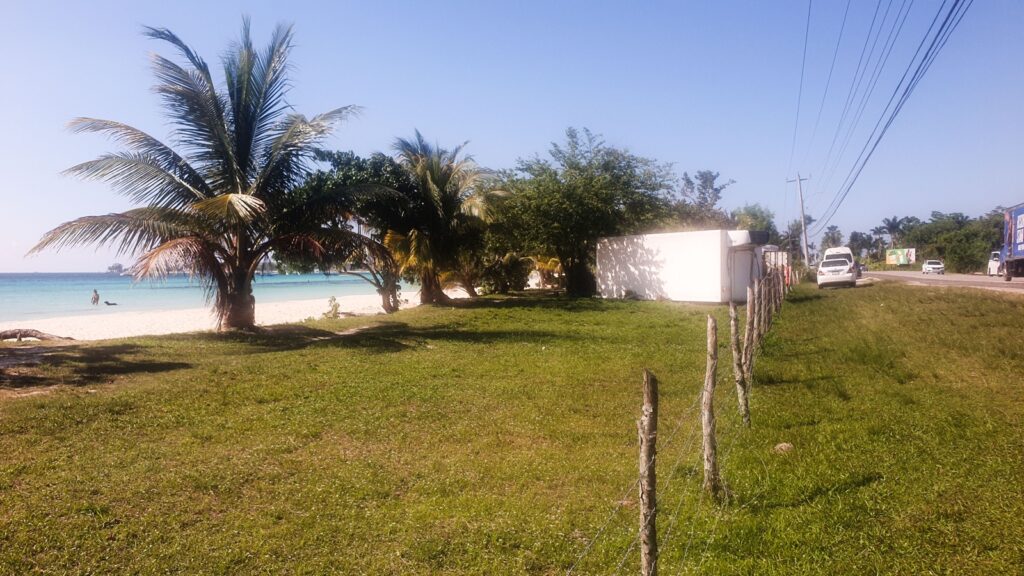
NEGRIL, Hanover — A sudden public access dispute that threatened to cut off sections of Jamaica’s iconic Seven Mile Beach in the popular resort town of Negril has been resolved within hours, after coordinated intervention from local government agencies quickly removed an unauthorized barrier.
The incident unfolded early Tuesday, when local hotelier Winthrop “Throp” Wellington discovered a barbed-wire fence spanning from the main public road down to the shoreline during his daily morning jog along Long Bay Beach. Shocked by the obstruction, Wellington recorded a video of the blocked access route, which spread rapidly across social media and sparked widespread public anger over attempts to restrict entry to one of Jamaica’s most beloved public natural spaces.
Wellington emphasized that the barrier was an illegal violation of public right-of-way, noting that Seven Mile Beach is universally recognized as public land open to all. “Nobody owns this beach, and nobody has the right to prevent people from moving freely along it,” he said, adding that even beachfront hotel operators like himself have no authority to block public access. He warned that allowing such encroachments would set a dangerous precedent for further privatization of the public coastline.
The fence was erected by Diego Heaven, a local water sports and diving business owner who operates Reef Explorer and Dive Centre on a plot of land leased from Jamaica’s Urban Development Corporation (UDC). Heaven told reporters the barrier was never intended to block public access to the beach, but was a desperate measure to protect his business assets after a string of repeated thefts that have cost him more than JA$3.7 million in lost equipment.
Over the past several months, Heaven explained, thieves have stolen paddleboards, beach chairs, and critical diving gear from his operation, with the most recent theft occurring just the previous Saturday. He noted that while his property is covered by security cameras, the area lacks sufficient street lighting, leaving dark stretches vulnerable to criminal activity. He insisted he supports full public access to the beach, even providing free drinking water and changing facilities for visitors, and that the fence was only meant to secure his gear storage area. Heaven added that the thefts have been carried out by local individuals, not tourists, and appealed to community members to support local businesses rather than harm them.
Local industry leaders expressed deep concern over the incident, warning that unauthorized barriers would open the door for widespread encroachment on public beach access, a core draw for Negril’s tourism-driven economy. Immediate past president of the Negril Chamber of Commerce Elaine Allen-Bradley stressed the critical need to enforce existing land use regulations to protect the public coastline.
When authorities were notified of the obstruction Tuesday morning, multiple local agencies mobilized immediately to address the issue. Richard Wallace, chairman of the Negril Destination Assurance Council (DAC), told the Jamaica Observer that the fence was removed completely within hours of the complaint being filed. “As soon as it was brought to our attention, the different agencies jumped into action, and the fence was removed forthwith,” Wallace said. By midday Tuesday, he confirmed that full public access had been restored, and normal activity along Seven Mile Beach had resumed.
The rapid resolution has eased immediate fears of prolonged access restrictions, though the incident has renewed discussion around balancing private business security needs on the coastline with the public’s long-held right of access to Negril’s famous beaches.