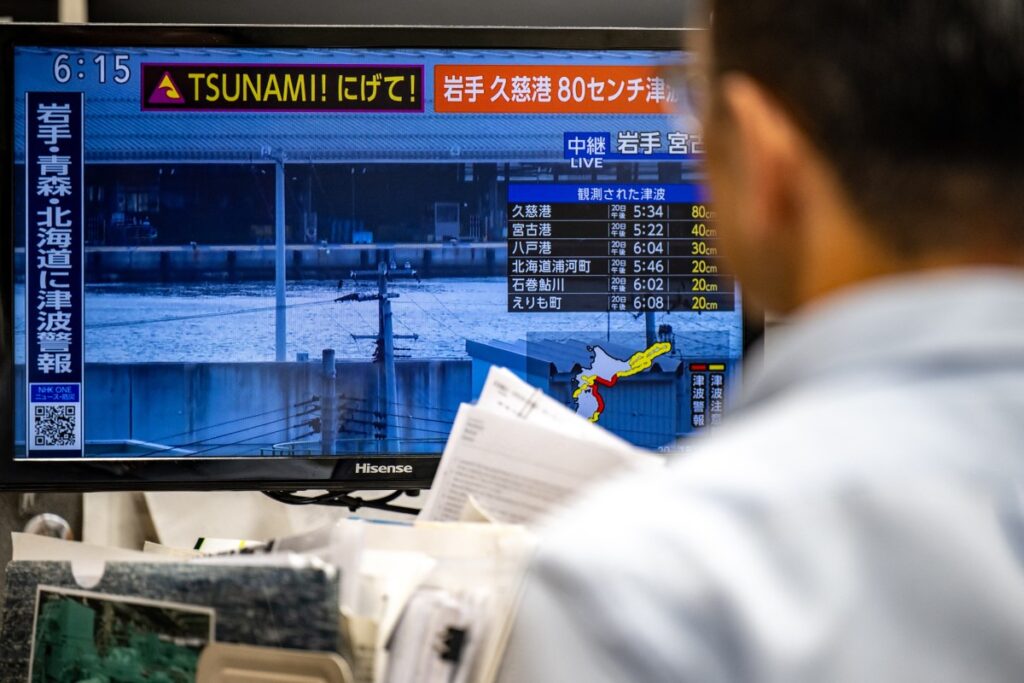
On Monday, Japanese public officials activated a special national warning after a powerful undersea earthquake shook the country’s northern coast, triggering initial tsunami alerts and leaving the nation bracing for the possibility of a far larger seismic event in the coming period.
The 7.7-magnitude quake struck at 4:53 pm local time (0753 GMT) in the Pacific Ocean off the coast of Iwate Prefecture, Japan’s northern region. Seismologists initially assessed the event as a 7.4-magnitude temblor, before upgrading the reading first to 7.5 and ultimately settling on a 7.7 rating. Despite the significant strength of the quake, which was powerful enough to sway high-rise structures in Tokyo, hundreds of kilometers away from the epicenter, there have been no immediate reports of major structural damage or critical injuries, according to Japan’s top government spokesperson.
In an official statement, the Japan Meteorological Agency confirmed that the probability of a subsequent massive earthquake measuring magnitude 8.0 or higher in the region is now elevated compared to typical baseline risk levels. The unexpected seismic activity prompted quick action from national authorities, who issued public guidance to residents across the affected northern zone.
Speaking at a televised briefing, a senior Cabinet Office official acknowledged that there is no definitive certainty that another major quake will strike. Even so, the official emphasized that all local residents must prioritize personal disaster preparedness, under the core principle that individual responsibility plays a critical role in protecting personal safety during seismic emergencies. Chief Cabinet Secretary Minoru Kihara later reaffirmed the lack of early reports of serious harm during a separate press conference, as authorities continue to monitor seismic activity across the region closely.