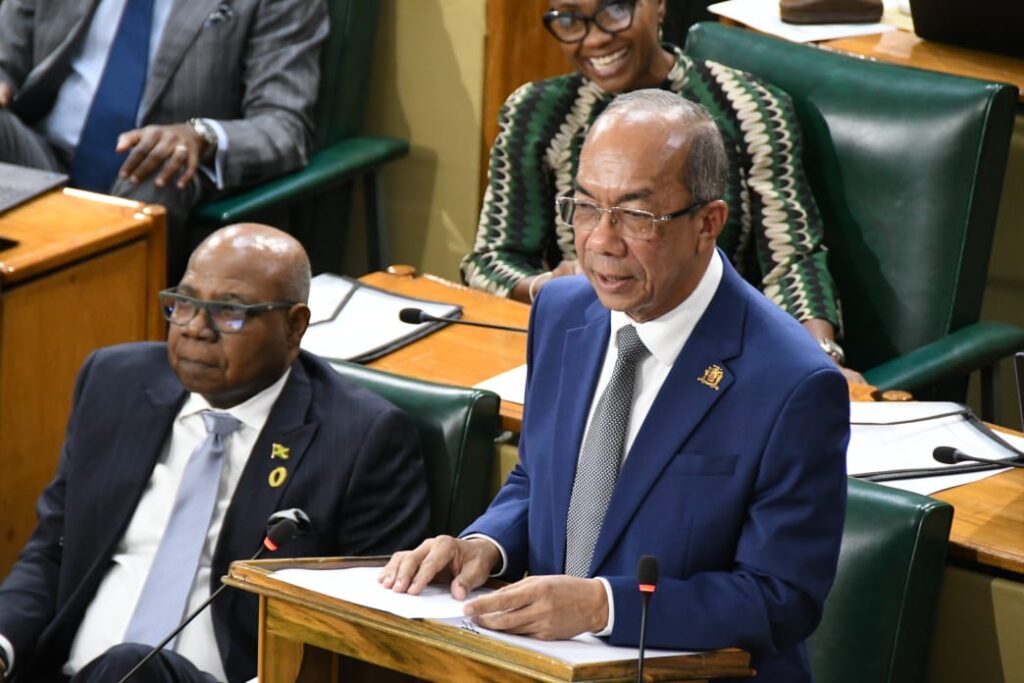
KINGSTON, Jamaica — Tensions between Jamaica’s top security leadership and local civil society organizations have flared once again, as National Security Minister and Deputy Prime Minister Dr. Horace Chang reiterated that no independent advocacy group has the authority to dictate operational decisions to the country’s national police force.
Chang delivered the sharp rebuke Tuesday afternoon during his opening address for the 2026/27 Sectoral Debate held at Gordon House, Jamaica’s parliamentary building. The comment comes as the latest chapter of a long-running, combative dispute between Chang and civil society groups — most prominently Jamaicans For Justice (JFJ) — over a key policing reform demand: mandatory body-worn camera use for officers during planned operations.
The push for expanded body camera deployment gained traction last year, when JFJ stepped up its calls amid a significant spike in fatal police shootings across the island. That period coincided with an unexpected nationwide drop in homicide rates, a trend the government has highlighted as a sign of progress in its anti-crime strategy.
Addressing lawmakers, Chang pushed back against civil society pressure while confirming that the government has followed through on its commitment to acquire body cameras for the Jamaica Constabulary Force (JCF), with all purchased units already delivered to the service. But he emphasized that operational deployment decisions rest exclusively with the country’s top police leadership.
“Body-worn cameras are part of modern police equipment, and the only person who has the authority and the professional capacity to instruct where they should go is the commissioner of police and his team,” Chang told the legislative chamber. “No civil society organisation can tell us where to put them. That was what was damaging the police for years. Everybody [acts like] cowboy policing and ‘donmanship’ and tell police where to go police.”
Despite pushing back on external demands for deployment timelines and scope, Chang acknowledged that body cameras serve a critical purpose in strengthening police transparency and accountability. He added that the government is continuing its investment in the technology, with another 1,000 units already on order to expand access across the force.
Chang also outlined his government’s broader surveillance infrastructure investment plans during the address. The Jamaica Eye Programme, the country’s national public closed-circuit television network, is on track to expand its footprint, with a target of 3,000 active cameras operational by the 2028 budget year, he confirmed.
Closing his remarks on police governance, Chang reaffirmed the division of responsibilities between political leadership and law enforcement command. “My job is oversight and providing equipment,” he said. “[The] society holds them accountable, they do policing, and we have an excellent commissioner of police.”
Reporting by Lynford Simpson