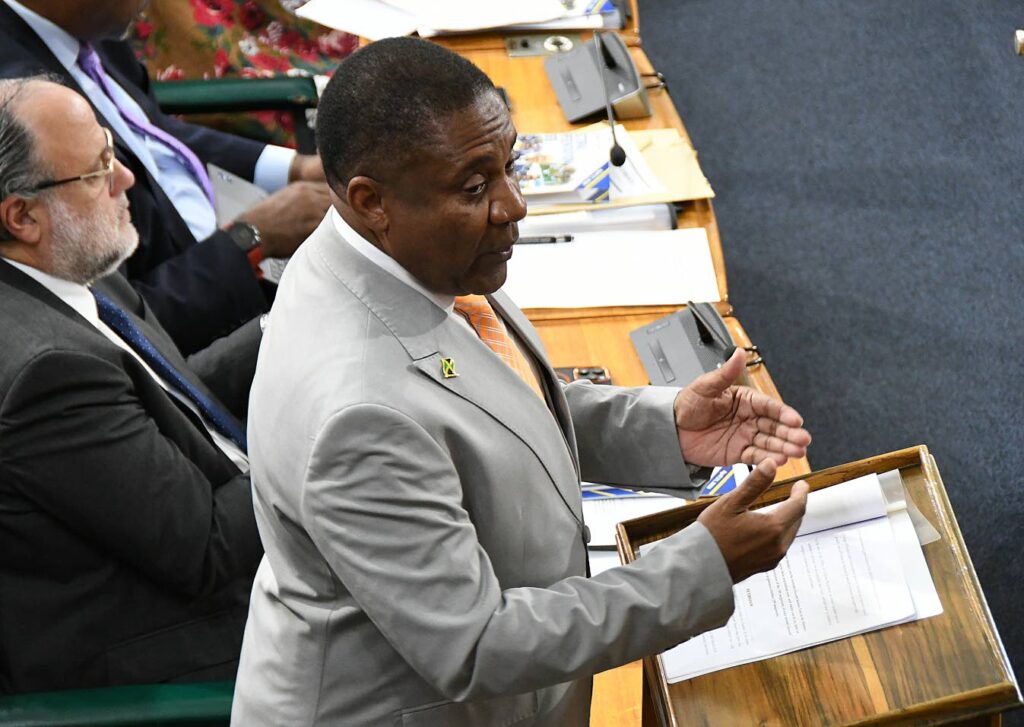
KINGSTON, Jamaica — In a pointed address during the 2026/27 Sectoral Debate in Jamaica’s House of Representatives on Tuesday, opposition energy spokesperson Phillip Paulwell has publicly challenged the ruling government to deliver clear, time-bound details about the fuel price cap imposed on state-owned oil refinery Petrojam, a policy Paulwell argues has accelerated the facility’s financial decline and fostered unaccountable government interference.
Paulwell, drawing attention to the refinery’s once-solid track record of consistent annual profits, noted that Petrojam is now staring down its third straight year of steep financial contraction, a downturn that has coincided with the implementation of the controversial price cap. Energy Minister Daryl Vaz first confirmed the policy’s existence in an April 14 post-Cabinet media briefing, where he disclosed that a $4.50 per unit cap has been placed on fuel sold by Petrojam. The measure was introduced to shield Jamaican consumers from the full brunt of global oil price spikes triggered by heightened Middle East conflict that broke out on February 28, preventing the entire cost increase from being passed on to everyday motorists and households.
However, Vaz has already acknowledged that the cap is financially unsustainable. He warned that if the policy remains in place through the end of June, Petrojam will accumulate a staggering $11.8 billion in losses. For Paulwell, the sudden disclosure of the cap after years of declining profits raises urgent unanswered questions: When exactly was the price cap formally implemented? How does the policy align with the previously transparent weekly petroleum pricing framework that once governed the sector?
The opposition spokesperson argued that arbitrary tampering with Petrojam’s pricing mechanism has deepened public distrust over disproportionate government meddling in the state-owned refinery’s core operations. Rather than forcing the facility to absorb unplanned cost hikes to protect consumers, Paulwell said the government should instead adjust its tax rates on fuel — a policy change that would relieve consumer pressure without putting Petrojam’s long-term solvency at risk.
Paulwell also pushed for full parliamentary disclosure of Petrojam’s current operational standing, demanding Minister Vaz present a detailed, credible, costed strategy to return the 40-year-old refinery to sustained profitability. The facility, which has already lost billions of dollars over the past three financial years, relies on outdated technology that drags down operational efficiency and pushes up running costs. Paulwell emphasized that the previous administration had already mapped out a clear path forward, including a targeted expansion and modernization program that has since been sidelined. He rejected calls for new consultant-led assessments of alternative operating models, arguing that solutions have already been identified.
Without full transparency and a clear recovery plan, Paulwell warned, Jamaican taxpayers will continue to be on the hook for mounting losses at a failing enterprise with no clear path to recovery. He compared the current approach of forcing Petrojam to operate under the unsustainable price cap to “carrying water in a basket” — a futile exercise that will only deliver years of continued red ink and public financial burden.