As Jamaica navigates a heated public debate over the future of the Jamaica Public Service (JPS) licence – which is scheduled to expire in 2027 – and growing public frustration over persistent high electricity prices, Opposition Energy Spokesman Phillip Paulwell has pushed back against dominant narratives, arguing that flawed government energy policy, not the existing licence framework itself, is the root cause of the island nation’s affordability crisis.
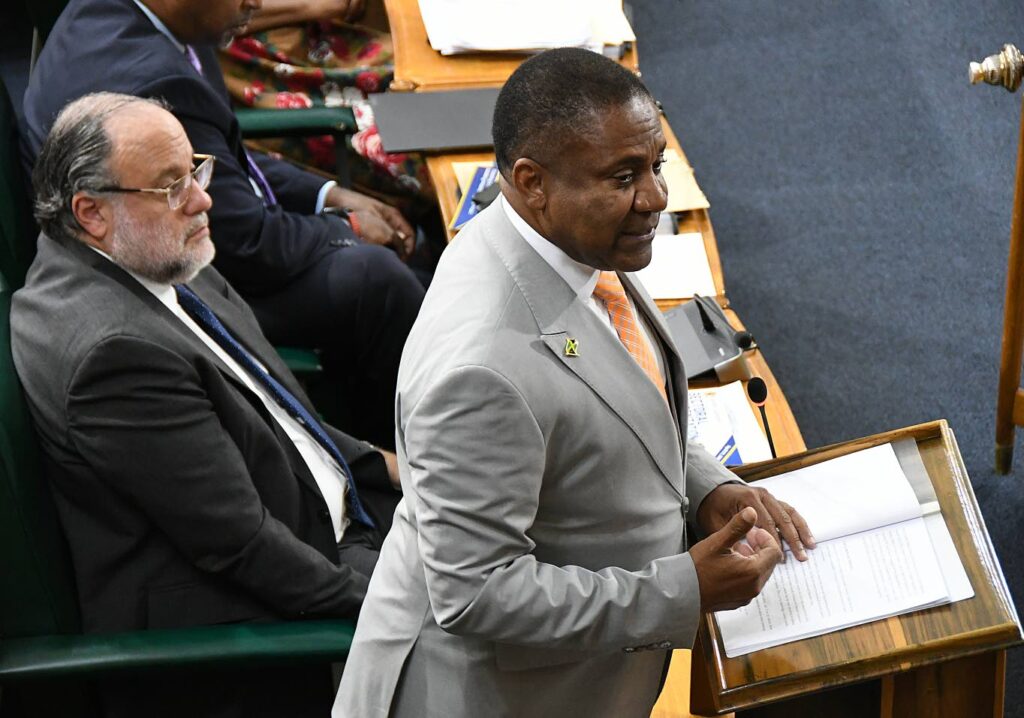
Speaking during his contribution to the 2026/27 sectoral debate in Jamaica’s Parliament on Tuesday, Paulwell dismantled what he framed as a misleading public conversation that links elevated power costs directly to the terms of JPS’s operating licence. Instead, he traced the problem to successive government failures to diversify the country’s energy mix and open up the sector to healthy competition, before laying out a comprehensive set of restructuring proposals to anchor any upcoming revised or renewed licence agreement.
At the core of Paulwell’s plan is a fundamental overhaul of how electricity generation capacity is developed and approved in Jamaica. A centerpiece reform is the elimination of JPS’s current right of first refusal to replace its existing generation infrastructure. Going forward, he argues, all new generation licences should be awarded through the government-run Generation Procurement Entity (GPE) via a fully transparent international competitive tender, with contracts awarded based on the lowest-cost viable renewable energy technologies paired with high-efficiency energy storage solutions.
“ You can’t award licences for renewables without thinking about storage, and the level of efficiency in storage has improved tremendously,” Paulwell told Parliament. He emphasized that expanding competition in renewable energy generation is the only sustainable path to long-term cost reduction, a position that aligns with global and regional policy trends shifting toward competitive procurement to cut energy prices and speed the clean energy transition.
Beyond generation reform, Paulwell called for the long-delayed rollout of energy wheeling, a transmission mechanism that would allow large industrial and commercial businesses to generate power at one site and move it across the national grid to operations at other locations. He also pushed for expanded self-generation access, with a priority on the country’s special economic zones, arguing that allowing zone operators and tenants to produce their own power would cut operational costs, boost Jamaica’s global competitiveness, and attract much-needed foreign investment.
For residential consumers and small business owners, Paulwell highlighted the urgent need to reform and improve net metering programs, which currently allow households with rooftop solar to feed excess power back into the grid. Updating these policies would put more money in consumers’ pockets and encourage broader adoption of residential renewable energy, he said. The opposition spokesman also proposed a major shift in distribution infrastructure, calling for competitive bidding for microgrid licences with a clear mandate to extend reliable power access to unserved and underserved communities across Jamaica. Even where public subsidies are required to make the projects economically viable, universal access is a non-negotiable public priority, he argued: “This is what it means to build with purpose and to build with people.”
Paulwell also turned attention to systemic inefficiencies that drive up overall costs for all consumers, specifically highlighting widespread illegal power connections and unmetered usage. He called for a clear, enforceable national mandate to crack down on these losses, urging the government to take greater responsibility for addressing the issue. His approach would pair stiffer penalties for electricity theft in more affluent communities with targeted support to connect low-income households to the grid legally, removing the incentive for illegal hookups in marginalized areas.
In addition to generation and distribution reforms, Paulwell called for clearer structural separation of JPS’s core generation, transmission, and distribution operations, as well as sweeping billing transparency reforms. Slamming Jamaica’s current billing system as one of the most opaque in the world, he argued that all charges – for generation, transmission, distribution, and system losses – must be fully disaggregated to give consumers clear insight into exactly what they are paying for.
Consumer protection was another key pillar of Paulwell’s proposals, particularly around compensation for damaged household appliances caused by frequent voltage fluctuations. He called for an end to the practice of JPS avoiding liability by referencing fine print in consumer contracts, saying the sector must be restructured to prioritize robust protections for residential customers.
Paulwell’s comprehensive set of recommendations comes as Jamaica enters a multi-year period of review ahead of the 2027 expiry of JPS’s current licence, with affordability remaining one of the most pressing public policy issues for Jamaican households. His intervention reinforces longstanding opposition calls to reframe Jamaica’s energy sector around consumer interests rather than incumbent utility preferences.