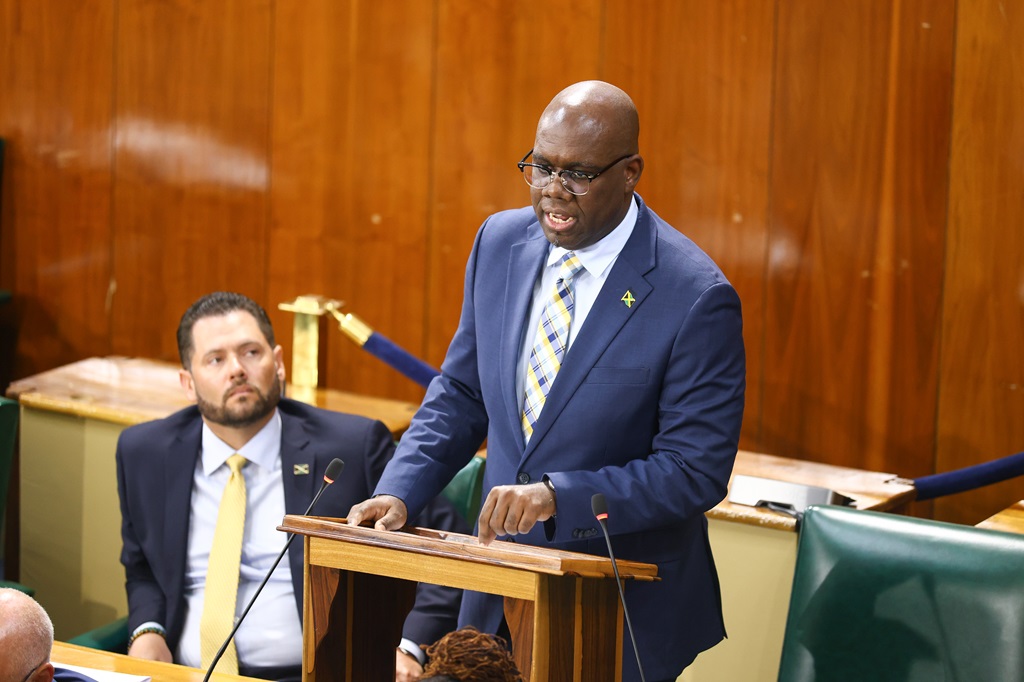
During a Friday sitting of Jamaica’s Senate, government Senator Dr. Elon Thompson publicly defended the newly approved Casino Gaming (General) Regulations 2025, arguing that the Holness administration has struck a careful and effective balance between fostering economic growth through investment, commercial development and entertainment, and putting in place robust guardrails to enforce accountability and responsible industry operation. The upper legislative chamber approved the new regulatory framework shortly after Thompson’s remarks, bringing long-awaited formal implementing rules to the 15-year-old Casino Gaming Act, which was originally passed into law in 2010.
Thompson laid out that the new regulations lay the foundational administrative structure for the Casino Gaming Commission, outlining clear protocols for the body’s procedural work, binding obligations for licensed operators, mandatory record-keeping and reporting requirements, regulatory fee structures, inspection and enforcement authority, and overarching operational standards designed to keep the industry running in an orderly, transparent fashion.
Addressing widespread public concerns that expanded casino gaming could fuel addiction, widespread financial hardship and broader social disruption, Thompson acknowledged that these anxieties deserve full respect. But he pushed back against claims the regulatory regime ignores these risks, emphasizing that the new rules are explicitly designed to anticipate harm and put legislative safeguards in place to mitigate it directly. The regulations, he noted, require operators to implement formal systems to protect player well-being and proactively prevent and manage problematic gaming behavior.
Thompson went on to detail the layers of protection built into the new framework. The rules prohibit participation by people who are intoxicated, mandate strict protocols to block access by minors, require detailed ongoing tracking of patron activity, establish formal dispute resolution processes, and set up mandatory reporting structures designed to catch patterns of harm before they escalate. When combined with the publicly available Responsible Gaming Framework hosted on the Casino Gaming Commission’s website, Thompson said the policy’s core priorities become even clearer. He stressed that the public framework is not an afterthought or peripheral add-on, but a central anchor of the entire regulatory regime.
Thompson explained that the framework is built on a clear recognition that while most people can engage in casino gaming responsibly, a subset of the population is inherently vulnerable due to preexisting psychological, social or economic challenges that can make it difficult to maintain informed, controlled decision-making. This foundational understanding, he argued, is what shifts the entire approach from passive, after-the-fact regulation to proactive, active harm reduction.
The senator highlighted that the full legal and regulatory regime establishes a three-tiered protection model that addresses risks across three overlapping levels: individual patrons, licensed operator organizations, and the wider Jamaican community. For individual patrons, the framework requires that they not only be allowed to participate voluntarily, but also be given clear, accessible information to fully understand the risks associated with gaming. For operators, the regime mandates that companies build internal monitoring systems capable of identifying early signs of problematic behavior and responding appropriately. Finally, the framework requires cross-institutional collaboration to turn abstract goals of prevention, detection and treatment of problem gambling into tangible, operational realities across the country.