A long-simmering constitutional debate over candidate eligibility for general elections in St. Vincent and the Grenadines (SVG) has entered a critical new phase, with the newly elected New Democratic Party (NDP) government moving to codify a clarification that directly contradicts a dramatic shift in position by former prime minister Ralph Gonsalves and his Unity Labour Party (ULP).
The controversy traces back to the 2009 constitutional referendum, when Gonsalves, then serving as prime minister, openly acknowledged that SVG’s founding constitution allowed any Commonwealth citizen — not just native-born or naturalized Vincentians — to qualify as a candidate in national general elections. At the time, Gonsalves pushed voters to approve constitutional changes that would narrow that eligibility, a position the NDP, then the opposition, campaigned against vigorously. The referendum was soundly defeated, leaving the original Commonwealth citizen eligibility rule intact.
Now, 16 years later, the political landscape has flipped dramatically. After Gonsalves’ 25-year incumbent ULP government was defeated in the November 2025 general election, the former leader has reversed his 2009 stance. He now claims Commonwealth nations qualify as “foreign powers”, and has challenged the eligibility of two top NDP officials — Prime Minister Godwin Friday, who has represented Northern Grenadines in Parliament since 2001, and Foreign Affairs Minister Dwight Fitzgerald Bramble, first elected as MP for East Kingstown in 2020 — on the grounds that both hold Canadian citizenship obtained through their own application. The ULP has filed two electoral petitions, which are scheduled to go to trial in June, asking the courts to remove the two officials from their parliamentary seats.
In response to the legal challenge, the NDP, which won a 14-1 supermajority in Parliament after the 2025 election, has brought forward a constitutional amendment for a parliamentary vote scheduled for Tuesday. The amendment would formally add a definition of “foreign power” to the constitution’s interpretation section, explicitly stating that a foreign power is any state that is not a member of the Commonwealth. Because the change only affects the definition section, not an entrenched core provision of the constitution, no new public referendum is required to enact it, and the amendment is all but guaranteed to pass given the NDP’s overwhelming parliamentary control.
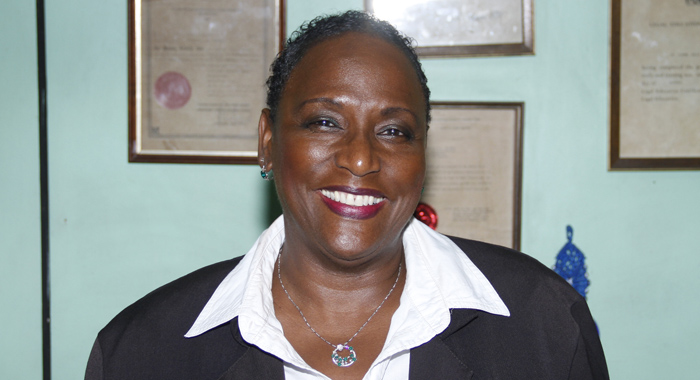
Kay Bacchus-Baptiste, a prominent constitutional lawyer and former NDP senator, has defended the government’s move, framing it as a long-overdue clarification rather than a substantive rewrite of the nation’s supreme law. Speaking to iWitness News earlier this week, she noted that the 2009 referendum result, which defeated all proposed constitutional changes, confirmed that the Vincentian public intended to keep the original Commonwealth citizen eligibility rule in place. She pointed out that the original constitution’s definition section never explicitly defined the term “foreign power”, even as the core text clearly restricts eligible candidates to Commonwealth citizens.
“‘Commonwealth citizen’ is a clear definition,” Bacchus-Baptiste said. “Canada is part of the Commonwealth. So, it is clear. The law says that you have to be a Commonwealth citizen, which is different from the constitutions of other Caribbean nations like Dominica and St. Kitts, which restrict candidates to their own citizens.”
Bacchus-Baptiste emphasized that Gonsalves’ own words from 2009 confirm that the original interpretation has long been understood: back then, Gonsalves himself acknowledged that any Commonwealth citizen with one year of residence in SVG could run for office, and campaigned to change that rule. She called the current ULP argument a complete reversal of the party’s long-stated position.
“In our law, it says a Commonwealth citizen. That alone is a massive distinction that would be difficult to get over. And I do agree that enough has been said, and it should be clarified, because even Dr. Gonsalves himself had said that a Commonwealth citizen can run; he had said it over and over and wanted to amend it. Now he’s changing his mind or pretending that that is not what the law says,” she said. “It says that, and I commend this government for clarifying it by simply including in the definition section something that was omitted. That is what they’re doing and I commend them.”
Gonsalves and ULP spokespeople have pushed back against the amendment, accusing the NDP government of enacting an “insurance policy” to pre-emptively protect its officials from a potential unfavorable court ruling in the upcoming petitions. In an about-face from his position during the 2015 post-election legal challenges brought by the NDP, Gonsalves said in an April 15 interview with Star Radio that the courts should be allowed to issue an independent ruling on the eligibility petitions.