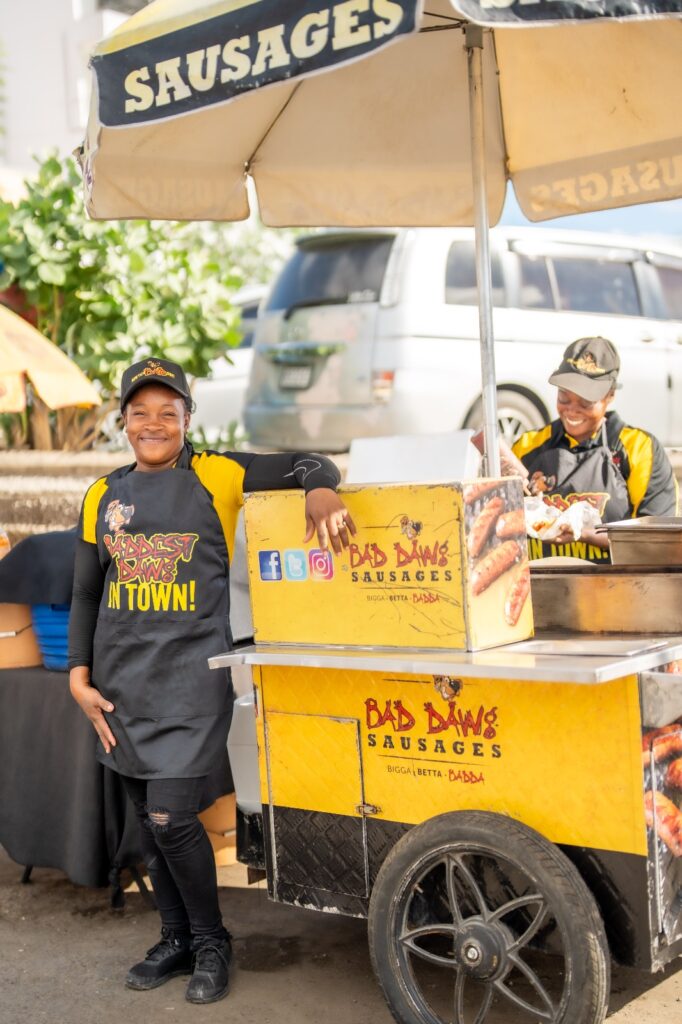
KINGSTON, Jamaica — A homegrown Jamaican food brand is redefining market expansion by prioritizing local empowerment alongside business growth, building a sustainable distribution model that lifts small business owners across the island. Bad Dawg, a brand under regional food producer CB Foods, has moved beyond traditional retail shelf placements to build a vendor-led micro-enterprise network that turns aspiring entrepreneurs into small business owners under the brand’s umbrella.
What started as a small pilot project in 2012 with just one branded food cart has now blossomed into a network of 18 independent vendors operating across multiple Jamaican parishes. The model was originally conceived purely as a local job creation effort, but it has steadily evolved into a structured entrepreneurship platform that balances brand support with operational autonomy. Under the framework, vendors own and manage their day-to-day business operations, while Bad Dawg provides critical foundational support including branded assets, comprehensive business training, and streamlined logistics coordination.
Nicole Hall, senior manager for commercial marketing at CB Foods, emphasized that this community-focused model remains a core strategic pillar for Bad Dawg decades after its launch. “Bad Dawg was born out of a job creation initiative, designed to give individuals the opportunity to be their own boss,” Hall explained. “Through entrepreneurship, our vendors are able to grow and build something meaningful that lasts for themselves and their families.”
For many participants in the program, the low-risk model has opened doors to scalable growth that would have been out of reach for independent small operators. Take Shauna Lee McCalla, who joined the network eight years ago: she now runs two branded carts and has created five full-time local jobs in her community. Another long-time vendor, Demario Brown, who operates out of a location at NCB in Morant Bay, St Thomas, has expanded to two sales points and manages a team of eight workers that includes temporary seasonal staff.
The widespread appeal of the Bad Dawg model stems from two key advantages that address common barriers to small business entry: a relatively low barrier to get started, and the instant credibility that comes from partnering with an established local brand. Vendors gain immediate access to existing customer recognition and proven product demand, while still retaining full control over their daily operations and profit streams. “People trust the brand, and that trust carries over into my business,” Brown shared. “It’s pushed me to be more focused about sustainable, long-term growth that I couldn’t have built on my own.”
Beyond the individual success stories, Bad Dawg’s program aligns with a broader global shift in the food industry toward supporting informal and micro-enterprise activity. More food brands are turning to structured branded vendor systems as a win-win strategy: they allow companies to scale their direct-to-consumer distribution reach without the heavy capital outlay required for opening corporate-owned locations, while creating income-generating opportunities for local community members.
While Bad Dawg expanded into mainstream supermarket retail across Jamaica in 2014, the original vendor network remains a central component of the brand’s distribution strategy, particularly for connecting directly with consumers in local communities. CB Foods says it will continue investing in vendor development, offering ongoing operational guidance and enforcing consistent brand standards across all network locations to support long-term success.
“Our vendors are at the heart of the brand, and we remain committed to supporting them as they continue to grow,” Hall added. Though the network remains relatively small in overall scale, the Bad Dawg model offers a replicable example of how structured, supportive vendor systems can create accessible pathways to income generation and small business ownership, especially in economic environments where accessing startup capital and market access remains a major challenge for aspiring entrepreneurs.