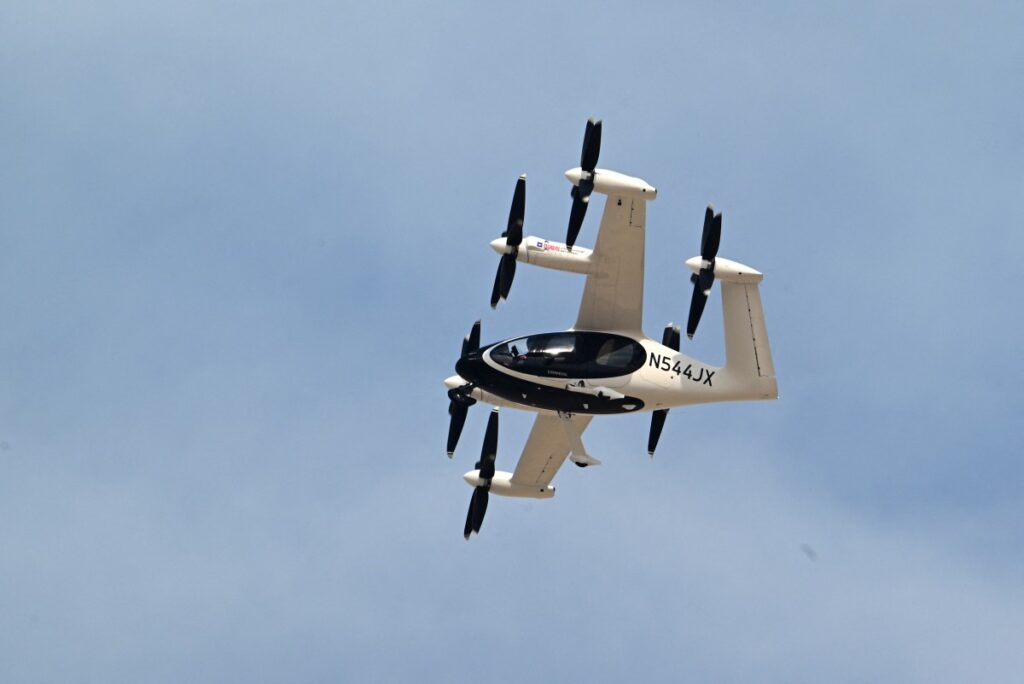
In a landmark step forward for urban advanced air mobility, Dubai has officially completed construction of the world’s first purpose-built electric vertical take-off and landing (eVTOL) flying taxi station, with commercial passenger services on track to launch by the end of 2025, Gulf emirate officials announced Thursday.
The completion of the project was marked by a visit from Sheikh Hamdan bin Mohammed, Dubai’s Crown Prince and Deputy Prime Minister of the United Arab Emirates, according to an official statement released by the emirate’s media office. Billed as a one-of-a-kind infrastructure facility globally, the new hub spans four floors across 3,100 square meters near Dubai International Airport. It comes equipped with a two-storey public parking facility, two dedicated takeoff and landing pads for air taxis, and purpose-built high-capacity charging infrastructure tailored for electric eVTOL craft.
As the central operations hub for Dubai’s upcoming flying taxi network, the completed station is designed to handle up to 170,000 passenger trips annually. Officials added that three additional purpose-built air taxi stations are already in the planning pipeline to expand the network across the emirate in coming years.
All commercial air taxi flights will be operated by Joby Aviation, a California-based electric aviation company that has secured exclusive six-year operating rights for the service in Dubai.
Speaking on the occasion of the station’s completion, Sheikh Hamdan emphasized that the new infrastructure represents a critical milestone in Dubai’s push to adopt cutting-edge, sustainable transportation alternatives and future-proof the city’s mobility ecosystem for decades to come. For years, Dubai — the UAE’s most populous urban center — has positioned itself as the leading business and tourism hub of the Middle East, consistently investing in emerging technology to maintain that status.
The announcement comes against a backdrop of recent regional geopolitical tension: in recent weeks, the Gulf region has seen tit-for-tat attacks launched by Iran against its neighboring Gulf states, carried out in retaliation for the US-Israeli military offensive in Gaza. A two-week ceasefire has now been implemented across the region, easing immediate security concerns.