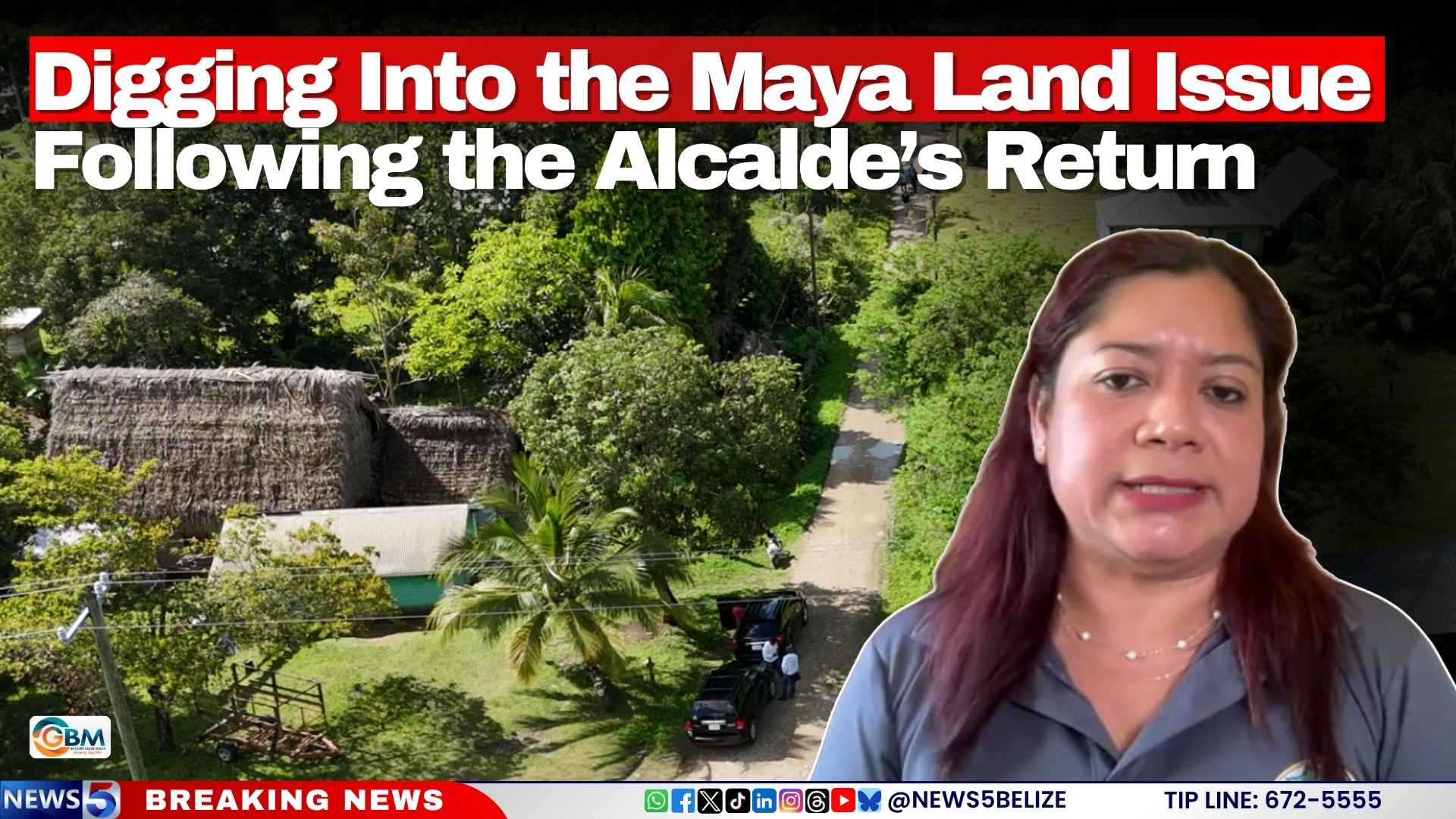
A decades-long fight over Indigenous land rights in southern Belize has erupted into open unrest, following the brief disappearance and sudden return of a local Indigenous leader that left two community homes damaged by mob violence. The incident has reignited urgent calls for the Belizean government to honor a 10-year-old court order to codify Maya customary land rights, with Indigenous advocacy groups accusing officials of cutting Maya communities out of the legislative process entirely.
The crisis unfolded this week in Indian Creek Village, Toledo District, where First Alcalde Marcus Canti went missing from his personal farm earlier this week. His disappearance sparked immediate outrage among community members, who took to the streets in protest, damaging the private residences of two local leaders. Canti resurfaced days later, reporting to police that he had been abducted by two unidentified men and is currently receiving outpatient medical care for injuries sustained during the incident.
In the immediate aftermath of Canti’s disappearance, local authorities briefly detained Village Chairman Domingo Choc and Deputy Alcalde Manuel Ack as persons of interest. Both men were released without charge within days after providing conclusive evidence of their innocence.
The unrest has thrown long-simmering tensions over unregulated land tenure in the region into the global spotlight. The Sarstoon Temash Institute for Indigenous Management (SATIIM), a leading advocacy group for Maya land rights, issued an official press release calling on the government to immediately pause work on new land tenure legislation until full, meaningful consultations with all affected Maya communities can be completed.
SATIIM’s statement emphasizes that the Belizean government holds a clear legal obligation to center Maya villages in the development of laws governing customary land tenure, a requirement stemming from a landmark 2015 ruling by the Caribbean Court of Justice. The court ruled that Maya customary land rights are protected under Belize’s constitution and ordered the government to draft and enact formal legislation to safeguard those rights nearly a decade ago. As of 2026, that binding order has yet to be fulfilled.
The group went on to criticize the government’s opaque legislative process, noting that third-party private landowners have already been granted access to the draft tenure law, while affected Maya communities have not been consulted at all. “That third-party landowners have had access to the draft legislation while Maya communities have yet to be consulted speaks volumes about the deep imbalance of power that continues to define this process,” SATIIM wrote in the release. The group warned that the lack of transparency has already created a fertile ground for misinformation, which has stoked widespread mistrust, fear and rising tension across southern Belize. SATIIM has called on the government to immediately release the full draft of the legislation to all Maya villages and open inclusive, good-faith negotiations before moving forward with a final vote.
The National Garifuna Council has added its voice to the calls for action, issuing its own statement in solidarity with Indigenous rights across Belize and demanding a full, independent, and transparent investigation into the circumstances of Canti’s alleged abduction.
Minister of Indigenous People’s Affairs Dr. Louis Zabaneh acknowledged the slow pace of the legislative process this week, confirming that a key meeting of the government’s review panel is scheduled for April 24 to advance the drafting process.
The immediate conflict centers on 1,500 acres of land at Boden Creek, which is currently privately owned by UK-based conservation group Flora and Fauna International, and managed locally by the Belizean conservation organization Ya’axché Conservation Trust. Earlier this month, before his disappearance, Alcalde Canti issued approximately 280 private land certificates for plots on the Boden Creek property to community members. The Belizean government swiftly declared the certificates invalid and illegal, noting that alcaldes hold no legal authority to grant formal land rights until the long-awaited tenure legislation is enacted.
Ya’axché Executive Director Christina Garcia explained in an interview with local outlet News Five that the Boden Creek property has a long history of private ownership that predates the founding of the modern Indian Creek Village. According to Garcia, the land was first held by private owners in the 1950s, decades before the current community formed. In the 1970s, agricultural developer Harold Whitney purchased the property and launched farming operations, hiring local workers who eventually settled on land east of the nearby highway – that settlement would grow into modern Indian Creek Village.
“There was never a permanent settlement on the private Boden Creek property,” Garcia explained. “Our research, cross-referenced with satellite imagery dating back to the 1980s, confirms that settlement developed east of the highway, on what is now the existing Indian Creek community. Those early residents were the same workers Whitney hired to manage his agricultural operations.”
Whitney sold the Boden Creek property in 1998, and it was eventually acquired by Flora and Fauna International in 2019 for permanent conservation protection. Ya’axché took over day-to-day management of the site in 2021. Garcia told reporters that her organization made repeated attempts over the past five years to open formal dialogue with both the Indian Creek Village Council and the office of the alcalde to resolve boundary disputes, but failed to bring the two factions to the negotiating table. That internal community division, she noted, is the same rift that boiled over into mob violence this week.
At the core of the ongoing crisis, Garcia argues, is the government’s decade-long failure to set clear rules and boundaries for land tenure. Without formal government guidance, no party – not Indigenous communities, not private landowners, not local elected leaders – has clear direction on where community boundaries lie or what legal process must be followed to resolve disputes. “There needs to be a clear position statement from the government in terms of how it is that we’re going to move forward with identifying these lands,” Garcia said.
As Belize prepares for the April 24 review panel meeting, Indigenous groups, conservation organizations, and local residents are all waiting to see if the government will finally move to address the 10-year-old court order and defuse the tension that has now erupted into violence.