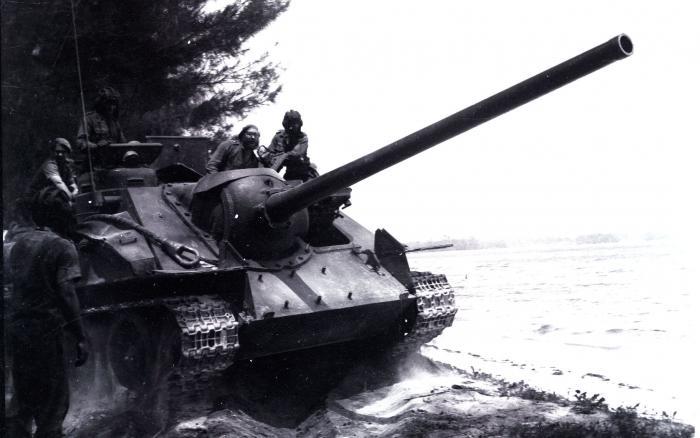
Six and a half decades have passed since the fiery, heroic April of 1961, when Cuban forces defeated a CIA-backed mercenary invasion at the Bay of Pigs, also known locally as Playa Girón. To commemorate this defining moment in the island nation’s revolutionary history, the Fidel Castro Ruz Center is hosting a two-day academic workshop titled *“Bay of Pigs: 65 Years Since the Great Victory Against Imperialism”* on April 14 and 15, 2026. The gathering forms a core part of national activities honoring the centennial birth anniversary of Fidel Castro, the legendary commander-in-chief of the Cuban Revolution.
According to official announcements posted on the center’s website, the workshop will open with a keynote address from René González Barrios, Ph.D., who serves as the institution’s director. Barrios’ talk will focus on the direct role of the United States Armed Forces in the mercenary incursion, with particular attention to the role of the U.S. Naval Base at Guantánamo Bay, a longstanding point of geopolitical tension between the two nations.
The workshop’s agenda extends far beyond formal lectures, with a lineup of complementary public events scheduled across the two days. Attendees will get access to the official launch of a new edited volume, *Bay of Pigs: 65 Years Since That Socialist April*, compiled by Elier Ramírez Cañedo, deputy head of the Ideological Department of the Central Committee of the Communist Party of Cuba, and published by independent publishing house Ocean Sur. Following the book launch, the center will open a new photographic and archival exhibition titled *“Fidel, Days of Bay of Pigs”* in its Cinco Palmas Hall, showcasing never-before-seen personal materials from Castro’s experience leading the counter-invasion.
Scheduled thematic presentations cover a wide range of under-explored angles of the 1961 invasion, including the behind-the-scenes development of Operation Pluto (the codename for the U.S.-planned invasion plot), the organization and arming of the mercenary brigade that carried out the attack, and the concurrent counter-insurgency campaigns against pro-U.S. remnant bands across Cuba in the weeks surrounding the invasion. Historians, political analysts, journalists, and academic researchers from across Cuba and international partner institutions are taking part in the workshop, continuing a tradition of annual critical analysis of the Bay of Pigs legacy.
Since the Fidel Castro Ruz Center opened its doors in 2021, institutional leadership has prioritized the study and preservation of the Bay of Pigs as a foundational moment of anti-imperialist resistance for Cuba and Global South movements more broadly. Each annual edition of the workshop has brought new archival discoveries and updated scholarly analysis of the invasion, deepening collective understanding of how the victory reshaped global politics in the Cold War era and beyond.
Beyond its military and geopolitical significance, the Bay of Pigs victory holds a central place in Cuba’s domestic political history: the heroic resistance during the invasion directly led revolutionary leaders to declare the socialist character of the Cuban Revolution on April 16, 1961, the date now recognized as the founding day of the modern Communist Party of Cuba.
As Castro himself framed the moment in a 1976 address, the Bay of Pigs invasion was never a small, marginal skirmish. It was, in his words, “the choice between the past and the future, reaction or progress, tradition or loyalty to principles, capitalism or socialism, imperialist domination or liberation.” Six and a half decades later, that framing remains just as relevant for Cuban political life and global anti-imperialist movements, organizers with the workshop note.
For audiences unable to attend the event in person at the Fidel Castro Ruz Center, all plenary lectures will be streamed live for free via the center’s official YouTube channel, allowing interested observers around the world to follow the proceedings remotely.