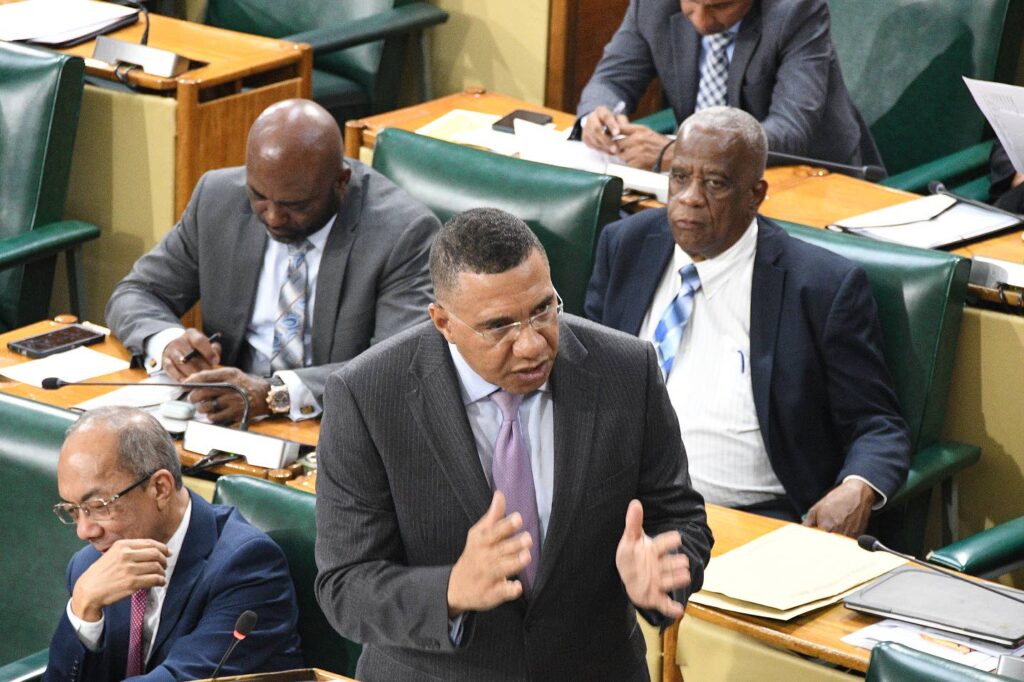
Jamaican Prime Minister Dr. Andrew Holness has introduced a critical policy adjustment to the government’s flagship post-disaster recovery and economic expansion initiative, cutting the minimum investment requirement for the Facilitated Acceleration of Strategic Transformation (FAST) by 90% to unlock broader private sector participation.
FAST operates as a complementary framework to the proposed National Reconstruction and Resilience Authority (NaRRA), the central government body tasked with leading rebuilding efforts in the wake of Hurricane Melissa, alongside delivering transformative long-term infrastructure projects including a new Kingston Public Hospital, the expansion of Vernamfield Airport, and a new government administrative campus at Heroes’ Circle. When the initiative was first unveiled during Holness’ March budget address, the prime minister set a minimum investment cap of US$150 million for projects seeking to access the FAST accelerated approval pathway. That threshold has now been lowered to just US$15 million, a change announced Tuesday during the opening of parliamentary debate on the NaRRA establishment bill.
Holness told the House of Representatives that the adjustment follows a thorough review of Jamaica’s current investment climate and the volume of private capital the government aims to attract for its recovery and growth agenda. “After careful reflection on the investment landscape and the scale of private capital the Government would need to crowd in, we have decided to lower the FASTJamaica investment threshold from US$150 million to US$15 million. This is a deliberate decision to widen the door for resurgence. At US$15 million a broader universe of strategic investors — local, regional, Diaspora, international — can qualify for the FAST pathway,” the prime minister stated.
He outlined the transformative potential of the adjusted threshold, noting that even 100 qualifying projects at the new minimum would generate US$1.5 billion in private sector investment, delivered at a much faster pace than traditional government-led projects. This influx of capital would translate to new job opportunities, expanded industrial and institutional capacity, and broad-based economic growth across every region of Jamaica, Holness added.
Under the FAST framework, designated private-sector led strategic investment projects gain access to a dedicated, streamlined approval process designed to cut through bureaucratic red tape that has long delayed major developments in Jamaica. While NaRRA will not directly deliver these private projects, it will hold a core coordination role to speed up progress across government. “NaRRA will provide the power of expedition — coordinating across agencies, accelerating regulatory approvals, and compressing the enabling environment that a strategic investor needs to commit capital and commence execution,” Holness explained.
The prime minister pointed to a widespread backlog of stalled projects across Jamaican government agencies, municipalities, and ministries, where many viable proposals have sat waiting for final approvals and clear decisions for months or even years. For projects that meet the new US$15 million threshold, the FAST pathway will change that: investors will receive a clear yes or no decision, secure all required permits and approvals, and be integrated into the coordinated FAST ecosystem administered by NaRRA.
Holness emphasized that the new framework directly addresses a long-standing problem that has cost Jamaica dearly in lost economic opportunity. For decades, he argued, countless promising, job-creating private sector investments have opted to locate in other countries that offer more agile, faster approval processes, where decisions on major projects are delivered in weeks or months rather than years. “Too many promising, transformational, private sector investments that would create thousands of jobs, generate significant tax revenues, and reshape our economic geography have gone elsewhere. They have gone to countries that are simply more nimble, countries that can say ‘yes’ to strategic investors in weeks or months, not years,” he said.
In a move to address concerns that speed would come at the cost of transparency and accountability, Holness stressed that the new system will maintain rigorous oversight standards. On the contrary, he claimed, NaRRA will operate with a level of management discipline, transparent reporting, and public accountability that has never been applied to large-scale government infrastructure delivery in Jamaica to date. To enforce this accountability, the recently established Jamaica Reconstruction and Resilience Oversight Committee (JAMRROC) — modeled after the widely respected Economic Programme Oversight Committee — will oversee NaRRA’s operations and ensure it adheres to strict governance standards.