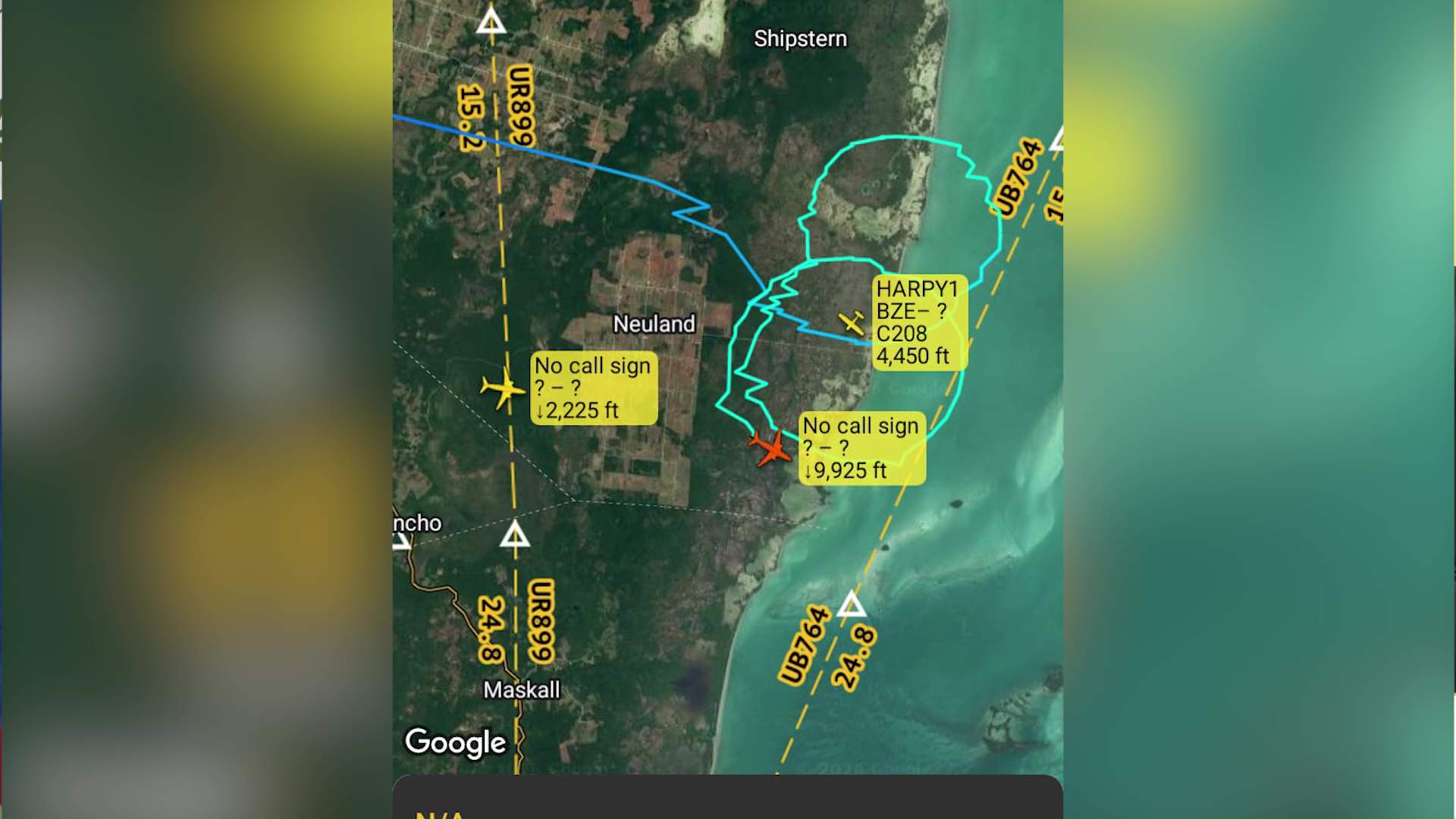
On a Friday in April 2026, a cross-border law enforcement operation delivered a major blow to transnational drug trafficking, intercepting a suspected smuggling plane carrying over 1,000 pounds of cocaine before it could complete its journey to a remote landing strip in northern Belize. The operation traces its origins to early morning air surveillance, when U.S. authorities first detected an unregistered aircraft moving over Pacific waters near Costa Rica. Alerted immediately to the threat, Belizean security agencies activated a rapid joint response framework, mobilizing personnel across the country within minutes to prepare for the plane’s expected arrival. The initial break in the ground operation came when a customs enforcement patrol conducting sweeps near the coastal Neuland Community discovered a suspicious SUV parked off-road. Inside the vehicle, officers found nine canisters of aviation fuel, an unregistered firearm, and a satellite phone, confirming their intelligence that Neuland was the aircraft’s intended landing site. As law enforcement locked down the area, the suspect plane continued its erratic northbound journey, zigzagging between the airspaces of El Salvador, Nicaragua, and Honduras to evade detection. By 2:40 p.m., projections placed the aircraft just one hour from entering Belizean airspace, with security teams already strategically positioned around the Neuland landing zone. At 5:03 p.m., after receiving formal airspace clearance, the Belize Defense Force deployed its air assets to intercept the incoming plane. Seventeen minutes later, Mexican military aircraft were also granted permission to enter Belizean airspace to support the operation, marking a rare example of cross-border security cooperation against drug trafficking. Radar contact with the suspect plane was confirmed at 5:21 p.m., roughly six nautical miles east of Carmelita Village, as it traveled northeast toward its intended landing. The aircraft touched down in Neuland Village at 6:14 p.m., and two Mexican men—identified as pilot Paul Valenzuela Osuna and co-pilot Edgar Aguilar Trinidad—were taken into custody immediately after exiting the plane. Authorities confirmed the two suspects were carrying thousands of dollars in mixed U.S. and Mexican currency, alongside the 1,000+ pounds of cocaine. The seized narcotics have an estimated street value of $11 million, marking one of the largest drug seizures in Belize so far this year. Both men now face formal charges of drug importation and violations of immigration law, and remain in custody ahead of their upcoming trial. The operation’s success has, however, been overshadowed by a lingering controversy surrounding the suspicious SUV that tipped off authorities to the landing site. Shortly after customs officers discovered the vehicle, the SUV was destroyed by fire, sparking widespread public speculation that law enforcement personnel deliberately set the blaze to cover up procedural missteps or corruption. Belize’s top police official has forcefully rejected these claims, offering a clarified timeline of events to clear his department of wrongdoing. “The claim that law enforcement burned the SUV holding the suspected aviation fuel is completely false,” said Commissioner of Police Dr. Richard Rosado in an official press briefing. After the initial discovery of the vehicle, “certain circumstances on the ground required the customs enforcement team to withdraw for their safety. I will not go into specific details at this time, but the withdrawal was a prudent and necessary decision. When our officers returned to the site with additional security support, the vehicle was already engulfed in flames.” Assistant Superintendent Stacy Smith, a staff officer with the department, acknowledged that the loss of the vehicle and the aviation fuel has complicated evidence collection for the upcoming prosecution. “It would have been ideal to preserve all of this evidence for court,” Smith explained. “Of course losing the fuel does detract from some of the evidential material we can present in the case. But we have already recovered enough critical evidence to support the prosecution, and the investigation remains active.” Three individuals were initially in the SUV when it was discovered: two Belizean nationals and one Mexican national. However, Dr. Rosado confirmed that the Office of the Director of Public Prosecutions (DPP) has ruled there is insufficient evidence to file charges against the two Belizean suspects at this time. The pair remain persons of interest in the ongoing investigation, which authorities say will continue to uncover the full network behind this smuggling attempt. The successful interception highlights the growing cooperation between North American and Central American security agencies to disrupt drug trafficking routes that have increasingly shifted through smaller Caribbean and Central American nations in recent years. While the burned vehicle remains an unsolved complication in the case, authorities say the seizure of the cocaine and the arrest of the two pilots marks a critical win against transnational organized crime operating in the region.