On April 13, employees of Dutch public transport provider EBS took industrial action, halting all work amid escalating tensions with company leadership that have been building for months. The decision to down tools came from an urgent general members’ meeting held on the morning of the strike, organized by the EBS Employees’ Organization (OWOS), the union representing EBS workers. Marciano Hellings, chair of OWOS, told local outlet Starnieuws that the work stoppage is a direct response to long-running frustration over management’s refusal to enter into structured, substantive negotiations with the union.
Hellings explained that the conflict has unfolded over multiple core issues, ranging from stalled 2025 collective bargaining agreement (CAO) talks to a range of unresolved personnel concerns. Despite repeated formal requests from the union for discussions, EBS leadership has consistently declined to engage in meaningful dialogue, the union claims. Beyond the bargaining impasse, OWOS has also raised formal allegations of a pervasive “culture of intimidation” among frontline staff, and has publicly criticized the opaque process the company has used to appoint new management leadership. All of these concerns were previously submitted to EBS leadership in written correspondence, according to the union.
Additional worker discontent centers on unequal financial arrangements across the company: a targeted pay bonus granted to a small group of senior managers was implemented without any prior consultation with the union, a decision that runs counter to OWOS’s demand for equal treatment for all EBS employees. In the lead-up to the strike, the union issued a formal ultimatum to management, demanding that it come to the negotiating table within a set timeframe. When no substantive response was forthcoming from EBS leadership, union representatives moved forward with planning for industrial action.
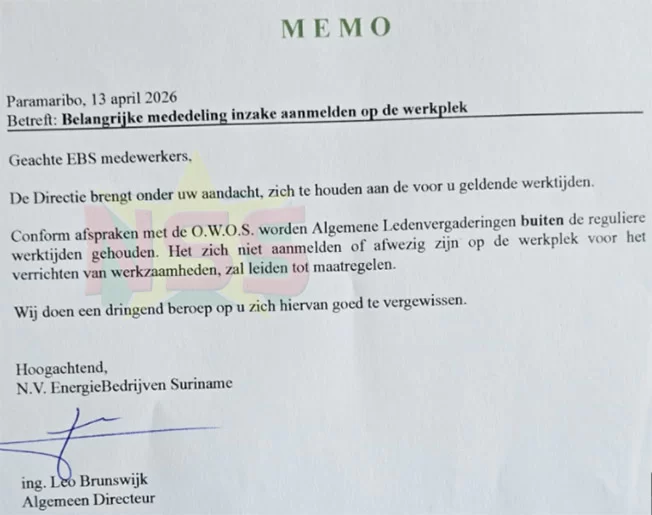
A recent internal memo from EBS management proved to be the final straw, Hellings said. The memo reminded all employees of their mandatory attendance requirements and outlined potential disciplinary measures for unapproved absences, prompting the union to escalate pressure by calling the general members’ meeting that approved the strike.
In an official response to the industrial action, EBS management stated that it supports the principle of “open, constructive and sustained dialogue” with employee representatives, and confirmed that it will extend a new invitation to OWOS for formal talks. At the same time, the company pushed back against the union, criticizing the tone and framing of OWOS’s previous communications. EBS emphasized that both sides should prioritize the shared goal of maintaining stable, productive labor relations at the company.
The union, however, has maintained its hard line, noting that months of stonewalling have severely damaged trust between worker representatives and EBS leadership. OWOS argues that the work stoppage is a necessary step to defend the legal rights and core interests of rank-and-file employees, and has called on all members to remain unified in their action and refuse to be intimidated by management pressure.
As of the initial announcement, there is no clear timeline for how long the work stoppage will continue. OWOS has reiterated that it remains willing to end the strike and return to negotiations, on the condition that EBS management enters into talks with a commitment to serious, substantive discussion of all the union’s outstanding concerns.