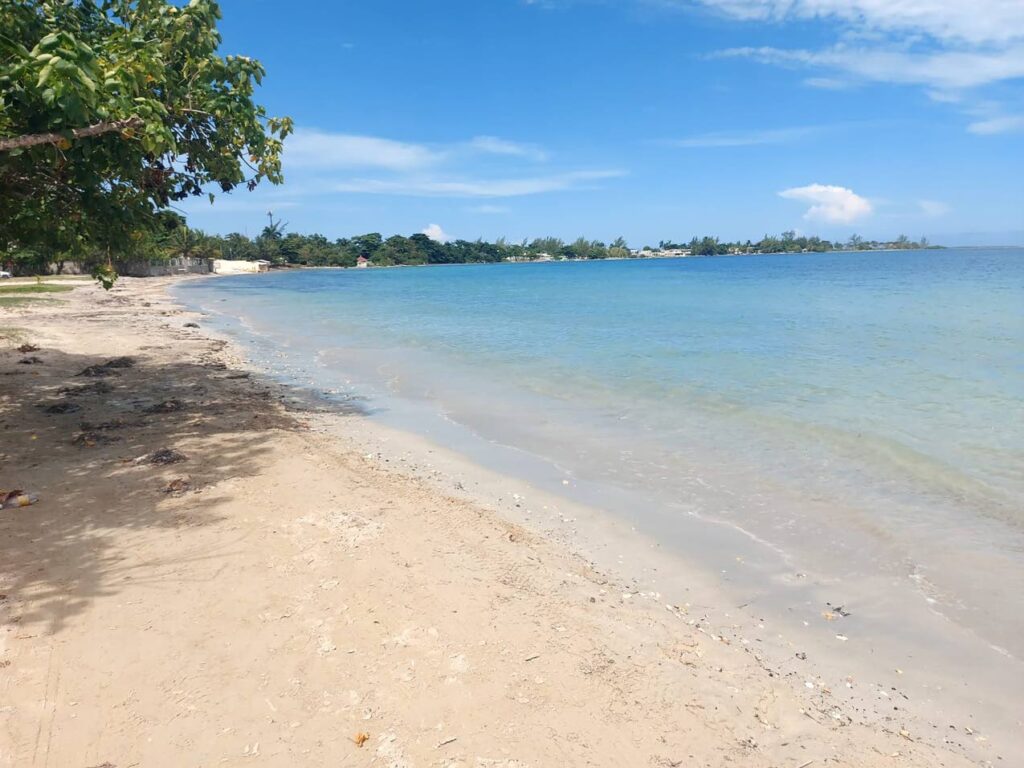
A prominent Jamaican environmental and beach advocacy organization is pushing back against the Andrew Holness administration’s new beach access framework, arguing that the proposed policy falls short of guaranteeing unfettered public access to the island’s public foreshore lands.
Last month, Prime Minister Andrew Holness tabled the long-awaited Beach Access and Management Policy in Jamaica’s Parliament, a piece of policy that aims to update outdated legal definitions of coastal land types including beaches, foreshores, backshores and water shelves. The proposal also maps out the government’s plan to formalize beach access rules, outlines necessary legislative changes, and revises approval requirements for new coastal development projects. A key provision of the draft policy encourages hotels that control sections of public beach to implement a tiered beach pass system, where non-hotel guests pay a government-consulted reasonable fee to access the stretch of beach within the hotel’s property.
But Dr. Devon Taylor, president of the Jamaica Beach Birthright Environmental Movement (JaBBEM), says the proposed system violates the fundamental public right to Jamaica’s coastal lands, which are legally vested in the public trust. Taylor argues that under Jamaican law, all foreshores and seabeds are held in perpetuity by the Crown as a public trust for the Jamaican people, not for government or private commercial interests to monetize. “Foreshores are the heritage of the Jamaican people, enshrined in our constitution,” Taylor explained in an interview. “It is unacceptable for a private hotel to charge Jamaicans to access a natural resource they already collectively own.”
Taylor notes that his group does not oppose hotels charging for the private amenities they provide, such as restroom access, bar service, or lounge facilities. Instead, he calls for a clear separation between access to public beach land and access to private on-site services. “If a visitor wants to use a hotel’s private bathroom or restaurant, that is fair for the hotel to charge for,” Taylor said. “But charging people just to step onto the public foreshore is effectively selling the Jamaican people back their own heritage.”
To back his argument, Taylor points to existing successful models across the Caribbean, where nations including Barbados, St. Kitts and Nevis, The Bahamas, and the Cayman Islands guarantee free public access to all beach lands while still allowing hotels to charge for private amenities. “Critics claim free access would destroy the hotel industry, but there is no evidence to support that claim,” Taylor said. “None of these peer nations see chaos on their beaches, and hotels still turn a healthy profit. The argument that exclusion is necessary is nothing more than a baseless farce.”
Beyond the beach pass provision, Taylor highlights two additional critical flaws in the draft policy. First, the policy frames public beach access as a regulated privilege granted by the state rather than an inherent, inalienable right of the Jamaican people. Taylor calls this framing a reintroduction of colonial-era resource exclusion, wrapped in modern policy language, and demands that public access to the foreshore be codified as absolute, unconditional, and independent of any state licensing regime. Second, the policy endorses the construction of private artificial beaches, a practice Taylor says prioritizes commercial profit over ecological health. Artificial beaches require the removal of natural limestone and volcanic rock formations that naturally absorb wave energy, reduce storm surge damage, and support native fisheries. This practice also converts publicly owned submerged land into a private amenity, effectively dispossessing the Jamaican people under the guise of leisure development.
JaBBEM is calling for an immediate moratorium on all new artificial beach construction and an independent ecological audit of all existing artificial beach installations across the island. The organization is also demanding that the entire draft policy be withdrawn from Parliament and revised to enshrine full public right of access to all Jamaican foreshores. “The sea belongs to Jamaica. The beach belongs to Jamaica. The foreshore belongs to Jamaica,” Taylor stressed. “No government licensing framework can ever change that fundamental fact.”