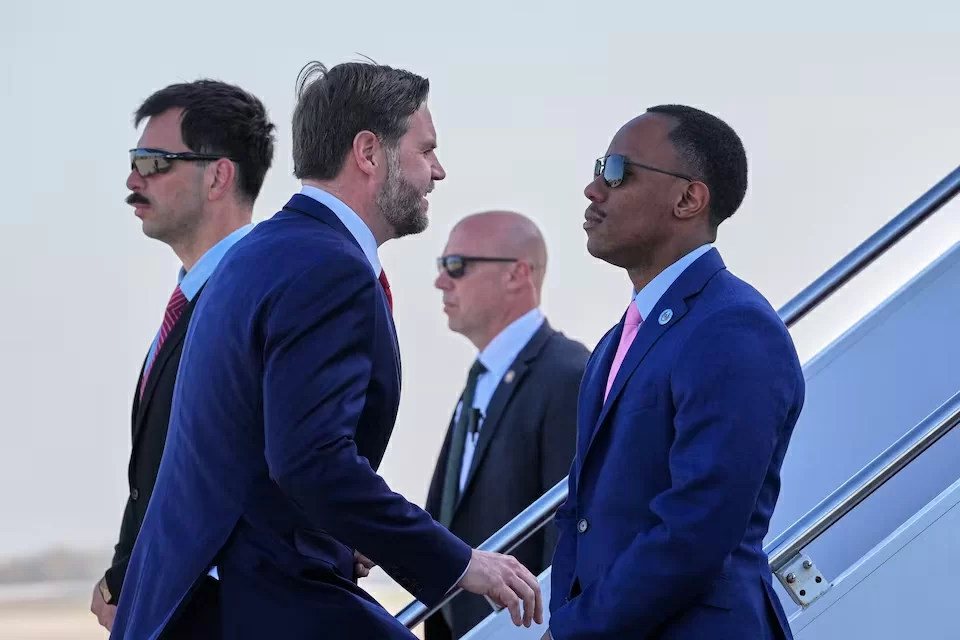
On Friday, a high-level United States delegation headed by Vice President JD Vance touched down in Islamabad for long-awaited peace negotiations with Iran, but the diplomatic effort was immediately overshadowed by mutual accusations of ceasefire violations and rising violence in neighboring Lebanon that has cast deep uncertainty over prospects for a lasting regional peace deal.
The US delegation, which also includes special envoy Steve Witkoff and former White House advisor Jared Kushner, arrived in the Pakistani capital under strict security lockdown measures. Pakistan has positioned itself as a neutral mediator for the talks, seeking to cement its role as a stabilizing force in a region that has been torn apart by months of open conflict.
However, Iran has laid out strict preconditions that have already thrown the launch of formal negotiations into question. Senior Iranian officials, including Parliament Speaker Mohammad Baqer Qalibaf and Foreign Minister Abbas Araqchi, have made two non-negotiable demands before talks can proceed: any temporary ceasefire must explicitly extend to Israeli strikes on Hezbollah in Lebanon, and all Iranian assets frozen under international sanctions must be unblocked immediately.
The US administration has already expressed open skepticism about the possibility of quickly reopening the strategically critical Strait of Hormuz, which is controlled by Iran. A months-long Iranian blockade of the key waterway has already caused massive disruptions to global energy supplies. Ahead of the negotiations, former President Trump stated that the US is extending an “open hand” to Tehran, but warned that the delegation would not tolerate bad-faith negotiating tactics.
While diplomats gather in Pakistan, deadly violence continues to escalate in Lebanon. Israeli airstrikes targeting positions in southern Lebanon and the capital Beirut have killed hundreds of people and forced mass civilian displacement across the country. In response, Hezbollah has launched sustained rocket attacks against northern Israeli cities, amplifying tensions in a country already grappling with a weak central government, deep sectarian divisions, and a collapsing national economy.
Though Israel recently agreed to enter separate peace talks with Lebanese government representatives, regional analysts remain deeply pessimistic about any breakthrough, as the Lebanese government lacks meaningful leverage over Hezbollah. The militant group has refused to participate in direct negotiations, creating a major barrier to any permanent ceasefire agreement.
The gap between core US and Iranian demands remains wide, creating a major obstacle to any successful diplomatic outcome. Iran’s key demands include a full end to economic sanctions that have gutted its national economy, formal international recognition of its sovereignty over the Strait of Hormuz, and a complete withdrawal of US military forces from the Middle East region. On the other side, the US is demanding that Iran end all uranium enrichment activities, abandon its ballistic missile arsenal, cut off all support to regional armed proxy groups, and release at least six detained American citizens, including journalist Reza Valizadeh.
Leading regional analysts warn that the wide gap between the two sides’ positions means the risk of a full resumption of open conflict remains very high. Barbara Leaf, a former senior US diplomat focused on the Middle East, emphasized there is a “very large risk” that tensions will reignite, particularly given the already severe damage the conflict has inflicted on global energy markets and global inflation levels.
The ongoing crisis has already triggered the largest disruption to global oil supplies in modern history, stoking widespread inflationary pressures, worsening global food insecurity, and pushing the global economy closer to the edge of recession. While the temporary ceasefire has reduced direct hostilities between major parties, Iran has maintained partial blockades on the Strait of Hormuz, restricting access for non-Iranian shipping and extending economic disruptions across global markets.
The economic fallout of the crisis is already being felt in the United States. March inflation data released recently showed consumer prices rising by 0.9% month-over-month, the fastest single-month increase since the major inflation shock of mid-2022. This has amplified economic pressure on the Trump administration just months ahead of upcoming midterm elections.