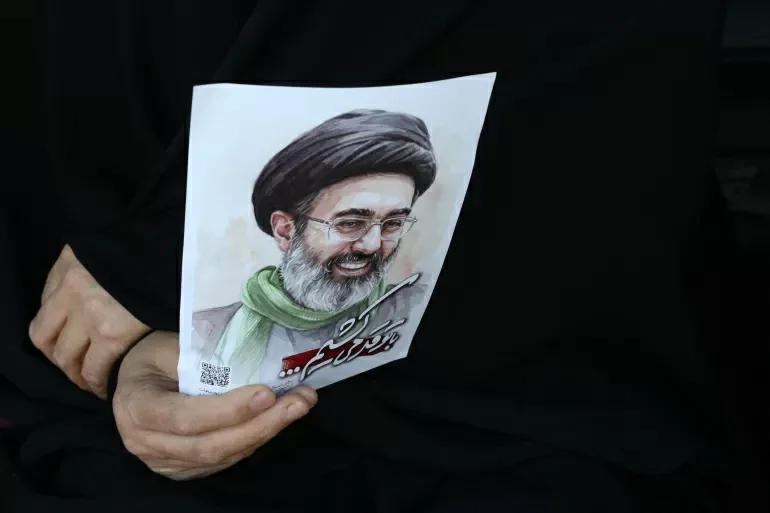
On the 40th day of mourning for his predecessor and father, Ayatollah Ali Khamenei – who was killed in a joint US-Israeli strike on the opening day of the ongoing conflict – Iran’s new Supreme Leader Mojtaba Khamenei issued a landmark public address Thursday, marking his first public statement since the outbreak of hostilities. The 58-year-old leader, who had stayed out of the public eye since fighting began, used the televised address to declare that Iran has secured a “final victory” in its war against Israel and the United States.
Khamenei emphasized that Iran has never sought unnecessary conflict, but remains committed to defending its inalienable legitimate rights. He stressed that the criminal aggressors who launched unprovoked attacks on Iranian soil will not escape unpunished, adding that Tehran will demand full compensation for all infrastructure damage, and for the blood of all martyrs and injured citizens lost in the conflict.
When addressing the status of the Strait of Hormuz, a critical global chokepoint that Iran has effectively blocked since the war erupted on February 28 and a core point of contention in ongoing US-Iran peace talks, Khamenei only noted that the country would enter a “new phase” without offering additional details. The strait accounts for nearly a fifth of global oil trade, making its status a critical issue for the global economy.
The announcement comes one day after the United States and Iran reached a two-week ceasefire agreement brokered by Pakistan to allow for formal peace negotiations. The truce was reached after escalating attacks on Gulf states and the near-complete closure of the Strait of Hormuz triggered widespread international fears of a prolonged regional conflict with far-reaching global economic and security consequences. As part of the ceasefire deal, Iran agreed to allow commercial shipping to resume passage through the strategic waterway, with unconfirmed reports indicating Tehran plans to charge transit tolls for vessels using the strait to fund post-conflict reconstruction.
Despite the diplomatic breakthrough, Khamenei issued a clear warning that Iran stands fully prepared to respond immediately if enemy forces violate the terms of the truce. “Our fingers remain on the trigger,” he stated.
The fragile ceasefire already faces a major test just hours after it took effect. On Wednesday, Israel carried out a devastating airstrike in Lebanon that killed more than 300 people, putting the US-Iran agreement at severe risk. Dispute already exists over whether Lebanon is covered under the ceasefire terms: Iran and Pakistan maintain the truce applies to all allied fronts of the conflict, while the US and Israel reject this interpretation. Global leaders have already called for Lebanon to be included in the ceasefire framework and urged an immediate end to hostilities across the entire region.
Khamenei reaffirmed that Iran did not initiate the war, but will never surrender its legitimate rights under any circumstances. He explicitly referenced the “entire resistance front”, a statement widely interpreted as including Lebanese armed groups aligned with Tehran. Formal peace talks between US and Iranian delegations are scheduled to kick off this weekend in Pakistan, where negotiators will work toward a permanent end to the conflict.