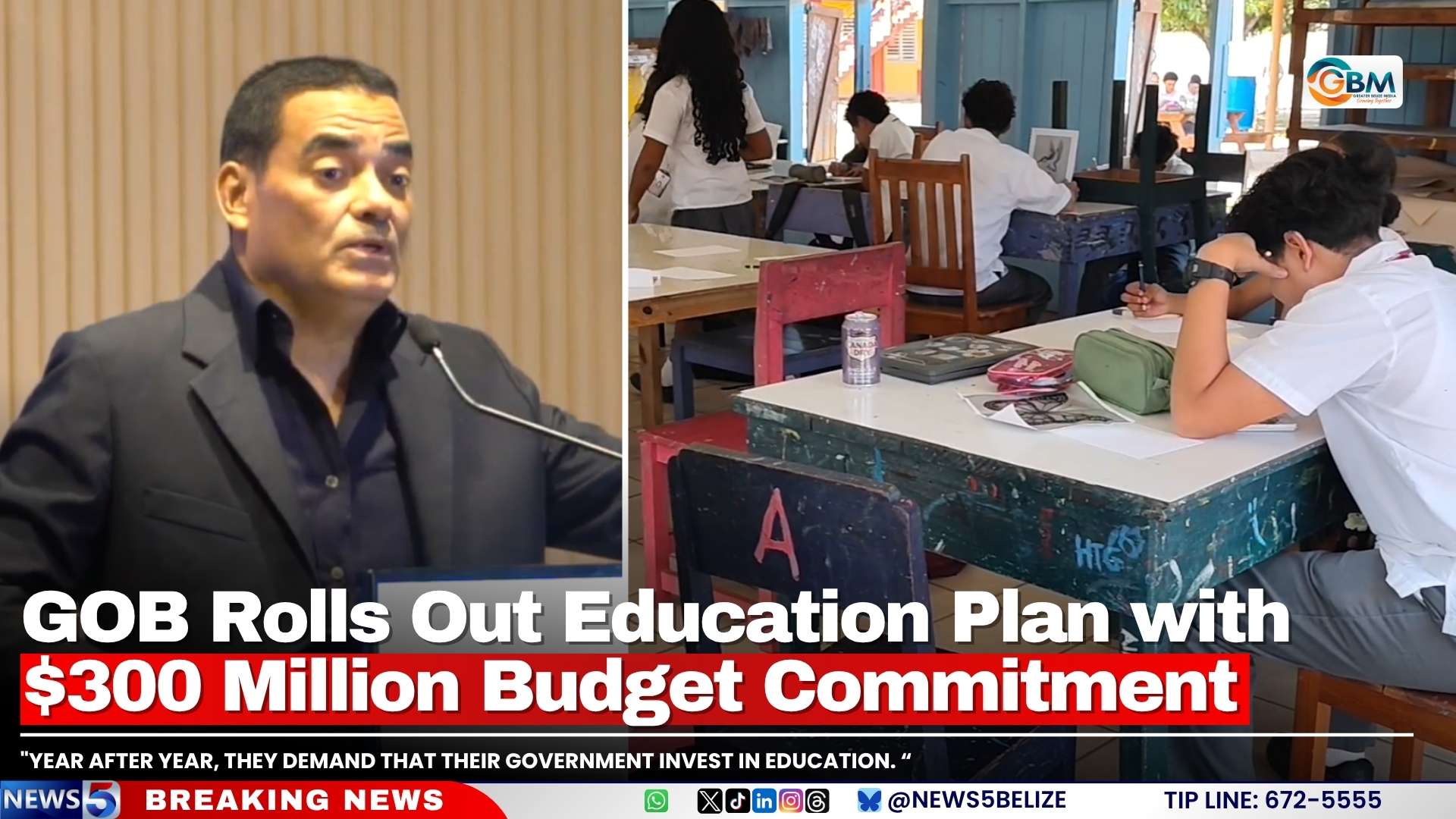
As the 2026 fiscal year kicks off, Belize’s Ministry of Education, Culture, Science and Technology has officially unveiled its ambitious Education Sector Plan 2.0, a four-year initiative designed to reshape learning outcomes across the entire education spectrum—from primary campuses to tertiary institutions, running from 2026 through 2030. Backing the far-reaching reforms is a $300 million budget allocation earmarked specifically for the education sector in the government’s latest national spending plan, cementing the country’s long-held dedication to advancing learning opportunities for all Belizeans.
At the official launch ceremony, Education Minister Francis Fonseca emphasized that the substantial budget commitment aligns with the priorities of the Belizean public, who have consistently pushed for greater governmental investment in education. “The Belizean people have always attached great importance to education,” Fonseca told attendees. “Year after year, they demand that their government invest in education. So we have a proud history in this country of investing in education.”
Crucially, Fonseca noted that financial resourcing alone is not sufficient to deliver meaningful change. Echoing widespread public scrutiny of public spending, he pointed out that questions around the real impact of education investment on both the schooling system and broader national development are not just valid—they are essential to holding policymakers accountable. “We have often asked, quite rightly… What impact is this investment having on our education system, on the development of our country? These are questions that are important,” he said.
The new four-year plan builds directly on the framework of its 2021–2025 predecessor, which the ministry credits with guiding the education sector through the widespread disruptions caused by the COVID-19 pandemic. Building on that foundation, Plan 2.0 includes three key, immediate priorities: extending free education coverage to more learners, integrating greater digital and technological resources into everyday classrooms, and carrying out much-needed structural upgrades to school facilities across the country.
Fonseca laid out five core objectives that anchor the entire plan, with equitable access and successful program completion at every education level topping the list. “We want to make sure that when our students enter the education system, they don’t only access it, but they complete it successfully,” he explained. Reaffirming the plan’s commitment to closing geographic and socioeconomic gaps, he added: “Every child in this country, every student in this country, wherever they live, Belize City or in the most remote rural communities of our country, should have equal access to quality education.”