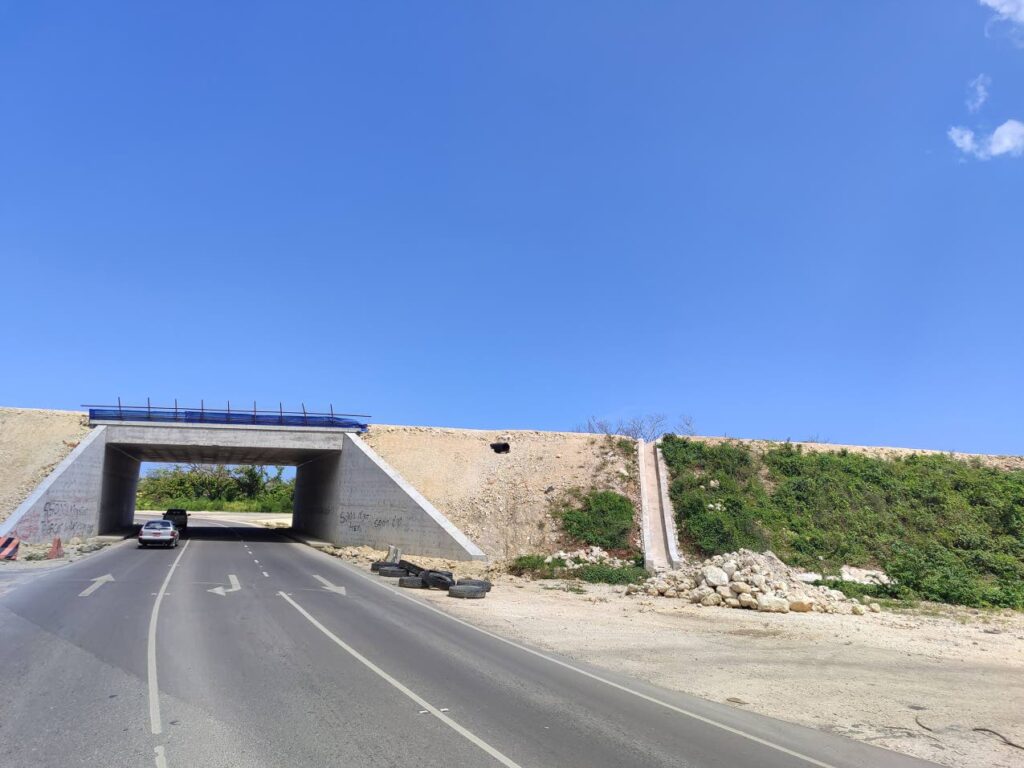
### Montego Bay Perimeter Road Project Delayed to 2027, Sparking Outcry From Local Business Leaders
For a city long crippled by crippling urban traffic congestion, the Montego Bay Perimeter Road Project has stood for decades as a beacon of hope — a promised solution that would cut through gridlock and unlock new economic growth for Jamaica’s iconic western tourism and commercial hub. But that hope has once again been pushed into the future, as local business leaders are voicing deep frustration over the news that a key section of the transformative infrastructure project will not be completed until May 2027, more than a year later than the most recent public target.
The new completion timeline for the Long Hill Bypass segment was confirmed earlier this week by the National Road Operating and Constructing Company (NROCC), the state-owned entity managing the project on behalf of the Jamaican government, in response to inquiries from the *Jamaica Observer*. When reached for comment by the outlet Wednesday, Nadine Spence, second vice president of the Montego Bay Chamber of Commerce and Industry (MBCCI), made clear the business community’s anxiety over the extended delay.
“Time means money, and the longer this project drags on, the more revenue and opportunity we lose,” Spence told the *Observer*. “We are deeply concerned about this new delay — this project has been waiting for generations, and every extra month of gridlock holds our city back.”
Robert Morgan, Jamaica’s junior minister with responsibility for public works, pinned the latest schedule shift on widespread damage inflicted by Category 5 Hurricane Melissa, which slammed into the island last October and devastated the Catherine Hall and West Green neighborhoods, where much of the bypass construction is concentrated. Morgan added that the project already suffered prior setbacks from Hurricane Beryl, which hit the island in 2024.
But while Spence acknowledged that natural disasters are unavoidable, she argued that project managers have failed to prioritize urgency to get work back on track. She has also thrown her support behind a compromise proposal: open already completed segments of the bypass to the public while remaining construction wraps up, to deliver at least partial relief to frustrated motorists and businesses.
“At one point, officials told us one leg of the route would be opened early,” Spence noted. “We are asking that this plan be revisited. Even partial access would make a huge difference for our city while we wait for the full completion, and we would welcome that right now.”
The revised timeline sees mixed deadlines across different segments of the project: the Montego Bay Bypass and West Green Avenue sections are now targeted for September 2026, while the Barnett Street leg has been moved up to an April 2026 completion. Even with that small acceleration, the new 2027 deadline for the Long Hill Bypass has done little to calm local nerves.
Spence specifically highlighted concerns over the upcoming Dream Wknd 2026 festival, scheduled to take place from July 30 to August 3 that year. The event is expected to draw thousands of visitors to Montego Bay, a city already struggling with daily traffic gridlock that the road project was designed to fix. With the bypass set to remain unfinished for the major tourism event, Spence warned the delay will exacerbate existing congestion issues.
“This delay just means Montego Bay will continue to grapple with persistent traffic snarls that hurt every part of our local economy,” Spence said. “When you host a major international event like Dream Wknd that brings thousands of extra people to the city, the impact of uncompleted infrastructure is going to be felt by everyone — visitors, locals, and business owners alike. Traffic conditions are completely unpredictable: some days you can move normally, and other days the whole area is gridlocked for hours. It’s a waste of time, a waste of energy, and it makes our city far less efficient for business and daily life.”
Mark Kerr-Jarrett, a prominent Montego Bay real estate developer and long-time advocate for the bypass, echoed Spence’s concern, describing the project as “desperately needed” and “decades overdue.” Beyond hurricane-related damage, Kerr-Jarrett argued that unnecessary bureaucratic red tape around land acquisition is also holding up work on the Long Hill segment.
“I’ve been told that the National Land Agency now requires a pre-check plan to be submitted alongside every land acquisition and sales agreement for the project,” Kerr-Jarrett explained. “This requirement is completely unnecessary, and it adds massive amounts of time to the process. Getting one pre-check plan approved can take up to nine months, which pushes every single acquisition back by a minimum of four months, and as much as nine.”
Looking beyond the current construction delays, Kerr-Jarrett is also calling on the Jamaican government to reverse its plan to charge tolls on the completed bypass, arguing the road is core public infrastructure that should be free to use for local residents and motorists.
“The people who need this road the most are the ones who can’t afford to pay tolls to use it,” he said. “Even though it’s called a bypass, this is core municipal infrastructure built specifically to cut congestion in the heart of Montego Bay. It should be treated as such.”