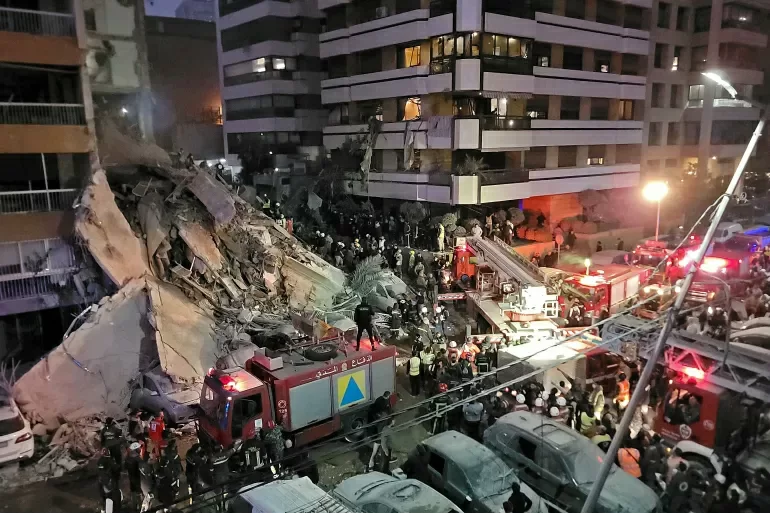
Just hours after a two-week ceasefire between the United States and Iran was announced, Israeli forces launched devastating, wide-ranging bombardment across Lebanon that has left hundreds dead and thousands injured, sending shockwaves through the already volatile Middle East.
Lebanese Civil Defense has confirmed that at least 254 people were killed and 1,165 more wounded in the airstrikes, which targeted locations across the country: including the Tallet al-Khayyat neighborhood of Beirut, the Bekaa Valley, the Lebanon Mountains, the coastal city of Sidon, and multiple villages in southern Lebanon. Emergency response workers and local residents have already gathered at the scene of the Beirut strike to recover victims and provide aid, according to AFP photos from the attack site.
The Israel Defense Forces labeled the operation the largest coordinated assault on Lebanon since it launched a new military campaign in the country on March 1. IDF officials confirmed that the strikes targeted more than 100 Hezbollah command centers and military installations across the country.
The scale of the casualties has overwhelmed Lebanon’s already strained healthcare system. Elias Chlela, head of the Lebanese Medical Association, issued an urgent call for all doctors to report to hospitals immediately to assist with the influx of wounded patients. One of Beirut’s largest hospitals also announced a critical need for blood donations of all blood types to support emergency operations.
Dispute has already erupted over whether Lebanon falls under the scope of the newly announced U.S.-Iran ceasefire. Israeli Prime Minister Benjamin Netanyahu stated openly that Lebanon is not included in the ceasefire deal, arguing the truce does not apply to clashes with Hezbollah. U.S. President Donald Trump echoed this position, describing Lebanon as a separate case excluded from the agreement. However, Pakistan, which served as a mediator in the ceasefire negotiations, confirmed that Lebanon was intended to be covered by the truce, creating a major rift over the terms of the deal.
Reactions from global actors and regional stakeholders have been swift and widespread: In Lebanon, Parliament Speaker Nabih Berri condemned the strikes on densely populated civilian areas as a full-fledged war crime. He noted the attack came immediately after the ceasefire announcement, calling it a serious test for the international community and a blatant violation of international law, while urging all Lebanese citizens to unite in solidarity with the victims.
Lebanese armed group Hezbollah affirmed its inherent right to respond to the attacks, stating that the blood of its killed and wounded members will not be spilled in vain, and reaffirming its right to resist occupation. A Hezbollah member of parliament warned that the Israeli strikes constitute a serious violation of the ceasefire, and continued attacks will put the entire truce agreement at risk.
On the Israeli side, Defense Minister Israel Katz explained that Israel intends to separate the conflict with Iran from its military campaign in Lebanon in order to fundamentally alter the situation on the ground. Netanyahu reaffirmed that Israeli operations will continue, as the ceasefire does not apply to Hezbollah targets.
Iran’s leadership issued a stark warning that it will retaliate if Israel does not immediately halt its attacks on Lebanon. Iranian Foreign Minister Abbas Araghchi stressed that the terms of the ceasefire are clear, stating “The United States must choose: either a ceasefire, or war through Israel.” He added that the entire world is witnessing the bloodshed in Lebanon, and responsibility for any further escalation rests with the U.S.
The U.S. maintained its position that Lebanon is excluded from the truce due to its conflict with Hezbollah, with Vice President JD Vance characterizing the disagreement over Lebanon’s inclusion as a legitimate misunderstanding of Iran’s position, in contrast to the Pakistani prime minister’s confirmation that Lebanon was part of the deal.
Multiple regional and global governments have condemned the strikes. Qatar’s Foreign Ministry decried the brutal series of attacks as a dangerous escalation and a blatant violation of Lebanese sovereignty and international law, expressing full solidarity with Lebanon and calling on the international community to hold Israel accountable. Egypt condemned the bombardment as a premeditated attempt to undermine regional and international de-escalation efforts and plunge the entire region into chaos. Turkey’s Foreign Ministry strongly condemned the attacks, warning they will drastically worsen the already catastrophic humanitarian situation, and called on the international community to act immediately to end Israeli operations and protect civilian lives. Spanish Prime Minister Pedro Sánchez called Netanyahu’s disregard for civilian life and international law disgraceful, calling for Lebanon’s immediate inclusion in the ceasefire and the imposition of sanctions on Israel. Italian Foreign Minister Antonio Tajani expressed solidarity with Lebanon, warned the offensive could create a second Gaza conflict, and called on Israel to halt bombing and guarantee safe operating conditions for United Nations peacekeepers.
United Nations officials issued a sharp condemnation of the strikes, calling for urgent diplomatic action to prevent further civilian casualties. The UN High Commissioner for Human Rights described the scale of destruction as appalling, and stressed that protecting civilian peace and safety must be the top priority. The International Committee of the Red Cross also expressed outrage over the deadly destruction in densely populated civilian areas, emphasizing that any regional ceasefire agreement must prioritize the safety and dignity of Lebanese civilians.