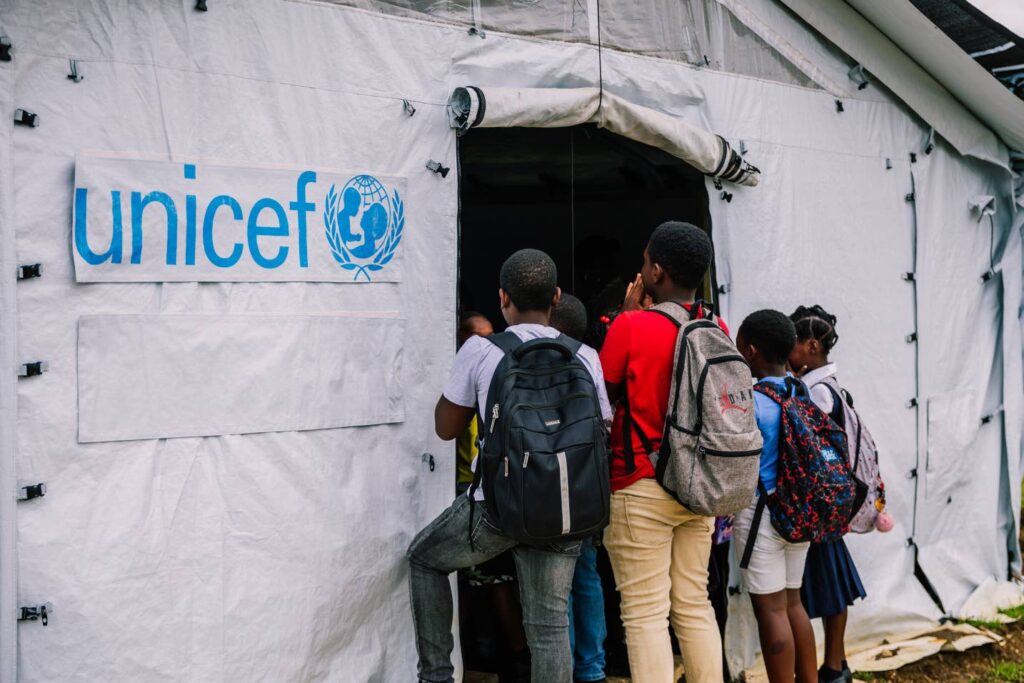
In late October 2025, Category 5 Hurricane Melissa made landfall across Jamaica, leaving widespread destruction in its wake. Roofs were torn from buildings, road networks were submerged and blocked by floodwaters, and hundreds of families were forced to flee their homes. For communities across the island, the storm brought unparalleled disruption to daily life — and nowhere was this disruption felt more acutely than in the education sector, particularly in low-income, vulnerable regions where families were already grappling with persistent economic hardship.
When the storm passed, education leaders across the island faced an urgent, human-centered question: how do we locate every displaced student and safely bring them back to structured learning? For two Jamaican primary and infant schools — Barrett Town in St James parish and Bromley in St Mary parish — the answer came from an unexpected source: a brand-new digital tool that had only been rolled out weeks before the hurricane made landfall.
Weeks before Hurricane Melissa struck, both institutions had gone live with the Education Management Information System (EMIS), a digital platform developed through a joint three-year initiative between Jamaica’s Ministry of Education and the United Nations. Titled “Empowering Jamaica’s future: SDG joint programme on digital transformation for education”, the initiative was designed to modernize Jamaica’s entire public education system, with the core goal of improving learning outcomes for more than 450,000 students across the country. Before the storm, the project’s main focus was institutionalizing cross-sector digitalization: upgrading data governance frameworks, digitizing routine administrative tasks, and integrating nutrition program tracking through the new EMIS platform. For school staff, the tool was initially viewed as just a modern administrative upgrade to replace outdated paper record-keeping. No one anticipated how critical it would become just weeks after launch.
When the hurricane hit, most physical paper records were destroyed by floodwater and wind damage, and traditional communication networks were severely disrupted. The digital student data stored on EMIS quickly became the backbone of post-storm recovery efforts. At Barrett Town Primary and Infant School, Principal Anthony Murray described the first days of reopening as a period of intense, community-led coordination rooted in compassion. The entire school community mobilized to deliver critical support to displaced families, providing everything from psychosocial counseling, new uniforms, textbooks and school supplies, to clothing, bedding, and daily hot meals, all designed to ease the burden on storm-impacted families and create a safe, welcoming space for students to return to learning.
But every step of this coordinated response was guided by the data in EMIS. “Through EMIS we tracked attendance in real time and followed up on absences,” Murray explained. “This made it possible to reach families directly.” Daily attendance monitoring through the platform revealed that 90% of Barrett Town’s students had returned to school within the first week of reopening, and the remaining unaccounted-for students were immediately flagged for targeted follow-up by the school guidance department. Administrators quickly learned that many of the missing students had transferred to new schools after displacement, while others needed tailored support to be able to return. The digital system ensured that no child was overlooked amid the chaos of post-storm recovery.
Murray now refers to EMIS as the school’s “early-warning and action system”, which pulls real-time data on student enrolment, attendance patterns, and unmet resource needs, allowing leaders to allocate support before small problems escalate into larger crises. The platform helps administrators quickly identify which students need access to emergency transportation, temporary shelter, or post-storm health follow-up. “That turns a crisis scramble into a coordinated response,” Murray said.
Over at Bromley Primary and Infant School, Principal Calef Williams reported a similar experience, despite unique challenges the school faced during recovery. Bromley adopted EMIS in September 2025, starting with core attendance tracking functionality. When Hurricane Melissa hit, internet connectivity became severely intermittent across the region, but teachers collaborated continuously to keep the platform updated. “During the hurricane and early recovery, it was a bit tedious with intermittent connectivity,” Williams said. “However, we collaborated and used it to ensure we were consistent.” By November 17, just over three weeks after the storm, Bromley had fully resumed normal in-person operations, a milestone Williams credits directly to the stability and structure EMIS provided during the transition.
Across both schools, EMIS proved to be far more than a digital replacement for paper attendance registers. It became a core tool for rebuilding learning communities after a devastating disaster. When communication networks were unreliable and families were scattered across the island in emergency shelters, centralized, accessible digital student records allowed recovery efforts to proceed faster and more equitably than would have been possible with destroyed paper records. Teachers were able to spend far less time reconstructing lost student files and far more time supporting students’ academic and emotional recovery after the storm. Temporary classroom tents donated by UNICEF provided the physical space for learning to resume, while EMIS provided the data backbone to reconnect students with their schools.
The experience of these two schools reflects the broader mission of the SDG Joint Programme on Digital Transformation for Education, which works to integrate data tools like EMIS to strengthen education systems across Jamaica. While the initiative was originally designed to improve long-term planning and data-driven decision making in education, it has unexpectedly demonstrated enormous value in crisis response, enabling schools to act faster and more equitably when large-scale disruption hits.
As Jamaica continues its long-term recovery from Hurricane Melissa, school leaders at both institutions are already looking ahead, planning to fully integrate EMIS into all daily school operations. Moving forward, they plan to use the platform’s data to monitor long-term attendance trends, identify unaddressed learning gaps, and build more robust preparedness plans for future climate shocks. Reflecting on the crisis, Murray noted that the hurricane laid bare how vulnerable coastal communities are to extreme weather events. But it also showed what can be achieved with the right digital tools. “The hurricane showed us how fragile things can be,” he said. “But it also showed us that with the right tools we can recover faster and build back stronger for our children.”